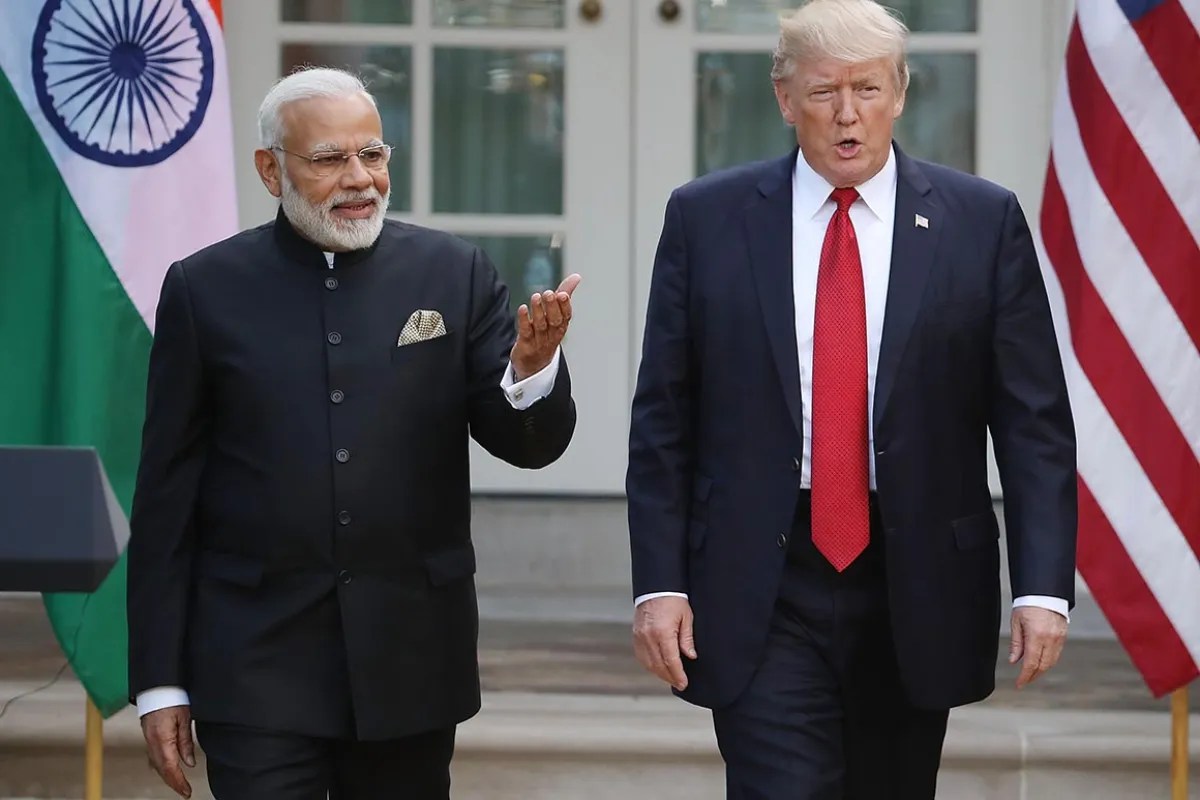
India-US Trade Agreement: Good news has emerged for India amid rising tensions. The US Ambassador to India has indicated that a major trade deal between the two countries could be signed in the next few weeks or months.
At an event held at the Indian Institute of Technology in Delhi, the US Ambassador said that over the past two decades, trade between India and the US has grown from $20 billion to over $220 billion. He described this as a symbol of the strong economic relationship and growing trust between the two nations. He stated that if this deal is finalized, it could open new opportunities in trade, investment, and employment, benefiting both India and the US.
The US Ambassador said that the process of finalizing the trade deal between India and the US is progressing rapidly. He noted that India recently sent its team to Washington to complete the final round of negotiations, and next week, a US delegation will visit India for further discussions. The Ambassador expressed hope that the deal could be signed in the coming weeks or months.
He said that trade between the two countries is growing rapidly, largely due to innovation, investment, and new technology. Cooperation between the two nations is strengthening in digital trade, advanced manufacturing, energy, and the startup sector. The Ambassador also stated that India and the US are working together in areas such as critical minerals, research, and defense technology, which could greatly benefit both economies in the future. India is one of the US’s top trading partners.
The US Ambassador further said that young people will play a major role in technology and research in the coming times. He noted that India and the US are now beginning to understand the true strength of their partnership, and cooperation between the two countries needs to be further strengthened.
The Ambassador said that the US is fully ready to work with India. India’s rapidly growing economy and infrastructure needs align well with US technology and expertise.
Praising institutions like IIT Delhi, he said it is essential to further strengthen research partnerships. More joint research projects, faculty collaboration, and increased student work will bring great benefits to both countries in the future.