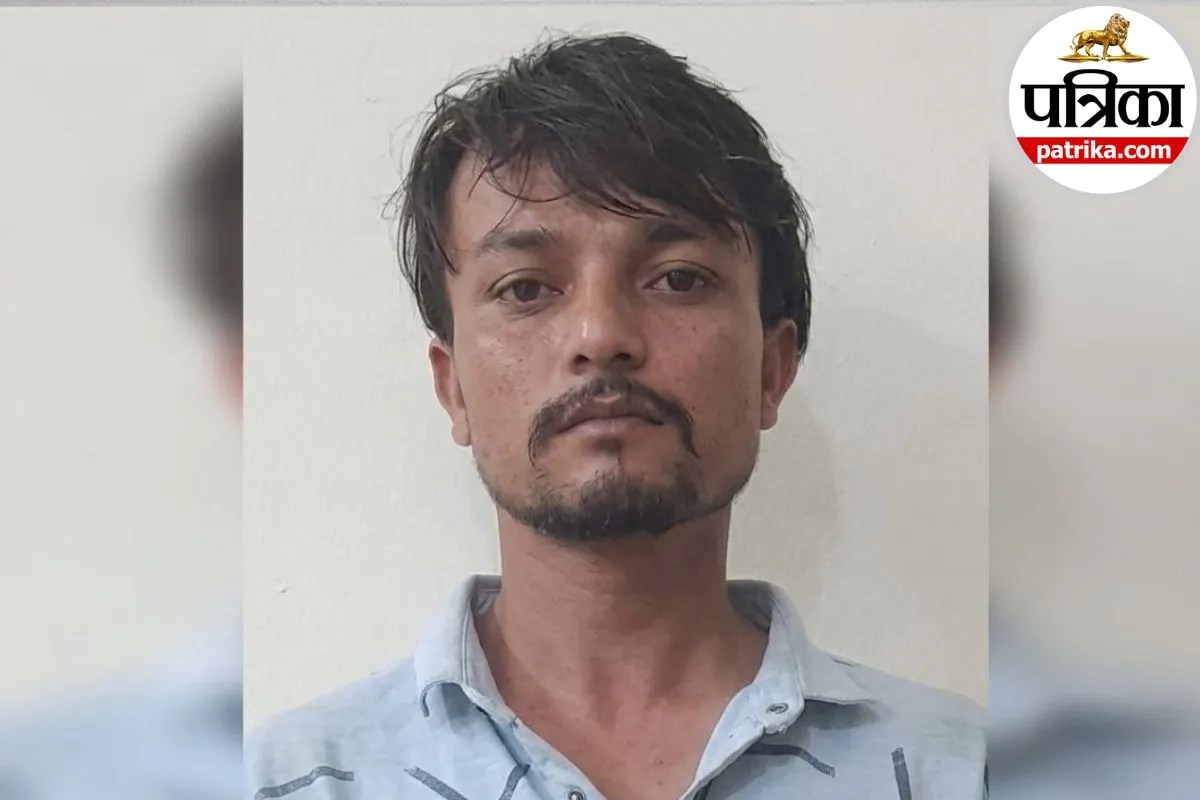
Uttarakhand Crime News: Musharraf, a resident of Dhandera in Roorkee, who was arrested by the UP ATS on charges of being linked to a Pakistani gangster network, has made several shocking revelations during interrogation. Musharraf, who only studied up to the fifth grade, has confessed everything to the police. He stated that he arrived in Kempti village, Mussoorie, on May 12, where he was working as a welder for a contractor. During ATS interrogation, Musharraf’s connections were also found linked to another accused.

Musharraf told the ATS that he comes from a simple family. His father works as a mason in the village, and his brother is learning to be a motorcycle mechanic. Musharraf first learned carpentry and later took up welding. It was through his welding work that he went to Ludhiana. There, he met Mahkab, a resident of Dhikka Kalan, Saharanpur. Mahkab had taken a welding contract at a car company in Ludhiana. While working together, the two became close friends. Musharraf revealed that the Pakistani number saved in his phone was saved by his friend Mahkab.

Uttarakhand accident news, Uttarakhand news, dehradun news

The most surprising revelation during the interrogation was regarding a hospital in Jalandhar. Musharraf said that, at the behest of a relative, he went to do welding work at a hospital located near the railway station. There, during work, the hospital’s bouncers severely beat one of his colleagues on charges of misbehaving with a nurse. Musharraf alleges that during this, the bouncers also pushed and shoved him and used abusive language.

Musharraf was angry about this incident. In a fit of rage, he sent a voice message to Mahkab saying that this hospital should be blown up with a bomb. Upon hearing this, Mahkab immediately asked for the hospital’s location and pictures. Within about half an hour, Musharraf sent the hospital’s photo and exact location to Mahkab. In response, Mahkab assured him that the job would be done.

The ATS is seriously investigating the entire story told by Musharraf. Additionally, the police are examining the mobile records and network of both individuals to trace other sleeper cells of the Pakistani gangster network.

Nitin Rana murder, Loni murder case, UP Crime News, up news

Dhandera

Dhandera is a small town located in the Haridwar district of Uttarakhand, India, known for its historical and cultural significance. It is famously associated with the Dhandera Industrial Area, which played a key role in the region’s industrial development after India’s independence. The town also holds importance as a site for local trade and as a gateway to the nearby religious city of Haridwar.

Roorkee

Roorkee, located in the Indian state of Uttarakhand, is historically significant as the site of the first engineering college in Asia, the Thomason College of Civil Engineering (now the Indian Institute of Technology Roorkee), established in 1847 by the British for training civil engineers. It also houses the historic Solani Aqueduct, built in the

Dhandera

Dhandera is a small town located in the Haridwar district of Uttarakhand, India, situated along the banks of the Ganges River. Historically, it is known for its association with the Indian independence movement, as it was a site where Mahatma Gandhi and other freedom fighters held meetings and rallies. Today, it remains a culturally significant area, often visited by pilgrims traveling to nearby Haridwar and Rishikesh.

Roorkee

Roorkee is a city in the Indian state of Uttarakhand, best known as the home of the Indian Institute of Technology (IIT) Roorkee, one of India’s oldest engineering institutions, established in 1847 as the Thomason College of Civil Engineering. Historically, it gained prominence during British colonial rule as a major center for the construction of the Upper Ganges Canal, a landmark irrigation project completed in 1854. Today, Roorkee remains a key hub for education, research, and water management technology.

Kempti village, Mussoorie

Kempti village, located near Mussoorie in the Indian state of Uttarakhand, is a serene hamlet known for its scenic beauty and apple orchards. Historically, it gained prominence as the site where the famous British-era “Kempti Falls” cascade, and it was a popular retreat for colonial officers seeking respite from the summer heat. Today, it remains a quiet destination for nature lovers and trekkers, offering a glimpse into the region’s colonial past and Himalayan charm.

Ludhiana

Ludhiana is a major industrial city in the Indian state of Punjab, known for its textile and hosiery manufacturing. Historically, it was founded in 1480 by the Lodhi dynasty, and later became an important center during the Sikh Empire under Maharaja Ranjit Singh. Today, it is the largest city in Punjab by area and population, blending its rich historical heritage with rapid modern economic growth.

Dhikka Kalan, Saharanpur

Dhikka Kalan is a village located in the Saharanpur district of Uttar Pradesh, India. Historically, it is part of the broader agricultural region known for its sugarcane and wheat farming, with roots dating back to the Mughal era when the area was developed for revenue and settlement. Today, it remains a rural community that reflects the traditional lifestyle and cultural heritage of western Uttar Pradesh.

Jalandhar hospital

Jalandhar Hospital likely refers to one of the major medical institutions in the city of Jalandhar, Punjab, India, such as the Civil Hospital, which has served the region for decades. These hospitals have played a key role in providing healthcare to the local population and surrounding areas, evolving from smaller colonial-era facilities to modern medical centers. Their history reflects the city’s growth as a major urban and commercial hub in Punjab.

Haridwar

Haridwar is a sacred city in the Indian state of Uttarakhand, situated along the Ganges River, where the river is believed to have descended from heaven to earth. As one of the seven holiest places in Hinduism, it has been a major pilgrimage site for centuries, hosting the Kumbh Mela every twelve years. Historically, the city dates back to ancient times, with references in Hindu scriptures and a rich tradition of spiritual practices and rituals at its ghats.

Solani Aqueduct

The Solani Aqueduct, located in Roorkee, India, is a historic brick masonry aqueduct built between 1854 and 1856 to carry the Upper Ganges Canal over the Solani River. Designed by British engineer Proby Cautley, it was a major feat of 19th-century irrigation engineering, constructed to support agricultural development in the region. The structure, featuring multiple arches, remains a notable example of colonial-era infrastructure and is still in use today.