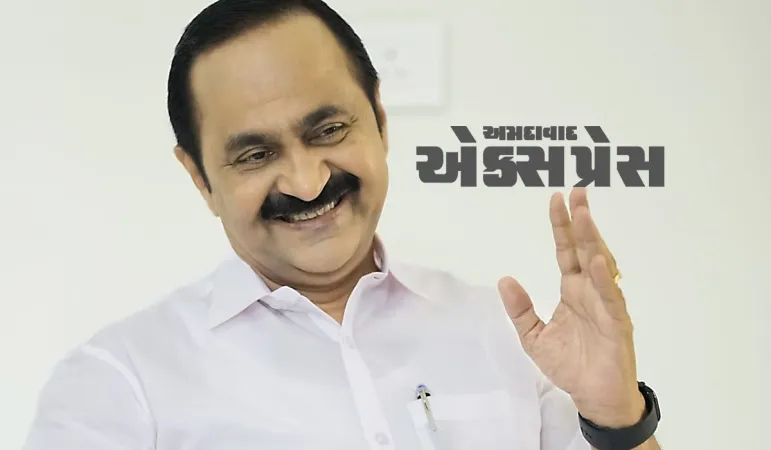
V. D. Satishan will take the oath as Chief Minister of Kerala today. Twenty ministers of the UDF government will also be included in the cabinet.
V. D. Satishan to take oath as Kerala Chief Minister today
After a decade, the Congress-led front has returned to power in Kerala. A grand swearing-in ceremony will be held in Thiruvananthapuram on Monday, May 18, 2026. V. D. Satishan will take the oath as Chief Minister of Kerala today and assume leadership of the state.
Along with him, twenty other ministers will also take their oaths of office today. The Governor, Rajendra Vishwanath Arlekar, will administer the oath to the new government at the Central Stadium. V. D. Satishan will take the oath as Chief Minister of Kerala today, marking the beginning of a new era.
All preparations for the swearing-in ceremony completed by Kerala Raj Bhavan
According to sources, the Congress high command approved Satishan’s name after lengthy discussions. He was unanimously elected as the leader in the meeting of the legislative party.
It is reported that the new cabinet provides appropriate representation to allied parties as well. The Indian Union Muslim League has been given five seats in this cabinet.
It is noteworthy that senior leaders Ramesh Chennithala and K. Muraleedharan will also take the oath as ministers. Meanwhile, Thiruvanchoor Radhakrishnan will be appointed as the new Speaker of the Kerala Legislative Assembly.
In this regard, V. D. Satishan submitted a letter of support from 102 legislators to the Governor. In the 140-member assembly, the United Democratic Front has secured a massive majority this time.
This political change is considered very significant in the politics of South India. The continuous ten-year rule of the LDF in Kerala has now permanently ended.
New government in Kerala faces economic challenges
After the formation of the new cabinet, meeting the expectations of the people will be a major test. Promises have been made to create new employment opportunities for the youth in Kerala. The new government will soon release a white paper to accelerate Kerala’s economic development.
According to sources, V. D. Satishan has announced a corruption-free administration. He has been active as the Leader of the Opposition in the assembly for the last five years.
However, managing internal factionalism within the Congress while running the government will also be a significant challenge. The Chief Minister has prepared a roadmap to fulfill all promises made to the people in a phased manner. The government’s main focus will be on establishing transparent administration through major changes in the administrative system.
This major victory in the Indian elections has generated immense enthusiasm among Congress workers across the country. Opposition parties have also assured constructive cooperation to the new government, respecting democratic norms.
Power change after election results heats up national politics
According to government sources, several top national leaders are expected to attend the swearing-in ceremony. After this grand victory, the Congress coalition in South India has strengthened its position.
Nevertheless, discussions on some minor issues are still ongoing among coalition partners regarding the distribution of ministerial portfolios. Ten days after the election results were announced, the suspense over power has finally ended.
As a result, the new government may hold its first cabinet meeting tomorrow and take major decisions. This meeting is expected to announce relief packages, especially for farmers and ordinary citizens.
It should be noted that the people of Kerala have given a clear mandate for change this time. The entire country will now watch in which direction the new Chief Minister Satishan leads Kerala.
V. D. Satishan will take the oath as Chief Minister of Kerala today. Along with him, a new cabinet of twenty members will also take the oath. The Congress-led UDF front has returned to power in Kerala after ten years. In the coming days, everyone’s attention will be on the first cabinet decisions and administrative changes of the new government.