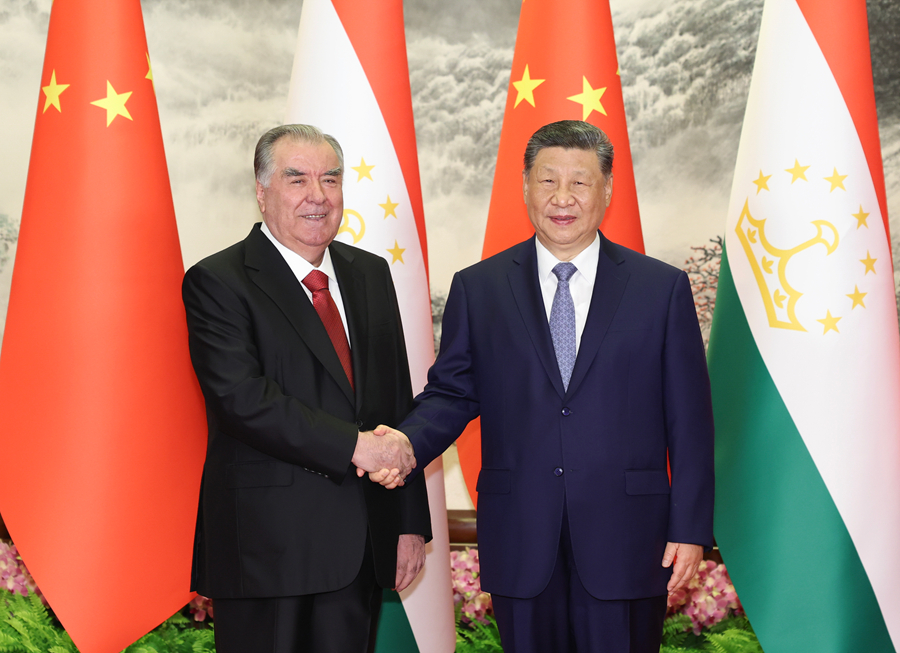
On the afternoon of May 12, President Xi Jinping held talks with Tajik President Emomali Rahmon, who was on a state visit to China, at the Great Hall of the People in Beijing.
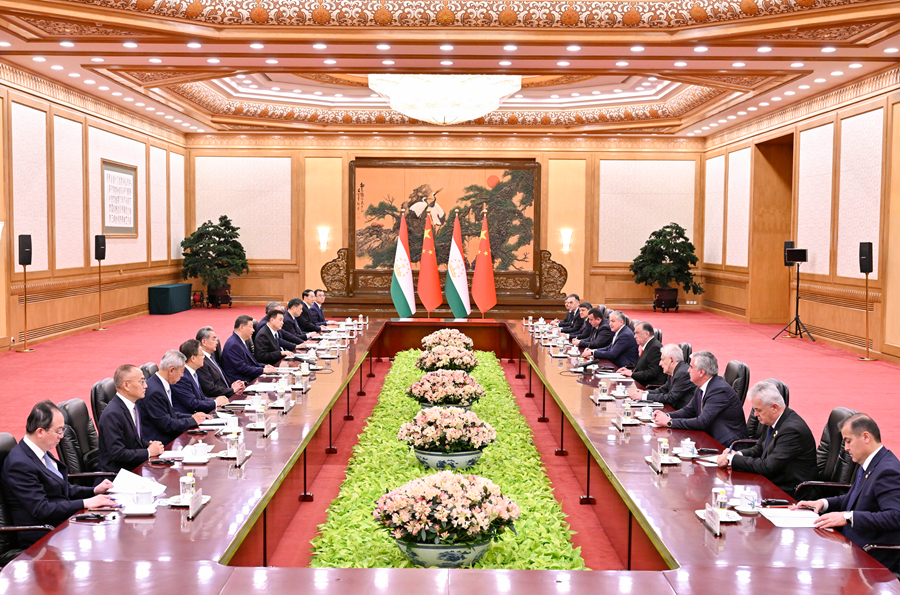
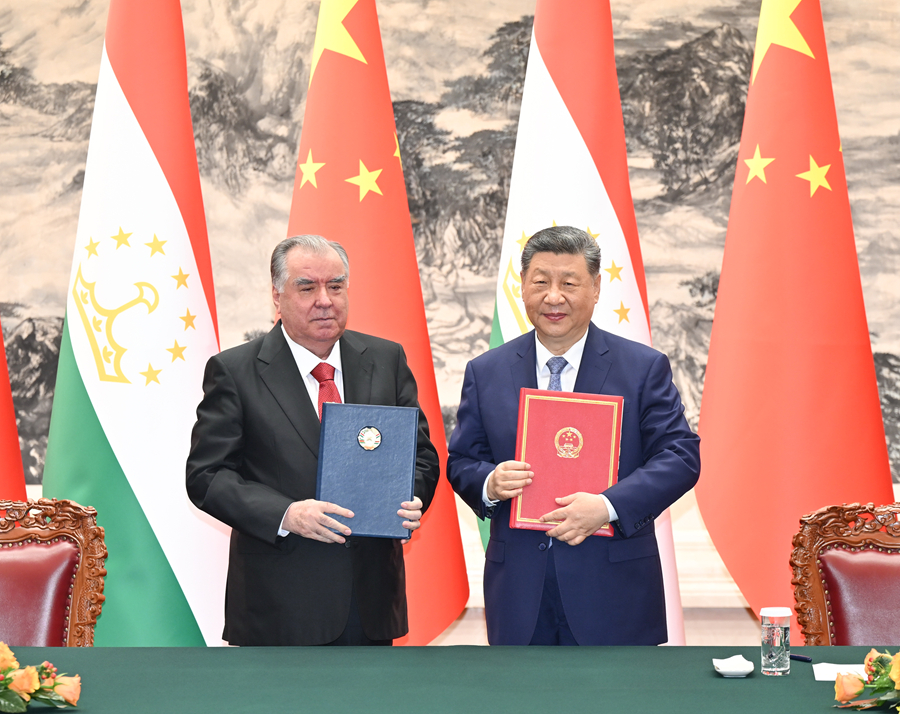
Xi Jinping congratulated Tajikistan on the 35th anniversary of its independence and its significant achievements in national development. Xi pointed out that mutual firm support is the core essence of China-Tajikistan relations. No matter how the external environment changes, China and Tajikistan will always be good neighbors supporting each other, good friends with sincerity and trust, and good partners for joint development. The signing of the China-Tajikistan Treaty on Permanent Good-Neighborly Friendship and Cooperation will fully demonstrate the high level of political trust between the two countries and provide solid guarantees for lasting friendship between China and Tajikistan. China is willing to work with Tajikistan to build an even closer China-Tajikistan community with a shared future, better benefiting the two peoples.
Xi emphasized that China will continue to support Tajikistan in pursuing a development path that suits its national conditions and support Tajikistan in safeguarding its national independence, sovereignty, and security. This year marks the beginning of China’s 15th Five-Year Plan, while Tajikistan is also fully advancing its National Development Strategy until 2030. The two sides should take high-quality Belt and Road cooperation as the main line, deeply align development strategies, and help achieve each other’s development goals. It is necessary to consolidate the good momentum of economic and trade cooperation, tap into cooperation potential, and simultaneously improve the scale and quality of trade and investment; ensure the implementation of key projects, expand cooperation in green energy, digital economy, smart cities, artificial intelligence, etc., and enhance the driving force of technological innovation; deepen people-to-people and cultural exchanges, create new paradigms of local cooperation, and promote mutual understanding and affinity between the two peoples; strengthen law enforcement and security cooperation, resolutely combat the three forces of terrorism, extremism, and separatism, and jointly maintain regional stability. China welcomes Tajikistan to join the International Mediation Organization and is willing to strengthen cooperation within the frameworks of the United Nations, the Shanghai Cooperation Organization, and the China-Central Asia mechanism, practice true multilateralism, and promote a more just and reasonable global governance system.
Rahmon stated that the new era comprehensive strategic partnership between Tajikistan and China is continuously deepening and developing, with fruitful cooperation in trade, investment, transportation, agriculture, and other fields, smooth progress in major projects, and increasingly close people-to-people and cultural exchanges, bringing benefits to the two peoples. The signing of the Tajikistan-China Treaty on Permanent Good-Neighborly Friendship and Cooperation marks a new historical stage in bilateral relations and will open up new prospects for long-term cooperation. Taiwan is an inalienable part of China, and Tajikistan firmly adheres to the One-China principle. Tajikistan looks forward to strengthening practical cooperation with China in key minerals, artificial intelligence, technological innovation, and other areas, facilitating personnel exchanges, enhancing educational exchanges, and promoting greater development of bilateral relations. President Xi Jinping’s global governance initiative is of great significance to the world. Tajikistan highly appreciates China’s tireless efforts for the political resolution of international hotspot issues and its important role in easing the situation in the Middle East. Tajikistan is willing to strengthen multilateral cooperation with China, jointly combat the three forces and transnational crimes, and maintain regional stability.
Great Hall of the People
Great Hall of the People
Beijing
Tiananmen Square
United Nations
Shanghai Cooperation Organization
Related news
“Several Regulations to Promote the Development of Private Economy in Hainan Free Trade Port Released”
Government Work Report Highlights Key Benefits for Parents
Beijing Huairou Releases a List of 100 Service Scenarios in Emerging Fields.

Revitalize Existing Patents to Accelerate the Commercialization of Research Outcomes