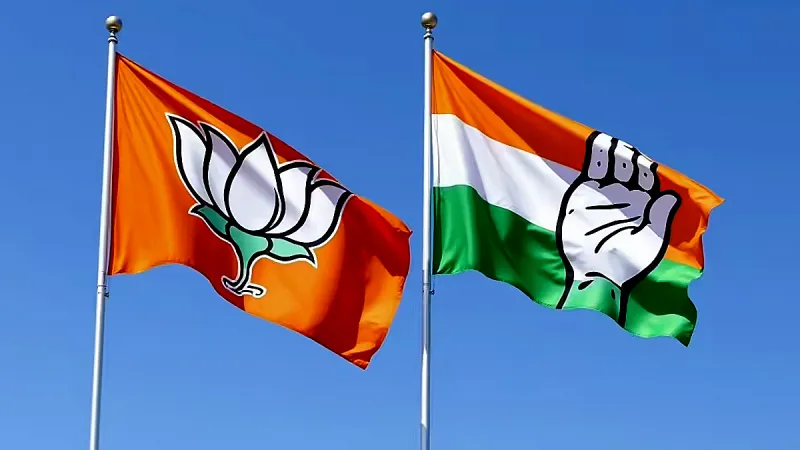
The Congress and BJP have announced their official candidate lists for the 24 Rajya Sabha seats to be held on June 18.
Congress and BJP announce candidate names for Rajya Sabha elections
Political heat has increased ahead of the biennial Rajya Sabha elections scheduled for June 18. On Thursday, the Congress and Bharatiya Janata Party released their official candidate lists. According to reports, several senior organizational faces have been included in these lists. The Election Commission has started the process of filing nomination papers.
Congress President Mallikarjun Kharge back in the fray from Karnataka
The Congress party has clarified its strategy by officially announcing seven candidate names. According to reports, party national president Mallikarjun Kharge will be sent back to the Rajya Sabha from Karnataka. Along with him, party media and publicity department head Pavan Kheda and Mansoor Ali Khan from Karnataka have also been given tickets.
According to sources, senior woman leader Meenakshi Natarajan has been fielded from Madhya Pradesh. Meanwhile, from Rajasthan, Neeraj Dangi has been given a Rajya Sabha ticket again, showing the party’s trust. Praveen Chakravarty will contest from the Tamil Nadu seat, and Pranav Jha from Jharkhand as official Congress candidates.
Additionally, the BJP has also announced names of 11 strong candidates, aiming to increase its strength in the upper house. The last date for filing nominations for this prestigious election has been set as June 8.
This development comes after the Election Commission issued an official notification on June 3 for 24 seats across 10 states. These seats include four each from Karnataka, Andhra Pradesh, and Gujarat. Additionally, elections will be held for three seats each from Rajasthan and Madhya Pradesh, two from Jharkhand, and one each from Arunachal, Mizoram, Manipur, and Meghalaya. By-elections in Maharashtra, Tamil Nadu, and Odisha will also be held on the same day.
BJP gives tickets to senior leaders for Gujarat and Rajasthan
The BJP’s central election committee has given opportunities to strategists and senior organizational leaders keeping state equations in mind. According to government sources, the names of Rajubhai Shukla, Mukeshbhai Rathwa, Mansinh Parmar, and Jitendra Meghjibhai Kanjariya have been finalized for the four seats in Gujarat. From Madhya Pradesh, party national general secretary Tarun Chugh and Rajnish Agarwal will go to the upper house.
Notably, in Rajasthan, the party has fielded heavyweight leaders like Satish Poonia and Alka Gurjar. Senior leader Tai Tagak from Arunachal Pradesh and state president A. Sharda Devi from Manipur have been allocated tickets. For the Rajya Sabha by-election in Odisha, the BJP has declared Devashish Samantaray as its official candidate.
Meanwhile, all political parties are making all-out efforts to secure victory based on the numerical strength of their legislators. Both the BJP and Congress have instructed their candidates to file nomination papers immediately.
Parliamentary equations in New Delhi and June 8 deadline
All candidate nomination papers will be submitted to Parliament and relevant assembly secretariats by June 8. After the voting process is completed on the morning of June 18, official results will be announced the same evening. The arrival of stalwarts like Mallikarjun Kharge and Satish Poonia will make the level of debate in the Rajya Sabha more interesting. In the coming days, the Telugu Desam Party will announce its candidates for the Andhra Pradesh seats.
For the 24 Rajya Sabha seats, the Congress has announced 7 candidates, including Mallikarjun Kharge and Pavan Kheda. In response, the BJP has finalized 11 candidates, including senior leaders from Gujarat and Rajasthan. Will the ruling NDA coalition succeed in securing a majority in the upper house after this new political distribution?