An agreement has been reached between the Punjab government and the Netherlands to establish a horticulture training center in Punjab. Technology-based farming will be promoted, modeled after the World Horticulture Center.
Horticulture Training Center in Punjab: Farmers will receive high-tech training modeled after the Netherlands’ World Horticulture Center, a major decision
Chandigarh: To transform the fortunes of Punjab’s farmers and diversify crops, the government under the leadership of Chief Minister is taking a major step. Under a strategic agreement, the Punjab government is fully prepared to establish a horticulture training center and a dedicated experience center in Punjab, modeled after the Netherlands’ ‘World Horticulture Center’ (WHC) ecosystem. The main aim of this center is to make traditional farming in the state technology-based and profitable.
Study of the Netherlands’ Agricultural Model
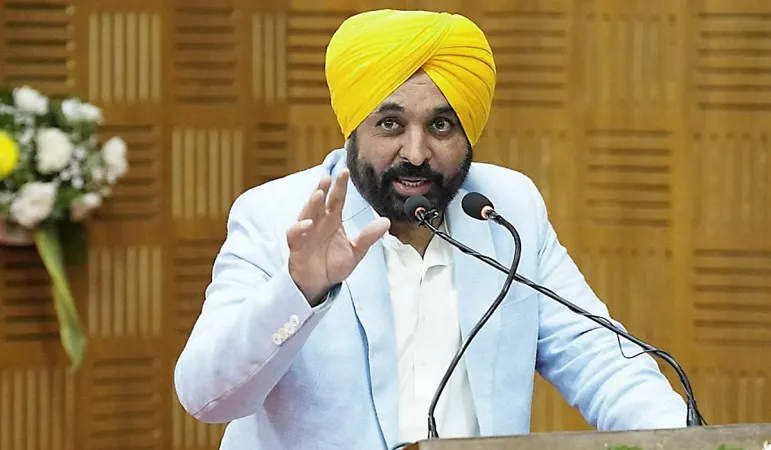
The Chief Minister is currently on a tour of the Netherlands for investment promotion outreach. During this trip, he visited leading institutions including the World Horticulture Center in Westland and the world-famous Keukenhof in Lisse. These institutions are world leaders in sustainable farming, floriculture, and high-capacity agricultural systems. Proposing the idea of establishing a horticulture training center in Punjab, the Chief Minister stated that this center will bring researchers, academic institutions, industry, and government onto a single platform to deliver skill development and modern solutions to the state.
Emphasis on Technology and Water Management
Praising the Netherlands’ greenhouse ecosystem, the Chief Minister said that productivity there has greatly increased due to robotics, artificial intelligence (AI), and modern irrigation systems. Through the horticulture training center in Punjab, Punjab’s farmers will also be trained in efficient water use, reducing dependence on pesticides, and greenhouse farming. Adopting this model will allow Punjab’s farmers to break free from the cycle of water-intensive crops and increase their income.
Development of Floriculture and Agri-Tourism
During the visit to Keukenhof, the Chief Minister studied the management model of the world’s largest flower exhibition. This model, spread over 32 hectares, integrates production, tourism, and global marketing. With the establishment of the horticulture training center in Punjab, focus will also be placed on developing floriculture clusters and promoting agri-tourism in the state. The government is keen to welcome large investments in this sector under the state’s ‘Industrial and Business Development Policy (IBDP) 2026’.
The Chief Minister added that the technological partnership and knowledge exchange resulting from this visit will help establish Punjab as a globally competitive agricultural hub.
Key Highlights:
A high-tech horticulture training center, similar to the Netherlands, will be established in Punjab.
The goal is to modernize farming through greenhouses, robotics, and AI.
Special emphasis on water conservation and pesticide-free farming.
Exports and tourism will get a boost through floriculture.
Upcoming Vision:
Preparation to develop Punjab as a global investment destination.
Incentives to turn farmers from traditional farming towards high-value crops.
Creation of new opportunities under Punjab’s 2026 industrial policy.
The establishment of the horticulture training center in Punjab will bring revolutionary changes to Punjab’s agricultural economy and connect farmers with world-class technology.