Crisis looms over trade and supply chain, Sanjay Malhotra says ‘wait and watch’ stance necessary
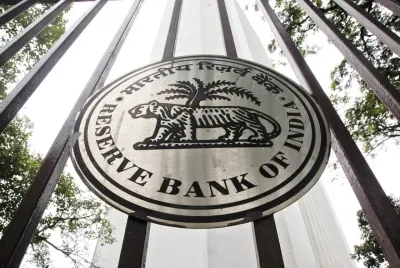
New Delhi/Princeton, April 21. Amid rising military tensions in West Asia (the Middle East), the Reserve Bank of India (RBI) has expressed its concerns regarding the country’s economy.
RBI Governor Sanjay Malhotra warned at an event held at Princeton University that if the conflict drags on, its ‘second-round effects’ could permanently increase inflation in India.
The Governor clarified that initially, it might seem like just a ‘supply shock,’ but disruptions to trade routes could cause price increases to spiral out of control. Due to this uncertainty, the central bank is currently adopting a ‘wait and watch’ strategy rather than making any firm promises on interest rates.
The significance of the West Asia region for the Indian economy can be gauged from the data shared by the Governor. Half of India’s total crude oil imports and one-fifth of its total imports come from this region. Additionally, one-sixth of the country’s total exports and about 40 percent of remittances from abroad depend on West Asia.
Since the start of the conflict, the Indian rupee has depreciated by more than 4%, but the Governor assured that India has a strong foreign exchange reserve of $710 billion, which is sufficient to handle any major crisis.
Despite global challenges, India’s internal digital and fiscal position remains quite satisfactory. In March 2026, UPI set a new record with 22 billion transactions, reflecting the momentum of the Indian economy.
Furthermore, the RBI is now working on a ‘Unified Lending Interface’ (ULI) to provide quick loans to small farmers. Governor Malhotra praised India’s fiscal strength, stating that the government’s fiscal deficit has decreased from 9.2% in 2021 to 4.4% now, which is a strong testament to the stability of the Indian economy during times of crisis.
New Delhi
New Delhi, the capital of India, was designed by British architects Edwin Lutyens and Herbert Baker and officially inaugurated in 1931, replacing Calcutta as the seat of British colonial power. It was built to the south of the older, historic city of Old Delhi, which had been the Mughal capital for centuries. Today, New Delhi serves as the political and administrative heart of India, blending colonial-era architecture with modern urban life.
Princeton
Princeton is a historic town in New Jersey, best known as the home of Princeton University, which was founded in 1746 and is one of the oldest and most prestigious universities in the United States. The town played a key role in the American Revolution, hosting the Battle of Princeton in 1777, where George Washington secured a crucial victory. Today, Princeton combines colonial-era architecture with a vibrant academic and cultural community.
West Asia
West Asia, often referred to as the Middle East, is a region of immense historical and cultural significance, known as the cradle of some of the world’s earliest civilizations, including Mesopotamia and the Persian Empire. It has been a crossroads for trade, religion, and conflict for millennia, giving rise to major religions like Judaism, Christianity, and Islam. Today, the region features a rich tapestry of cultural sites, from ancient ruins like Persepolis to modern metropolises, reflecting its complex and layered history.
Middle East
The Middle East is a historically and culturally rich region spanning from Egypt to Iran, often considered the cradle of civilization due to the rise of ancient Mesopotamian empires, the birth of major religions like Judaism, Christianity, and Islam, and the development of early writing and law. Its history includes periods of vast empires such as the Persian, Roman, and Ottoman, as well as significant cultural and scientific achievements during the Islamic Golden Age. Today, the region is known for its complex geopolitical dynamics, vast oil reserves, and diverse cultural traditions.
Reserve Bank of India
The Reserve Bank of India (RBI) is the central banking institution of India, established on April 1, 1935, under the Reserve Bank of India Act. It was originally set up as a private shareholders’ bank but was nationalized in 1949 following India’s independence. The RBI plays a crucial role in regulating the country’s monetary policy, issuing currency, and maintaining financial stability.
Princeton University
Princeton University, founded in 1746 as the College of New Jersey, is one of the oldest and most prestigious Ivy League institutions in the United States. Originally located in Elizabeth before moving to Newark and finally settling in Princeton in 1756, the university played a notable role in the American Revolution, hosting the Continental Congress in its Nassau Hall. Today, it is renowned for its historic Gothic architecture, rigorous academics, and influential alumni, including two U.S. presidents.
UPI
UPI, or the University of the Philippines Integrated School, is a prestigious secondary education institution in Quezon City, Philippines, established in 1952 as part of the University of the Philippines system. It is known for its rigorous academic curriculum and strong emphasis on research and holistic development, producing many notable alumni in various fields. The school has a rich history of fostering intellectual excellence and critical thinking among Filipino youth, contributing to the nation’s educational landscape.
Unified Lending Interface
The Unified Lending Interface (ULI) is a digital infrastructure initiative in India, developed by the Reserve Bank of India, designed to streamline and expedite the lending process by enabling seamless data sharing between financial institutions and borrowers. It aims to reduce paperwork and processing time, particularly for small and rural borrowers, by integrating diverse data sources like land records and cash flow information. Launched as a pilot in 2023, ULI builds on the success of India’s Unified Payments Interface (UPI) to make credit more accessible and efficient.