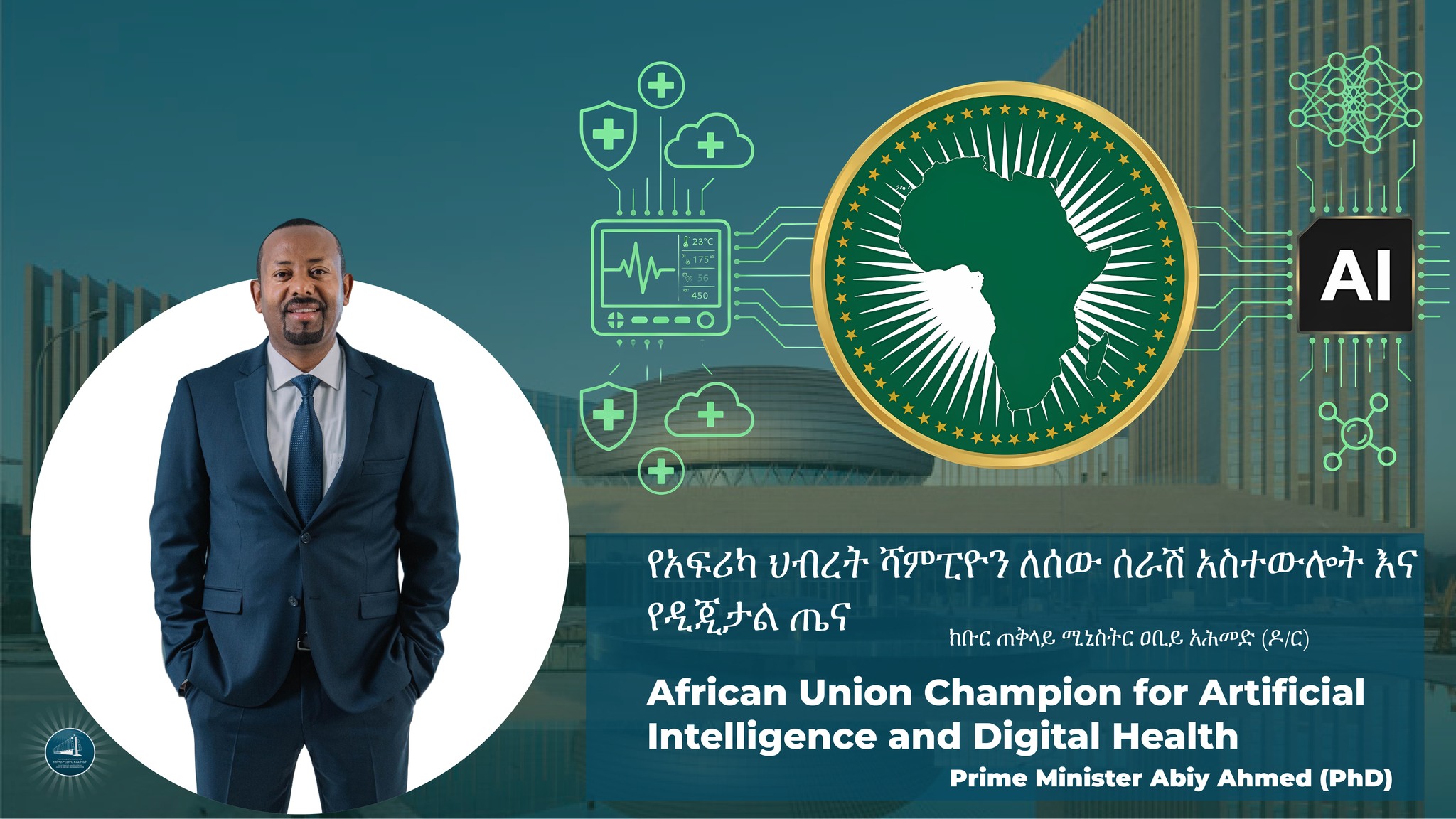
This announcement from the African Union underscores Ethiopia’s growing role in shaping Africa’s technological future, particularly in artificial intelligence and innovation-driven development.
The appointment letter stated: “Your leadership has advanced digital transformation and emerging technologies, establishing artificial intelligence as a key tool for achieving sovereignty, efficiency, and inclusive growth in Africa.”
The letter also noted that “your continued support for strategic independence and technological empowerment will be pivotal in making the continent a global leader in the responsible and equitable adoption of artificial intelligence.”
This recognition comes as Ethiopia continues to make significant progress in digitalization and artificial intelligence.
Over the past few years, Ethiopia has rapidly expanded its digital infrastructure, launched e-government services, and invested in innovation ecosystems aimed at fostering a knowledge-based economy.
During the 39th African Union Summit this year, the leader expressed Ethiopia’s ambition to make Africa a global leader in the age of intelligence.
The leader stated: “This institution will combine human values with artificial intelligence, local context with global relevance, and scientific rigor with practical impact.”
At the 24th Summit of the Common Market for Eastern and Southern Africa (COMESA), the leader affirmed that digital transformation remains a cornerstone of Ethiopia’s economic reform agenda.
Since taking office in 2018, the leader has consistently advocated for technological transformation as a driver of economic resilience, industrialization, and continental competitiveness.
This latest appointment is expected to strengthen Ethiopia’s role in advancing Africa’s digital transformation agenda, particularly in harnessing artificial intelligence and digital health solutions to address development challenges and improve service delivery across the continent.