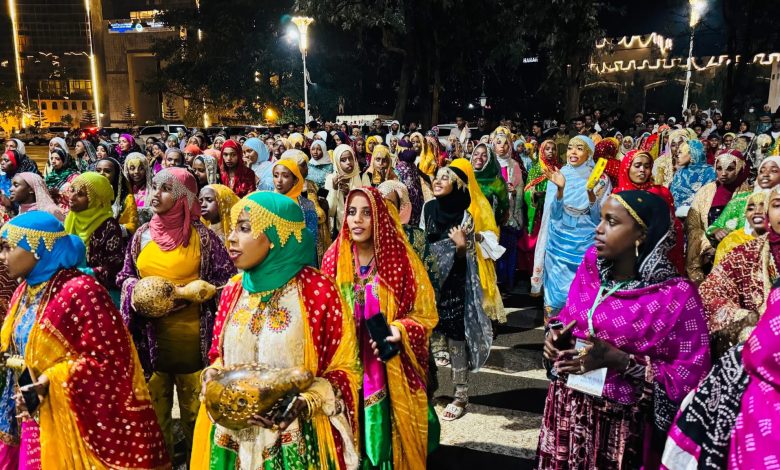
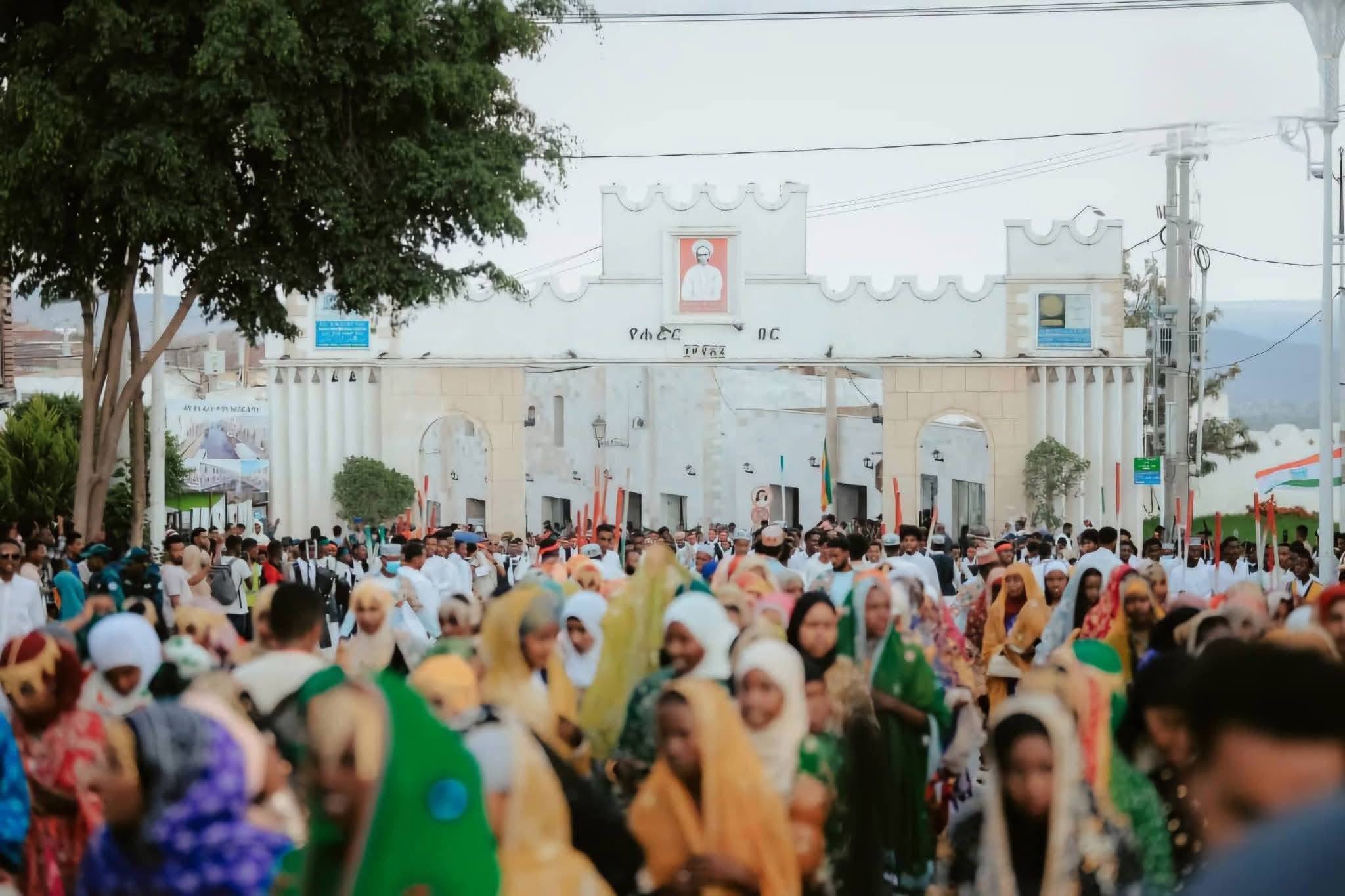
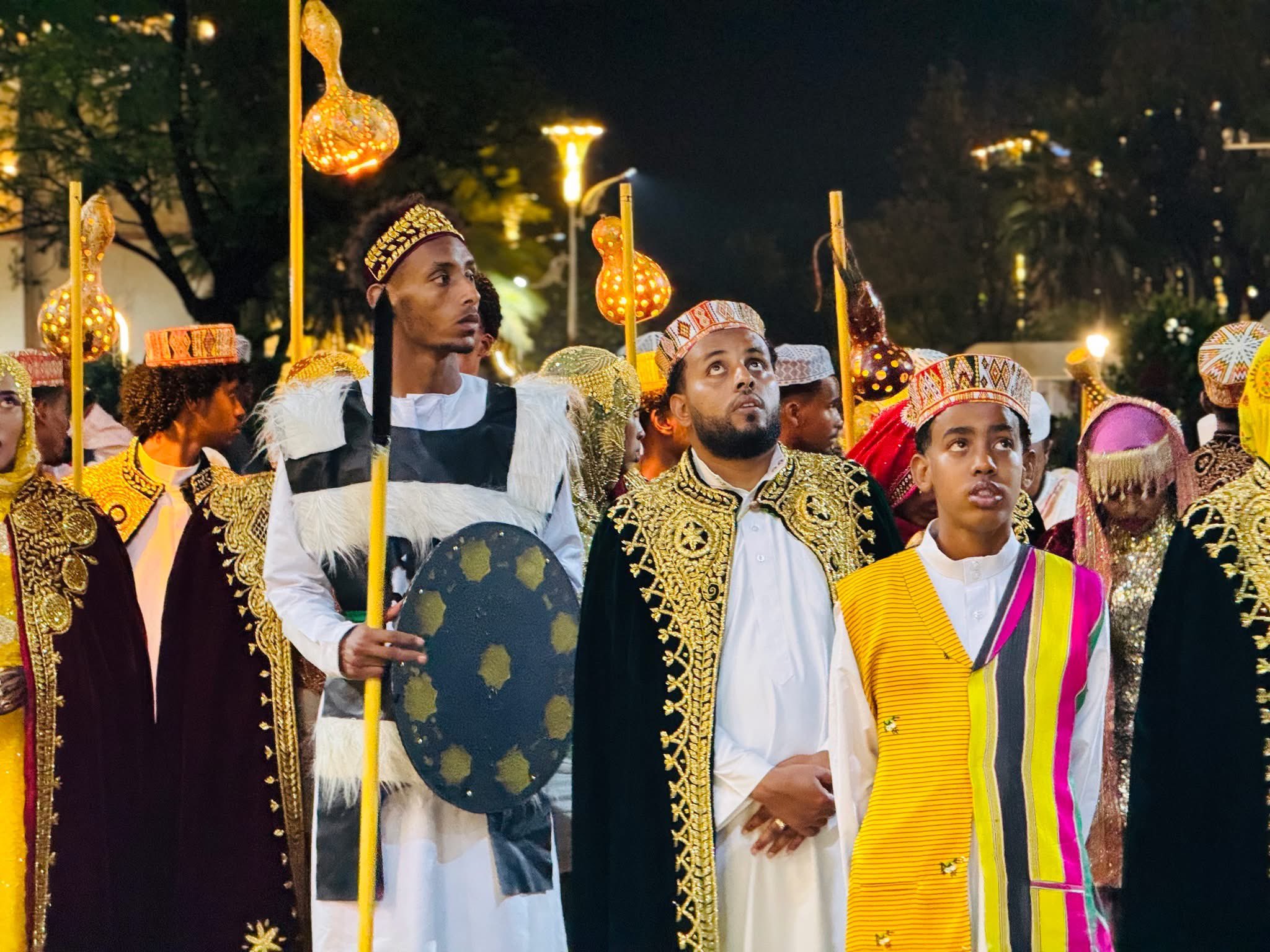
The “shrines of Aw Shulum Ahmed” refer to the sacred tomb complex of Sheikh Ahmed bin Idris al-Fasi (1760–1837), a revered Moroccan Sufi scholar and founder of the Idrisi order. Located in the town of Sabya in the Jizan region of southwestern Saudi Arabia, the site became a major center of Islamic learning
Harar
Harar is a historic walled city in eastern Ethiopia, founded between the 7th and 11th centuries, which became a major Islamic center and trade hub. Known as the “City of Saints,” it is famous for its unique architectural heritage, including 82 mosques and its distinctive, colorful hyena-feeding tradition. UNESCO designated Harar Jugol as a World Heritage Site in 2006 for its cultural importance and exceptional example of a traditional African Muslim settlement.
Harari region
The Harari region is a small, culturally distinct zone in eastern Ethiopia, centered on the historic walled city of Harar Jugol, a UNESCO World Heritage Site. Founded in the 7th century, it became a major Islamic center and a key hub for trade between Africa, the Middle East, and Asia. Today, it is renowned for its unique Harari people, its dense maze of alleys with traditional houses, and its ancient practice of feeding wild hyenas.
historic walled city
A historic walled city is a settlement enclosed by defensive stone or brick fortifications, typically dating from medieval or early modern periods. These walls were originally constructed for protection against invasions and often signify a city’s strategic or economic importance. Many, such as Carcassonne in France or Dubrovnik in Croatia, have been preserved and are now UNESCO World Heritage Sites, offering insight into historical urban planning and defense.
shrines of Aw Shulum Ahmed
The “shrines of Aw Shulum Ahmed” refer to the sacred tombs of Sheikh Ahmed, a revered 13th-century Islamic scholar and saint, located in the town of Aw Barkhadle in Somaliland. These shrines are a significant pilgrimage site and a center for religious learning, reflecting the deep Sufi traditions of the Horn of Africa. They have served for centuries as a place of worship, community gathering, and cultural preservation for the local Somali population.
shrines of Aw Akibra
The “shrines of Aw Akibra” refer to a collection of sacred sites in Morocco dedicated to Sidi Ahmed Ou Akbir, a revered 16th-century Sufi saint and scholar of the Regraga tribe. These shrines, particularly the main *zaouia* in the village of Aït Ou Akbir near Essaouira, serve as important pilgrimage destinations and centers for the annual Regraga seven-week pilgrimage circuit, which celebrates the tribe’s historical role in spreading Islam in the region.
UNESCO Representative List of the Intangible Cultural Heritage of Humanity
The **UNESCO Representative List of the Intangible Cultural Heritage of Humanity** is an international register established in 2008 to safeguard and raise awareness of living cultural practices, traditions, and expressions worldwide. It includes diverse elements such as performing arts, rituals, craftsmanship, and oral traditions, recognizing their importance to community identity and cultural diversity. Unlike sites on the World Heritage List, this list protects non-physical cultural heritage, ensuring its transmission to future generations.
UNESCO World Heritage Site
A UNESCO World Heritage Site is a landmark or area with legal protection by an international treaty administered by UNESCO, the United Nations Educational, Scientific and Cultural Organization. These sites are selected for their outstanding cultural, historical, scientific, or natural significance to humanity, such as the Great Wall of China or the Galápagos Islands. The program was founded in 1972 with the mission to identify, protect, and preserve heritage of universal value for future generations.
City of Saints
The “City of Saints” is a common epithet for **Córdoba, Spain**, renowned for its historic Jewish Quarter (*Juderia*) and the magnificent **Mosque-Cathedral**. Originally a major Roman settlement, it flourished as the capital of the Islamic Caliphate of Córdoba in the 10th century, becoming a world center of learning and culture. Following the Christian *Reconquista*, it earned its nickname due to the many churches, convents, and shrines dedicated to saints that were subsequently built within its ancient walls.