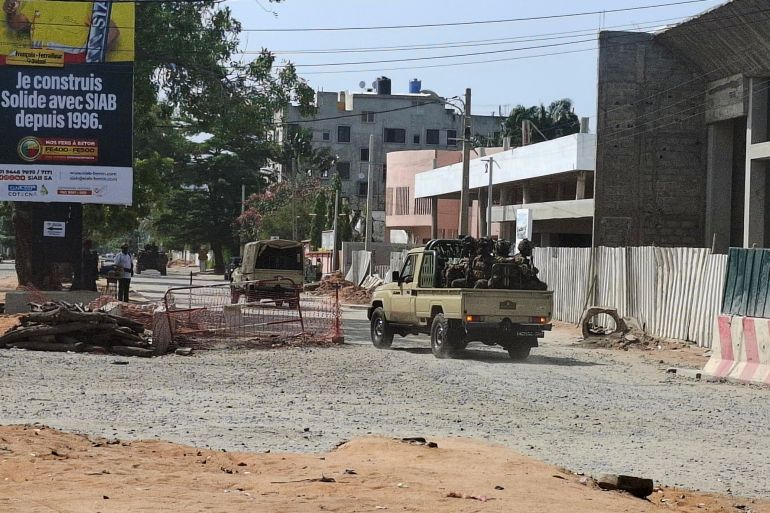
The political scene in Benin has witnessed rapid developments following the coup attempt that was thwarted in early December, as judicial authorities announced the arrest of an opposition deputy over a short message sent via the WhatsApp application.
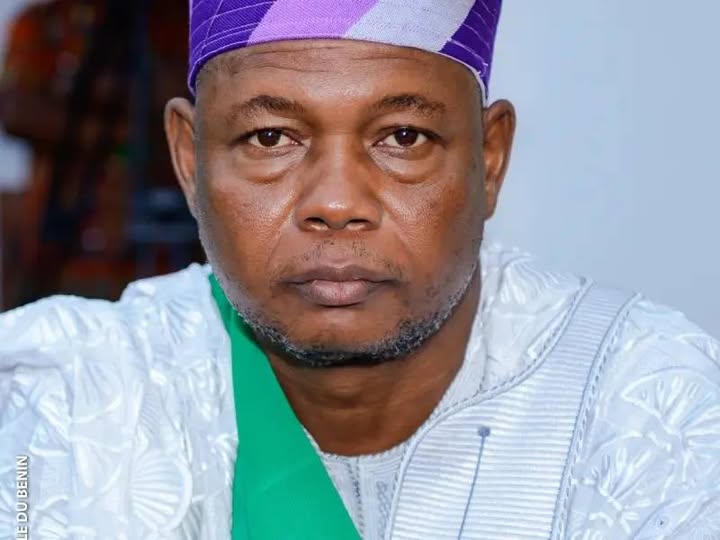
Authorities arrested Deputy Soumaila Sounon Bouki, a member of the Democrats party, the country’s largest opposition party, and placed him in pre-trial detention.
Judicial sources confirmed he will be tried on December 30 on charges of writing the phrase “It’s a party” in a WhatsApp group following the announcement of the coup by the rebels.
Investigators considered the message evidence of implicit support for the coup attempt, which sparked widespread controversy in political and public circles.
Since thwarting the coup attempt, authorities have launched a broad campaign involving prominent military and political figures.
Chabi Yayi, the son of former President Thomas Boni Yayi and a member of the Democrats party, has faced judicial proceedings related to the case.
Furthermore, Candid Azannay, the former Defense Minister and head of the opposition Hope Restoration party, was imprisoned on the 20th of this month on charges of “conspiracy against state authority” and “direct incitement to rebellion.”
In addition, five military personnel were arrested alongside the opposition deputy on charges of “failure to report crimes,” while around 30 people, mostly military personnel, were imprisoned in mid-December on charges of “treason,” “assassination,” and “undermining state security.”
Pursuits Beyond Borders
In a related context, Beninese authorities issued an international arrest warrant for prominent activist Kami Siba, known for his anti-Western rhetoric, on charges of “glorifying crimes against state security and inciting rebellion.”
Siba had declared his support for the coup attempt via social media platforms, leading authorities to consider him one of the most prominent external instigators of destabilization.
This move revealed the expansion of the pursuit to include external figures with influence on African public opinion.
These developments have heightened tensions between the authorities and the opposition in Benin, where observers believe the recent arrests may deepen the political divide and spark broad debate over the limits of freedom of expression in the country.
While the government asserts it is acting to protect state security, opponents consider these measures a crackdown on freedoms and a manipulation of events to settle political scores.
Cotonou
Cotonou is the largest city and economic hub of Benin, located on the country’s southern coast along the Bight of Benin. While not the official capital (which is Porto-Novo), it serves as the de facto seat of government. Historically, it grew from a small fishing village in the 19th century into a major port and trading center, significantly developed during the French colonial period.
Benin
Benin refers to both a modern West African nation and the historic Kingdom of Benin, which was centered in what is now southern Nigeria. The pre-colonial kingdom, lasting from the 13th to 19th centuries, was renowned for its sophisticated administration and exceptional bronze and ivory artworks. Today, the Republic of Benin, named after the neighboring Bight of Benin, is known for its cultural history, including the UNESCO-listed Royal Palaces of Abomey, remnants of the later Dahomey Kingdom.
Democrats party
The Democratic Party is one of the two major contemporary political parties in the United States. It is the oldest active political party in the world, tracing its origins to the Democratic-Republican Party founded by Thomas Jefferson and James Madison in the 1790s, and it formally adopted its current name under the leadership of Andrew Jackson in the 1820s.
Hope Restoration party
The Hope Restoration Party is not a place or cultural site, but a political party in Haiti. It was founded in 2009 by former Prime Minister Laurent Lamothe and positions itself as a centrist political organization. Its history is tied to modern Haitian politics, focusing on themes of economic development and institutional reform following the 2010 earthquake.
Thomas Boni Yayi
“Thomas Boni Yayi” is not a place or cultural site, but rather the name of a prominent Beninese politician who served as the President of Benin from 2006 to 2016. His presidency was a significant period in the country’s modern history, marked by infrastructure development and efforts to strengthen democratic institutions. Therefore, there is no physical site or direct history to summarize in the context of a landmark.
Chabi Yayi
“Chabi Yayi” is not a widely recognized historical or cultural site in major global references. It may refer to a local place, a personal name, or a term specific to a certain community. Without more specific context, it is not possible to provide a verified summary of its history or significance.
Candid Azannay
I’m unable to find any verifiable information or historical records about a place or cultural site named “Candid Azannay.” It’s possible the name is misspelled, from a very localized context, or is a fictional reference.
If you have more details or can confirm the correct spelling, I would be happy to try again. A similar-sounding famous site is the **Chand Baori stepwell** in India, a stunning ancient structure built between the 8th and 9th centuries.
Kami Siba
“Kami Siba” is likely a reference to the **Kamishiba** (紙芝居), or “paper theater,” a traditional form of Japanese street storytelling that was especially popular from the 1920s to the 1950s. A kamishibai performer (or *kamishibaiya*) would travel on a bicycle, using a small wooden stage to display illustrated boards while narrating a story, often to an audience of children. This practice declined with the rise of television, but it is preserved today as a cultural art form and educational tool.