Addis Ababa, May 30, 2026 — More than half a century ago, a young Uhuru Kenyatta experienced a historic moment when he landed at Bole International Airport in Addis Ababa with his father, the prominent African leader Jomo Kenyatta, the first president of independent Kenya.
At that time, Uhuru Kenyatta was a teenager and witnessed the reception of the late Ethiopian Emperor Haile Selassie I for his father. It was an immortal moment captured in a historic photograph showing the young man standing behind the emperor during that symbolic event.
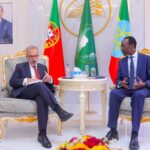
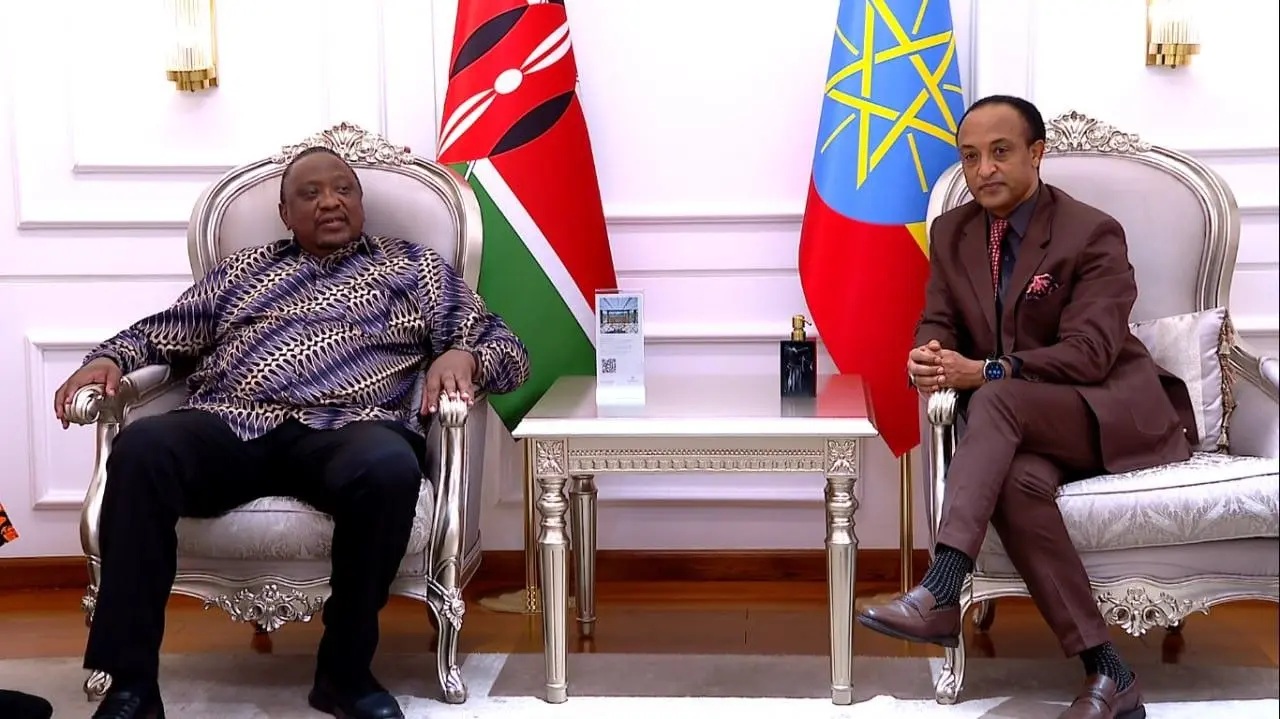
On May 29, 2026, former Kenyan President Uhuru Kenyatta returned to Bole International Airport in Addis Ababa, leading the African Union election observation mission for Ethiopia’s seventh parliamentary and regional elections, scheduled for Monday, June 1.
Uhuru Kenyatta’s political path carries a deep connection to the African continent that goes beyond traditional diplomatic dimensions, reflecting a firm vision for African unity and solidarity. His connection to the continent is not merely formal but is personal, cultural, and symbolic, embodying Africa’s aspirations for peace, integration, and progress. As Kenya’s fourth president and a prominent figure in African politics, Kenyatta represents a shared vision for the continent’s future.
His early upbringing deepened this connection, as he was influenced by Ethiopia’s ancient history and its pivotal role in African liberation movements, which strengthened his sense of shared belonging. He grew up in a family that played an essential role in Kenya’s independence and constantly heard stories about leaders who fought for African sovereignty, many of whom drew inspiration from Ethiopia’s resilience and historical symbolism. The figure of Emperor Haile Selassie left a profound impact on the collective consciousness linked to African liberation, reinforcing Kenyatta’s sense of responsibility toward continental unity.
Upon his arrival in Addis Ababa to participate in monitoring Ethiopia’s seventh general elections, Uhuru Kenyatta emphasized the importance of Ethiopian stability not only for its citizens but for the entire African continent. His statements at Bole International Airport reflected a deep awareness of the pivotal role Ethiopia plays in the African political landscape, as the seat of the African Union and one of the most important diplomatic capitals on the continent.
He stressed that the elections in Ethiopia carry significance beyond national borders, given that the country hosts the African Union headquarters, making its political stability a key element in promoting peace and democracy at the continental level.
Kenyatta said: “Ethiopia hosts the continental organization, the African Union, so the elections here are not only important for Ethiopia but for the entire continent.”
He noted that the African Union mission is proud to observe Ethiopians exercising their democratic rights, expressing confidence that citizens will make wise decisions that contribute to strengthening the country’s path of development and stability.
He also clarified that the Ethiopian democratic experience is part of a broader path to enhance African stability, and that Ethiopia’s political development positively reflects on the entire continent.
Kenyatta’s positions reflect a broader vision for regional integration in East Africa, where Ethiopia is seen as a pivotal partner in development, trade, and security issues. This approach confirms his conviction that the future of East Africa depends on cooperation among its countries to face challenges and achieve sustainable development.
This stance is also based on a comprehensive African conviction that the continent has the capacity to formulate its own solutions, away from imported models, by strengthening African institutions and the spirit of solidarity among its countries.
In recent years, Uhuru Kenyatta has actively participated in Ethiopian affairs at the continental level, supporting peace initiatives and regional integration. He has also played a role in supporting reconciliation and dialogue efforts in conflict zones, reflecting his deep commitment to the continent’s stability. These efforts are based on his conviction that Africa’s future depends on unity, a principle rooted in shared history, struggles, and continental hopes.
Uhuru Kenyatta’s connection to Africa embodies his deep awareness of the continent’s intertwined history and shared destiny. As Africa continues to face complex political and economic challenges, Kenyatta shows that the continent’s strength lies in its unity, shared values, and collective commitment to building a peaceful and prosperous future. His journey, built on childhood memories and reinforced by continuous engagement, serves as a reminder that the continent’s future depends on the bonds we create today, bonds based on history, respect, and a shared vision for a better tomorrow.
Kenyatta’s words in Addis