

Not long ago, copyright represented the first line of defense for creators, thinkers, and cultural producers against unauthorized reproduction, infringement, and exploitation of their works. Creativity was closely linked to human identity, and copyright laws, although sometimes slow, worked to protect this creativity in its original form, granting its owners professionalism, ownership, and deserved profit.
New Dilmun
New Dilmun is a planned city in Bahrain, conceived in the early 21st century as a modern development inspired by the ancient Dilmun civilization, a major Bronze Age trade hub. Located near the capital Manama, the project aims to blend contemporary urban living with the historical legacy of Dilmun, which flourished around 3000 BCE as a key link between Mesopotamia and the Indus Valley. Though still under development, it represents a cultural and economic revival of Bahrain’s ancient heritage.
New Dilmun
New Dilmun is a modern archaeological site in Bahrain, named after the ancient Dilmun civilization that thrived in the region around 3000 BCE. Discovered in the 1990s, it features burial mounds and settlements that provide insights into the trade and culture of the Dilmun era. The site highlights Bahrain’s historical role as a key hub in ancient Mesopotamian trade networks.
New Dilmun
New Dilmun is a modern archaeological site in Bahrain, named after the ancient Dilmun civilization that flourished in the region around 3000 BCE. It features reconstructed traditional houses, a museum, and exhibits that showcase the history, culture, and trade networks of the Dilmun era. The site serves as an educational and cultural attraction, offering visitors insight into Bahrain’s rich pre-Islamic past.
Manama
Manama is the capital and largest city of Bahrain, with a history dating back to ancient times as a key port in the Persian Gulf. It has been a significant center for trade, pearl diving, and commerce, later becoming a modern financial hub. Today, Manama blends its rich cultural heritage with contemporary architecture, featuring landmarks like the Bahrain National Museum and the Bab Al Bahrain souk.
Dilmun civilization
The Dilmun civilization was an ancient trading society that thrived from around 3000 to 1300 BCE in the region of modern-day Bahrain, Kuwait, and eastern Saudi Arabia. It is often described as a “land of the living” in Mesopotamian texts, serving as a crucial hub for trade between Mesopotamia and the Indus Valley, exchanging goods like copper, ivory, and pearls. The civilization declined after the second millennium BCE, but its legacy is preserved in archaeological sites such as the Bahrain Fort and burial mounds.
Mesopotamia
Mesopotamia,
New Dilmun
New Dilmun is a modern archaeological and cultural site in Bahrain, named after the ancient Dilmun civilization that thrived in the region around 3000 BCE. The site features reconstructed traditional buildings and exhibits that highlight the history, trade, and daily life of the Dilmun people, who were key players in ancient Mesopotamian commerce. It serves as an educational and tourist attraction, connecting visitors to Bahrain’s rich pre-Islamic heritage.
Manama
Manama is the capital and largest city of Bahrain, with a history dating back to ancient times as a key port in the Persian Gulf. It was a center for pearl diving and trade, later developing into a modern financial hub with a skyline of skyscrapers. Today, Manama blends its rich cultural heritage, seen in sites like the Bahrain National Museum and traditional souks, with a cosmopolitan atmosphere.
Bahrain National Museum
The Bahrain National Museum, opened in 1988, is the country’s oldest and most prominent museum, located in Manama. It showcases the rich history of Bahrain, from the ancient Dilmun civilization over 4,000 years ago to the modern pearl-diving era and pre-oil life. The museum’s extensive collection includes archaeological artifacts, traditional crafts, and natural history exhibits, offering a comprehensive overview of Bahrain’s cultural heritage.
Bab Al Bahrain
Bab Al Bahrain, meaning “Gate of Bahrain,” is a historic archway located in the heart of Manama, the capital of Bahrain. Built in 1949, it once served as the main entrance to the Manama Souq and housed the government’s administrative offices, including the customs and passport departments. Today, it stands as a iconic symbol of the city’s heritage, marking the gateway to the bustling traditional market and the modern financial district beyond.
Dilmun civilization
The Dilmun civilization was an ancient trading society that flourished from around 3000 BCE in what is now Bahrain, Kuwait, and eastern Saudi Arabia. It is frequently mentioned in Mesopotamian texts as a prosperous, sacred land and a vital link in trade routes between Mesopotamia and the Indus Valley. Often referred to as the “Land of the Living” in Sumerian mythology, Dilmun’s legacy includes extensive burial mounds and artifacts that reveal its significance as a major commercial and cultural hub.
Bahrain Fort
Bahrain Fort, also known as the Fort of Bahrain or Qal’at al-Bahrain, is an ancient archaeological site located on the northern coast of Bahrain. It was once the capital of the Dilmun civilization, one of the oldest in the region, and has been continuously inhabited for nearly 5,000 years, with layers of occupation from the Dilmun, Portuguese, and Islamic periods. Recognized as a UNESCO World Heritage Site, the fort offers a glimpse into the island’s rich history as a major trade hub in the Persian Gulf.
Mesopotamia
Mesopotamia, often called the “cradle of civilization,” was an ancient region located between the Tigris and Euphrates rivers, in modern-day Iraq and parts of Syria and Turkey. It was home to some of the world’s earliest civilizations, including the Sumerians, Akkadians, Babylonians, and Assyrians, who developed writing, law codes, and complex urban societies around 3500 BCE. The region’s rich history includes the famous Hanging Gardens of Babylon and the Epic of Gilgamesh.
Indus Valley
The Indus Valley was home to one of the world’s earliest major civilizations, the Indus Valley Civilization (c. 3300–1300 BCE), which flourished in what is now Pakistan and northwest India. Known for its advanced urban planning, sophisticated drainage systems, and trade networks, major cities like Mohenjo-Daro and Harappa were centers of this culture. The civilization declined around 1900 BCE, possibly due to climate change or shifting rivers, and remains a key subject of archaeological study.
Related news

Will the AI Chat Program Change Our Lives?
Yesterday
OpenAI, an artificial intelligence soft...

African Confederation: Wydad Falls to Maniema and Shares Group Lead
Moroccan Wydad Athletic Club lost in the Democrati...
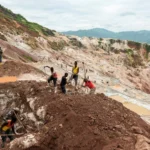
More than 200 killed in mine collapse in eastern Congo.
The Rubaya coltan mine in the east of the country ...
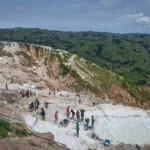
More than 200 dead at mining site in eastern Democratic Republic of Congo.
Miners spread out at a mining quarry in Rubaya, Co...

Why do we prefer to sympathize with groups rather than individuals?
A Swedish study reveals that 53% of people empathi...