African Confederation: Wydad Falls to Maniema and Shares Group Lead
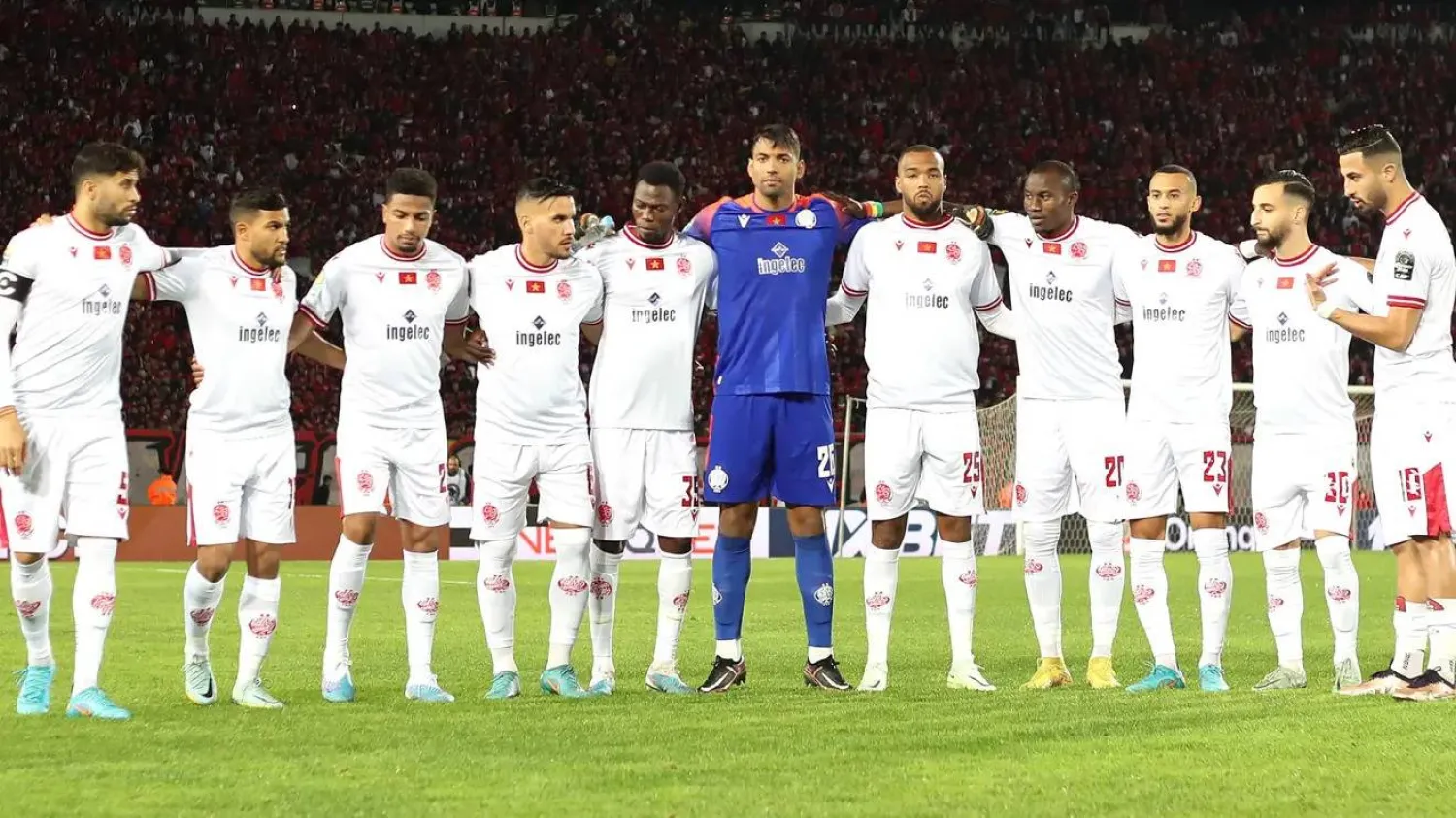
Moroccan Wydad Athletic Club lost away from home to Maniema Union of the Democratic Republic of Congo 1-2 in the city of Lubumbashi, in the fourth round of the group stage of the African Confederation Cup on Sunday.
The home side opened the scoring in the 33rd minute after an organized attack ended with a pass from Shadumo Mokini to Beni Namboka, who fired a powerful shot from inside the penalty area that settled in the net of goalkeeper Mehdi Benabid.
In the second half, Maniema Union continued their attacking pressure to double the score in the 61st minute through Clément Pétroïba, who received the ball on the edge of the penalty area and fired a powerful shot off the right post before the ball rebounded off the back of goalkeeper Benabid into the net.
Wydad reduced the deficit in the 65th minute from a penalty kick, awarded by the referee after Nigerian goalkeeper Detan Ogundari fouled striker Oussam Ben Yedder, which was successfully converted by Hamza El Hannouri.
The home side raised their tally to 9 points from 4 matches, tying Wydad at the top of Group Two, while Tanzanian Azam occupies third place with three points, and Nairobi United sits in fourth place without points before their match later on Sunday.
Algerian CR Belouizdad won in South Africa (CAF)Tunisian Espérance de Tunis returned with a draw from Tanzania (CAF)
Democratic Republic of Congo
The Democratic Republic of Congo (DRC) is a vast country in Central Africa, not a single site, with a complex history marked by the pre-colonial Kongo Kingdom, the brutal colonial rule of King Leopold II’s Congo Free State, and Belgian administration. It gained independence in 1960 and has since endured prolonged conflict and political instability, despite its immense mineral wealth and biodiversity, including the Congo Rainforest.
Lubumbashi
Lubumbashi is the second-largest city in the Democratic Republic of the Congo, founded in 1910 by Belgian colonists as the mining town of Élisabethville. Its modern history and growth are deeply tied to the rich copper and cobalt deposits of the Katanga region, which it served as the capital until 2015. Today, it remains a major economic and cultural hub for southeastern DRC.
African Confederation Cup
The African Confederation Cup is the second-tier continental club football competition organized by the Confederation of African Football (CAF), first launched in 2004. It was created from a merger of the CAF Cup and the African Cup Winners’ Cup, serving as a tournament primarily for domestic cup winners and league runners-up from across Africa.
Moroccan Wydad Athletic Club
The Wydad Athletic Club is a historic Moroccan sports club founded in 1937 in Casablanca during the French protectorate. It was established by Moroccan nationalists as a symbol of cultural identity and resistance, quickly becoming a pillar of Moroccan football and one of Africa’s most successful clubs.
Maniema Union
The Maniema Union is a professional football club based in Kindu, Democratic Republic of the Congo. Founded in 1937, it is one of the oldest and most historically significant clubs in Congolese football, having won multiple national championships. The club is a major source of regional pride in the Maniema Province.
Abu Dhabi
Abu Dhabi is the capital and second-most populous city of the United Arab Emirates, located on an island in the Persian Gulf. Historically a small fishing and pearling village, its modern history began in the late 18th century with the settlement of the Bani Yas tribe, and it was transformed into a global metropolis following the discovery of oil in the mid-20th century. Today, it is a major political, economic, and cultural hub, known for landmarks like the Sheikh Zayed Grand Mosque and Louvre Abu Dhabi.
South Africa
South Africa is a country located at the southern tip of the African continent, renowned for its diverse landscapes, wildlife, and multicultural society often described as the “Rainbow Nation.” Its modern history is profoundly shaped by colonialism and the institutionalized racial segregation of apartheid, which ended in 1994 with the country’s first democratic elections and the presidency of Nelson Mandela. Today, it is a constitutional democracy with a rich cultural heritage spanning indigenous groups, and European and Asian influences.
Tunisia
Tunisia is a North African country with a rich history shaped by ancient civilizations, including the Phoenicians, Romans, and Arabs. It is home to the archaeological site of Carthage, a major power of the ancient Mediterranean, and the well-preserved Roman amphitheater of El Jem. The country’s culture reflects this diverse heritage, blending Arab, Berber, and Mediterranean influences.