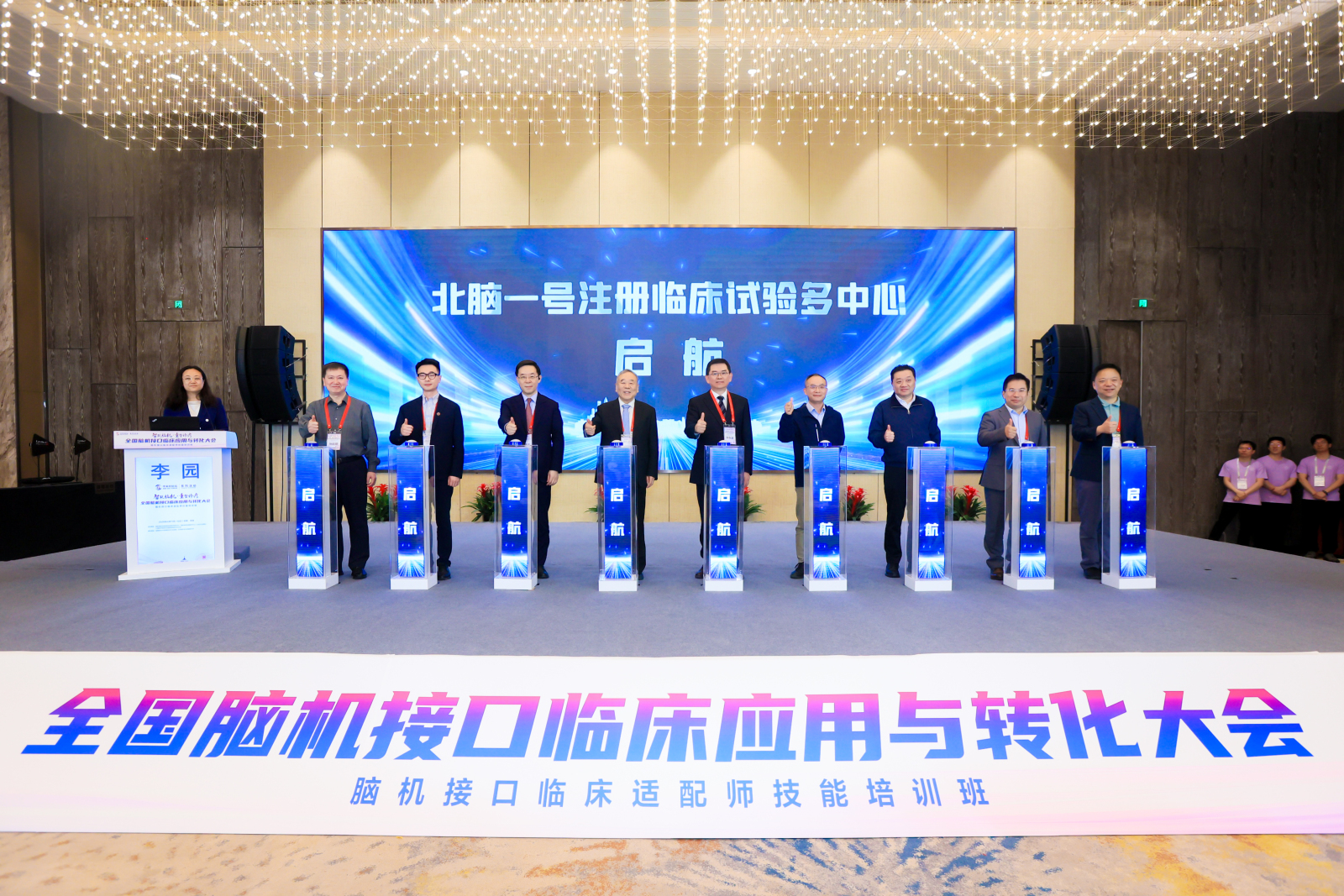
On April 11, the National Brain-Computer Interface Clinical Application and Transformation Conference was held in Beijing’s Fengtai District. It was announced at the conference that on April 13, Beijing Tiantan Hospital will conduct the first nationwide public, teaching-level live broadcast of an “North Brain One” implantable brain-computer interface surgery.
This live broadcast serves as the core practical training content for the conference’s Brain-Computer Interface Clinical Adapter Skills Training Course. It marks a significant milestone for China’s domestically developed high-end brain-computer interface technology transitioning from the laboratory to large-scale clinical application.
“North Brain One” is a new generation of implantable brain-computer interface system entirely independently developed in China. It has achieved breakthroughs across the entire technological chain, from flexible high-density electrodes and a miniature implantable device to deep learning decoding algorithms. Its core technical advantages are significant: it employs a minimally invasive, semi-invasive design for epidural implantation. This method does not require opening the dura mater or contacting brain tissue, needing only a small cranial bone window, which greatly reduces surgical trauma and complication risks, achieving an internationally recognized optimal balance between safety and signal precision. The system is equipped with a 128-channel synchronous acquisition system and 30 kHz high-frequency sampling, enabling millisecond-level neural signal capture. The motion intent decoding latency is less than 100 milliseconds, supporting fine motor control and Chinese language decoding. The implantable device is only the size of a coin, supports wireless transmission and wireless charging, has no percutaneous wires, effectively reducing infection risk, and can meet patients’ long-term needs for home rehabilitation and daily use.
The surgery live broadcast will utilize 4K+ microscopic imaging and multi-modal image fusion technology. It will clearly display the entire surgical process, including preoperative precise positioning, preparation of the minimally invasive bone window, precise electrode placement, intraoperative real-time neural signal verification, and closed-loop system debugging. This provides a standardized, normative teaching model for the participating clinical physicians.
The concurrently held Brain-Computer Interface Clinical Adapter Skills Training Course offers systematic instruction across seven modules: policy interpretation, theoretical principles, technical application, ward construction, disease diagnosis and treatment, process standardization, and technical practice. Upon completing all courses and passing the assessment, trainees will receive an officially issued skills certificate, contributing to the cultivation of specialized brain-computer interface clinical professionals in China.
Leveraging the platform advantages of the National Center for Neurological Disorders, Tiantan Hospital has established a comprehensive clinical validation system encompassing “surgical implantation — intraoperative verification — postoperative rehabilitation — long-term follow-up,” making it a globally leading hub for brain-computer interface clinical translation. Currently, Tiantan Hospital has established the country’s first brain-computer interface clinical translation ward, opened a brain-computer interface assessment clinic, and leads several major national clinical trials, laying a solid foundation for the clinical application of brain-computer interface technology.