Beijing: 180,000 Tulips Create a Sea of Spring Blossoms in Zhongshan Park
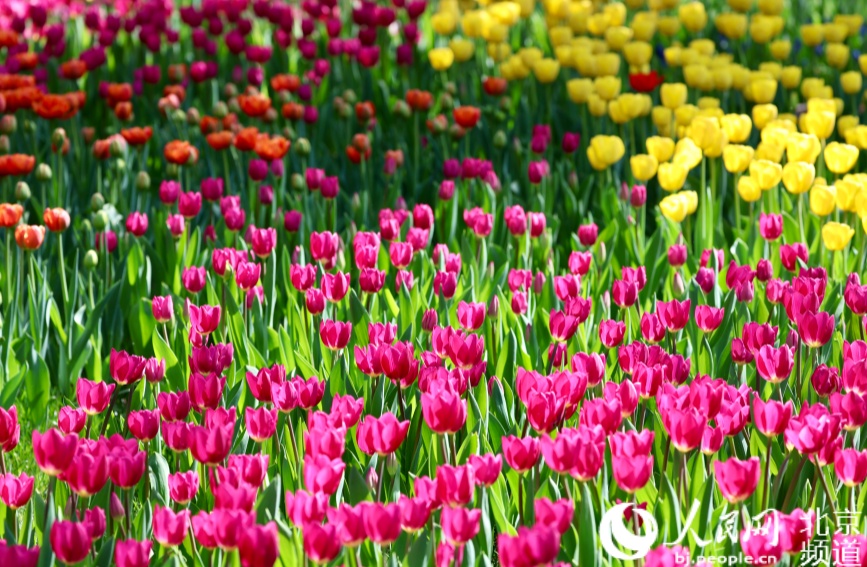
The tulips at Beijing’s Zhongshan Park have now entered their peak blooming period. This year’s Tulip Cultural Festival uses the historical journey of tulips along the Silk Road as its narrative theme, combining it with the park’s unique heritage of ancient trees, red walls, and historic architecture to create seven outdoor themed scenic areas. The total tulip planting area in the park covers 4,000 square meters, featuring 180,000 bulbs and over 100 tulip varieties, forming a rich, multi-layered, and brilliantly colorful spring floral sea.
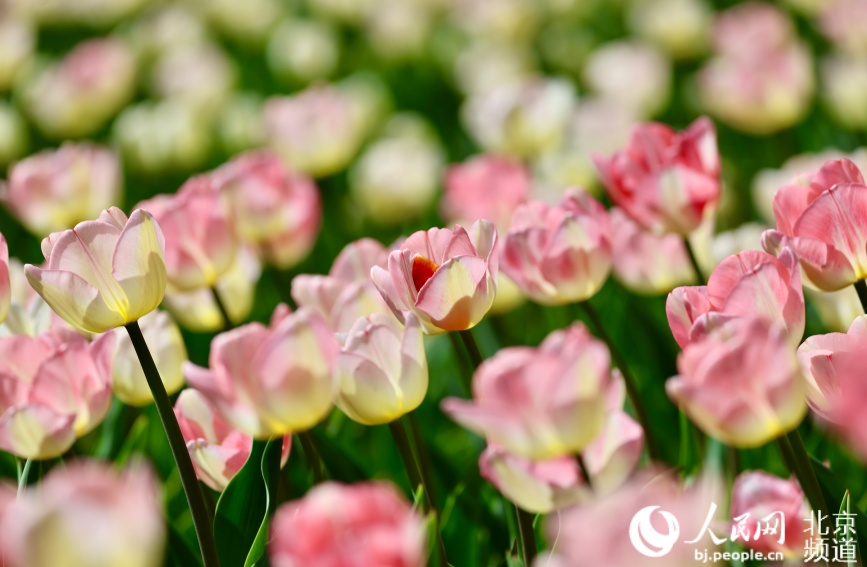
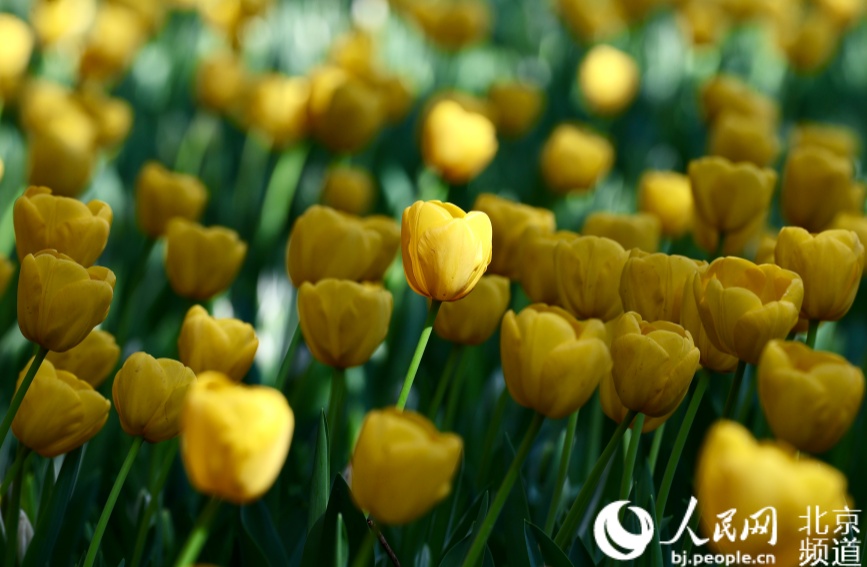
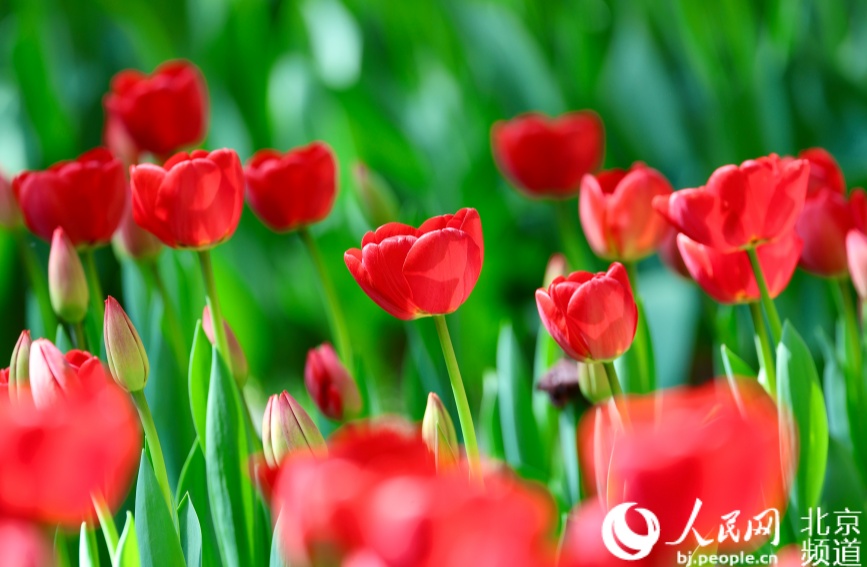
In the spring breeze, the tulips bloom in succession. Soft pinks, vibrant reds, bright yellows, and pure whites gently blend across the flower beds, creating a tapestry of light and dark shades that is both vibrant and gentle. The plump, cup-shaped tulips stand gracefully, and when a light breeze passes, they ripple into gentle waves of flowers. Tall, robust pine and cypress trees stand beside the blooms, while elegant, winding traditional Chinese corridors add an air of ancient charm to the sea of flowers.
The tulips at Beijing’s Zhongshan Park have now entered their peak blooming period. This year’s Tulip Cultural Festival uses the historical journey of tulips along the Silk Road as its narrative theme, combining it with the park’s unique heritage of ancient trees, red walls, and historic architecture to create seven outdoor themed scenic areas. The total tulip planting area in the park covers 4,000 square meters, featuring 180,000 bulbs and over 100 tulip varieties, forming a rich, multi-layered, and brilliantly colorful spring floral sea.
In the spring breeze, the tulips bloom in succession. Soft pinks, vibrant reds, bright yellows, and pure whites gently blend across the flower beds, creating a tapestry of light and dark shades that is both vibrant and gentle. The plump, cup-shaped tulips stand gracefully, and when a light breeze passes, they ripple into gentle waves of flowers. Tall, robust pine and cypress trees stand beside the blooms, while elegant, winding traditional Chinese corridors add an air of ancient charm to the sea of flowers.
The tulips at Beijing’s Zhongshan Park have now entered their peak blooming period. This year’s Tulip Cultural Festival uses the historical journey of tulips along the Silk Road as its narrative theme, combining it with the park’s unique heritage of ancient trees, red walls, and historic architecture to create seven outdoor themed scenic areas. The total tulip planting area in the park covers 4,000 square meters, featuring 180,000 bulbs and over 100 tulip varieties, forming a rich, multi-layered, and brilliantly colorful spring floral sea.
In the spring breeze, the tulips bloom in succession. Soft pinks, vibrant reds, bright yellows, and pure whites gently blend across the flower beds, creating a tapestry of light and dark shades that is both vibrant and gentle. The plump, cup-shaped tulips stand gracefully, and when a light breeze passes, they ripple into gentle waves of flowers. Tall, robust pine and cypress trees stand beside the blooms, while elegant, winding traditional Chinese corridors add an air of ancient charm to the sea of flowers.
The tulips at Beijing’s Zhongshan Park have now entered their peak blooming period. This year’s Tulip Cultural Festival uses the historical journey of tulips along the Silk Road as its narrative theme, combining it with the park’s unique heritage of ancient trees, red walls, and historic architecture to create seven outdoor themed scenic areas. The total tulip planting area in the park covers 4,000 square meters, featuring 180,
Zhongshan Park
Zhongshan Park is a public park located in the heart of Beijing, originally built as an imperial temple and altar complex during the Ming and Qing dynasties. It was renamed in 1928 to honor Sun Yat-sen (Sun Zhongshan), the founding father of modern China, transforming from an exclusive imperial site into a public recreational space. Today, it serves as a popular urban oasis featuring classical gardens, historical halls, and the iconic Altar to the Land and Grain.
Silk Road
The Silk Road was an ancient network of trade routes connecting China with the Mediterranean, active from around the 2nd century BCE to the 14th century CE. It facilitated the exchange of goods like silk, spices, and technologies, while also enabling the spread of ideas, religions, and cultures across Eurasia. Though no single road, this system profoundly shaped the civilizations along its path and laid early foundations for global interconnectedness.
Tulip Cultural Festival
The Tulip Cultural Festival is an annual celebration of the Netherlands’ iconic flower, typically held in spring at locations like the Keukenhof Gardens. It showcases millions of blooming tulips and highlights the flower’s deep historical significance in Dutch culture, dating back to the 17th-century “Tulip Mania.” The event features floral displays, parades, and art, symbolizing beauty, heritage, and the arrival of spring.
ancient trees
Ancient trees are living natural monuments, often thousands of years old, that have witnessed significant historical and environmental changes. They are found worldwide, from California’s bristlecone pines to Japan’s sacred cedars, and are frequently revered in local cultures and religions. Their longevity provides invaluable scientific data on past climates, while their preservation highlights the importance of ecological and cultural heritage.
red walls
The “Red Walls” most famously refer to the Forbidden City in Beijing, China, whose walls are painted a distinctive vermilion red. This color, symbolizing happiness, wealth, and imperial authority, has adorned the walls of the palace complex since its construction in the early 15th century during the Ming Dynasty. It served as the imperial palace for nearly 500 years and remains a profound symbol of Chinese history and architectural grandeur.
historic architecture
“Historic architecture” refers to buildings and structures of significant cultural, aesthetic, or historical value, often preserved to represent the design styles and construction techniques of a past era. These structures, ranging from ancient temples and medieval castles to 19th-century industrial sites, serve as tangible records of a society’s technological achievements, artistic values, and social history. Their preservation allows modern generations to understand and appreciate the architectural heritage and historical narratives of previous civilizations.
traditional Chinese corridors
Traditional Chinese corridors, known as *lang* (廊), are covered walkways that have been integral to classical Chinese garden and palace architecture since ancient times. Historically, they served both practical and aesthetic purposes—providing sheltered passageways while connecting pavilions and framing scenic views, with their designs evolving through dynasties like the Tang and Ming. Today, they remain iconic symbols of Chinese architectural harmony, blending functionality with poetic beauty in gardens such as those in Suzhou.
pine and cypress trees
“Pine and cypress trees” are not a specific cultural site, but are deeply symbolic plants in many cultures, particularly in East Asia. In Chinese tradition, they represent longevity, resilience, and moral integrity, often planted in Confucian temples, imperial tombs, and sacred spaces. Their evergreen nature has historically linked them to immortality and steadfastness, making them enduring cultural symbols rather than monuments.