Beijing, March 27 — According to information from the Beijing Municipal Ecology and Environment Bureau, on March 26, the 23rd meeting of the Standing Committee of the 16th Beijing Municipal People’s Congress heard and deliberated a report from the municipal government on the city’s environmental status and the completion of environmental protection targets for 2025, as well as the comprehensive advancement of green and low-carbon development. In 2025, Beijing vigorously implemented the Green Beijing strategy, coordinating efforts to reduce carbon emissions, cut pollution, expand green spaces, and promote growth, resulting in comprehensive and significant improvements in ecological and environmental quality.
The report shows that Beijing’s air quality improvement has been remarkable. Last year, the annual average concentration of fine particulate matter (PM2.5) achieved the milestone of “breaking 30” for the first time, reaching 27.0 micrograms per cubic meter, a decrease of 11.5% year-on-year, marking the lowest value since monitoring records began. The number of days with good air quality reached 311, accounting for over 80% of the year for the first time, making blue skies the norm.
In the battle for blue skies, Beijing promoted the electrification of vehicles and machinery, further increasing the number of new energy vehicles and raising the proportion of new energy non-road mobile machinery to 45%. It encouraged enterprises to adopt greener practices, cumulatively designating 1,803 “green” enterprises, achieving a ratio of 39.7%. The city enhanced refined urban governance, promoting the use of 26 fully enclosed foundation pit air domes.
Water environment quality continued to improve. The water quality of major centralized drinking water sources, such as Miyun Reservoir and Huairou Reservoir, remained stable and met national standards. Among the 37 state-monitored sections, the proportion of water bodies better than Class III reached 100%, and inferior Class V sections were dynamically eliminated.
Furthermore, Beijing’s forest coverage rate reached 45%, and the city released its first white paper on “Biodiversity Conservation in Beijing.” It accelerated the construction of a garden city, with the total number of parks reaching 1,136. Regarding sustainable ecological protection, Beijing conducted its first exchange and compensation based on the value of ecosystem regulation services (GEP-R) and regional GDP, further strengthening the momentum for green development in ecological conservation areas.
To comprehensively advance green and low-carbon development, Beijing issued and implemented documents for a dual-control system for carbon emissions, coordinating efforts in energy conservation, green expansion, gas reduction, oil reduction, and coal cleaning. It ensured the stable operation of the national voluntary greenhouse gas emission reduction (CCER) trading market. The city deepened its carbon inclusive mechanism, with the “Beijing MaaS Urban Green Travel” case being selected for the Global Sustainable Transport Best Practices collection.
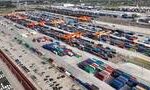
In key areas such as energy, industry, and transportation, Beijing’s externally sourced green electricity exceeded 44 billion kilowatt-hours, with renewable energy consumption accounting for over 19% of the total. The city cumulatively established 182 national-level green factories and 30 green supply chain management enterprises, building a green transportation chain combining “railway + new energy trucks.” The city’s energy consumption, water consumption, and carbon emissions per 10,000 yuan of GDP continued to decline year-on-year, further improving the quality and efficiency of the capital’s development.
This year, Beijing will accelerate the comprehensive green transformation of economic and social development, continue to deepen the battle against pollution, and work together to build beautiful blue skies by focusing on the electrification of vehicles and machinery and increasing the “green content” of enterprises. Adhering to the “three-water coordination” principle, the city will consolidate improvements in water ecological environment quality, speed up addressing shortcomings in environmental infrastructure construction in rural areas, and advance the construction of a “zero-waste city” across the entire region.
In terms of green and low-carbon development, Beijing will continue to expand the scale of externally sourced green electricity and actively develop local new energy and renewable energy. It will deepen the construction of the carbon market and expand application scenarios for carbon inclusion. The city will strengthen biodiversity protection, build a garden city, and focus on enhancing the value of ecological products. It will accelerate the construction of the Beijing-Tianjin-Hebei region as a pioneering zone for building a Beautiful China, focusing on pioneering tasks such as environmental quality improvement and green, low-carbon transformation, and establishing demonstration zones for the synergy of pollution reduction and carbon reduction, as well as ecological restoration.