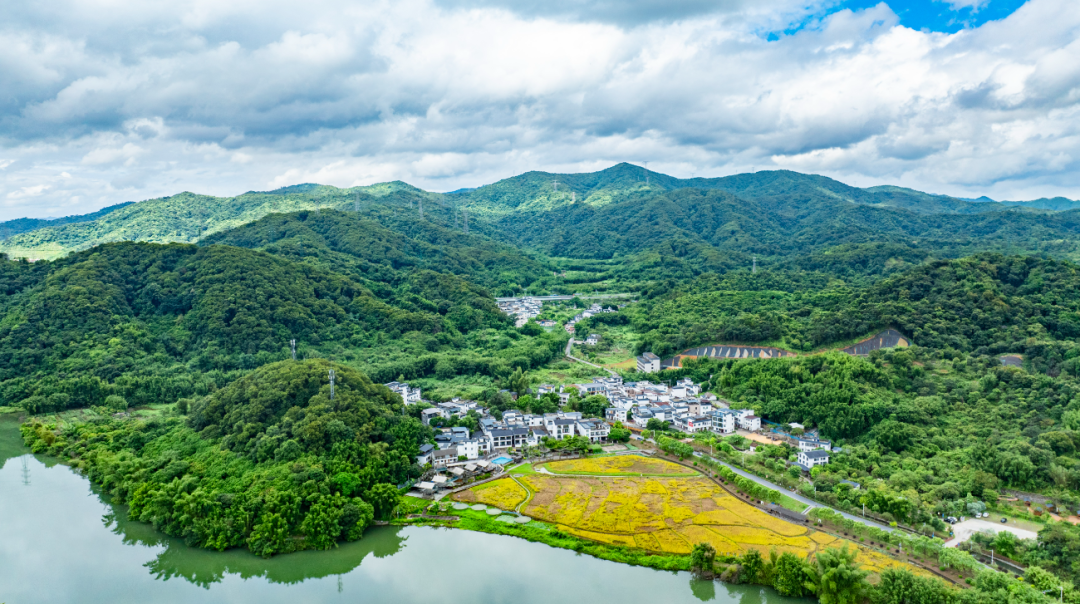
“The ‘High-Quality Development Project for Hundreds of Counties, Thousands of Towns, and Tens of Thousands of Villages’ you have implemented has brought new changes to the appearance of towns and villages. It must be continued persistently.”
In November of this year, during an inspection tour of Guangdong, the General Secretary fully affirmed the “High-Quality Development Project for Hundreds of Counties, Thousands of Towns, and Tens of Thousands of Villages” (hereinafter referred to as the “Hundreds, Thousands, Tens of Thousands Project”) and expressed hope that Guangdong would improve the systems and mechanisms for coordinated regional development and integrated urban-rural development, gradually bridging the significant gap that still exists in development between urban and rural areas.
Deeply entrusted, with continuous high expectations and profound anticipation. Since the 18th National Congress of the Communist Party of China, from Lianzhang Village in Qingyuan and the mangrove forests in Zhanjiang to the lychee orchards in Maoming and Nanfu Village in Meizhou, the General Secretary’s footprints have covered eastern, western, and northern Guangdong. Each footprint and each pause are engraved with the General Secretary’s profound affection for the land of Lingnan and his deep feelings for the people of Guangdong.
“I cannot rest easy until our fellow villagers are lifted out of poverty.” “Narrowing the development gap between eastern, western, northern Guangdong and the Pearl River Delta is an urgent task for Guangdong’s regional development.” “As a forefront of reform and opening up, there are imbalances in development, and this is also my concern.” “I wish our fellow villagers a life as sweet and beautiful as golden pomelos.”… These heartfelt words and earnest instructions reflect the profound and sincere people-centered sentiment of the people’s leader, embodying the General Secretary’s deep thinking and scientific judgment on Guangdong’s high-quality development, guiding the people of Guangdong to anchor themselves to “taking the lead, setting an example, and shouldering major responsibilities” as they stride forward.
Grateful and striving, grateful and forging ahead. In December 2022, building upon the work of previous provincial party committees and governments, Guangdong, learning from and applying the experience of Zhejiang’s “Thousand Villages Demonstration, Ten Thousand Villages Renovation” project, innovatively implemented the “Hundreds, Thousands, Tens of Thousands Project.” With the courage and determination of “knowing there are tigers in the mountains yet heading for the hills,” it charged towards the number one challenge and advanced towards the biggest短板. Over the past three years, the provincial party committee has attached great importance and advanced it from a high position. The entire province has been united in tackling difficulties, with strong leadership, extraordinary measures, and participation from the whole society, comprehensively igniting a fervent practice of strengthening counties, promoting towns, and driving villages. This has allowed a moving picture of high-quality development in counties, towns, and villages to gradually unfold across the land of Lingnan.
Happiness is achieved through struggle; struggle gives meaning to time. The “Hundreds, Thousands, Tens of Thousands Project,” with its solid and tangible results, has enhanced people’s wellbeing, revitalized the development landscape, and fully demonstrated the unparalleled superiority of the socialist system with Chinese characteristics at the forefront of reform and opening up, fully demonstrating the powerful truth and practical strength of Xi Jinping Thought on Socialism with Chinese Characteristics for a New Era.
I.
“A thousand jun of weight hangs by a single feather; balance lies in the distribution of weight.”
Large regional disparities and urban-rural imbalance are fundamental national conditions. Promoting coordinated urban-rural and regional development has always been a major issue concerning the overall development of the Party and the country’s cause.
Looking back over twenty years ago—”earning money from dawn to dusk, counting money amidst garbage, spending money lying in the hospital” was once a true portrayal of many villagers in Zhejiang. During his work in Zhejiang, Comrade Xi Jinping, based on intensive research, made the major decision to implement the “Thousand Villages Demonstration, Ten Thousand Villages Renovation” project. This project created thousands of beautiful villages, benefited millions of farmers, and also demonstrated the vast potential and infinite possibilities of coordinated urban-rural and regional development.
Focusing the lens on three years ago—by 2022, Guangdong’s GDP had ranked first in the nation for 34 consecutive years. The Pearl River Delta was vibrant and dynamic,