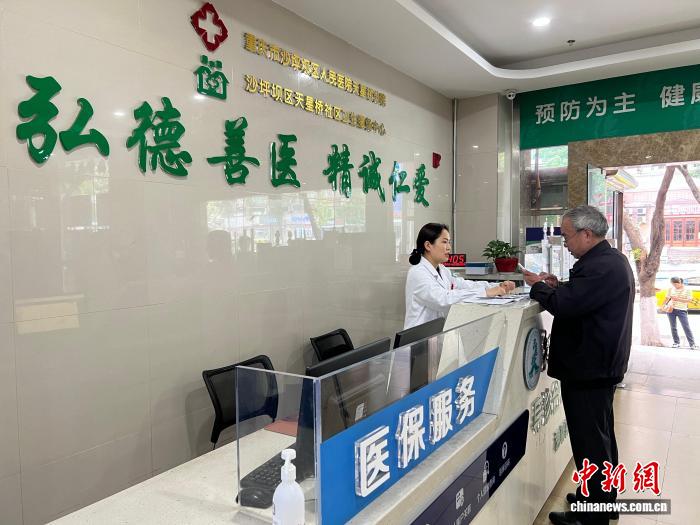
High-quality medical care reaches the grassroots, complex examinations are available nearby, and doctor-patient communication is just a click away… In Shapingba District of Chongqing, a healthcare reform centered on “letting the public travel less and receive better treatment” is quietly transforming the medical experience for millions of residents.
Located in the western part of Chongqing’s central urban area, Shapingba District boasts a strong foundation in medical resources. It is a hub for medical education, talent, and services. The area has 758 healthcare institutions at various levels, including 8 tertiary hospitals such as the First Affiliated Hospital and Second Affiliated Hospital of the Army Medical University, and Chongqing University Cancer Hospital. Eight key specialties in the district, including burns, hepatobiliary, infectious diseases, respiratory, and cardiovascular, consistently rank among the top 10 nationally. The annual outpatient volume in the district exceeds 10 million visits.
A special task force for building a close-knit medical community was established, with a clear goal to mobilize the entire district’s strength to build a modern, strong health district.
In specific measures, Shapingba District established 6 medical alliances led by large tertiary hospitals. Within these, 48 national and municipal-level key clinical specialties were paired with 100 clinical departments in district hospitals to build “jointly constructed and managed departments,” promoting the sharing of expert resources, integration of medical services, and two-way patient transfers. Simultaneously, 4 close-knit medical communities were formed, led by hospitals like Shapingba District People’s Hospital and Chenjiaqiao Hospital, with 21 community health service centers (township health centers) as member units. This promotes the下沉 (downward flow) of management, technology, and resources, allowing high-quality district-level resources to benefit the grassroots.
Furthermore, Shapingba District established 56 specialized alliances for areas like traditional Chinese medicine services, mental health, and integrated medical and elderly care. These alliances conduct professional guidance, training, and technical support, achieving “vertical integration, horizontal linkage, and full coverage” of regional medical resources. This gradually forms a three-tier diagnosis and treatment service system where “common illnesses are resolved at the grassroots, general diseases at the district level, and critical/severe illnesses at tertiary hospitals.”
The widely recognized “Hongyan Family Doctor” service delivers care to the finest details. Data shows the local area has established 121 off-site Hongyan Family Doctor workstations, 25 Hongyan Qihuang Medical Practitioner service stations, and built 118 “Healthy Communities.” Over 230 grassroots family doctor teams following a “1+3+N” model have been formed. The family doctor签约 (sign-up) coverage rate for the entire population is 60%, and for key groups like the elderly, weak, sick, disabled, and those with mental health conditions, it reaches 91.2%. Residents can enjoy continuous and stable health management right at their doorsteps.
“We closely follow the national healthcare reform direction, avoiding superficial efforts. On the foundation of a preliminarily sound system, we will focus on iterating, refining, and optimizing the service system. This ensures the public can not only ‘access medical care’ but also ‘receive good medical care’ at their ‘doorstep,’ making every medical visit more warm and rewarding.”
The deep meaning behind Shapingba District’s current city slogan, “Shapingba, Good Doctors,” was also explained. It was stated that this is not just simple praise; behind it lies the relentless pursuit of prioritizing people’s welfare. In the future, Shapingba District will continue to strengthen the close-knit medical community, solidify the下沉 (downward flow) of quality resources, and optimize doctor-patient communication channels. Through tangible, evaluable, and trustworthy medical services, the aim is to make “Shapingba, Good Doctors” a genuine口碑 (word-of-mouth reputation) among the public and a distinctive民生 (livelihood)名片 (name card).