“Reading has become a way of life for me,” President Xi Jinping once described his “biggest hobby” in an interview with foreign media.
Reading is an important way for people to acquire knowledge, enlighten wisdom, and cultivate morality. On the stage of major-country diplomacy, President Xi Jinping has repeatedly used books as a bridge to vividly explain the significance of exchanges and mutual learning among civilizations, promoting China’s strengthening of people-to-people exchanges with other countries to jointly enrich the garden of world civilizations.
On the occasion of the 31st World Book Day, let us revisit these wonderful stories.
The Power of Reading
“At the age of 15, I already had the ability to think independently. Through constant re-examination during reading, I achieved negation of negation and reviewing the old to learn the new. Gradually, I felt that Marxism is indeed the truth, the leadership of the Communist Party of China is indeed the choice of the people and history, and the socialist path we are taking is indeed a necessary path.” President Xi Jinping once recalled his mental journey of reading Marxist classic works in his youth.
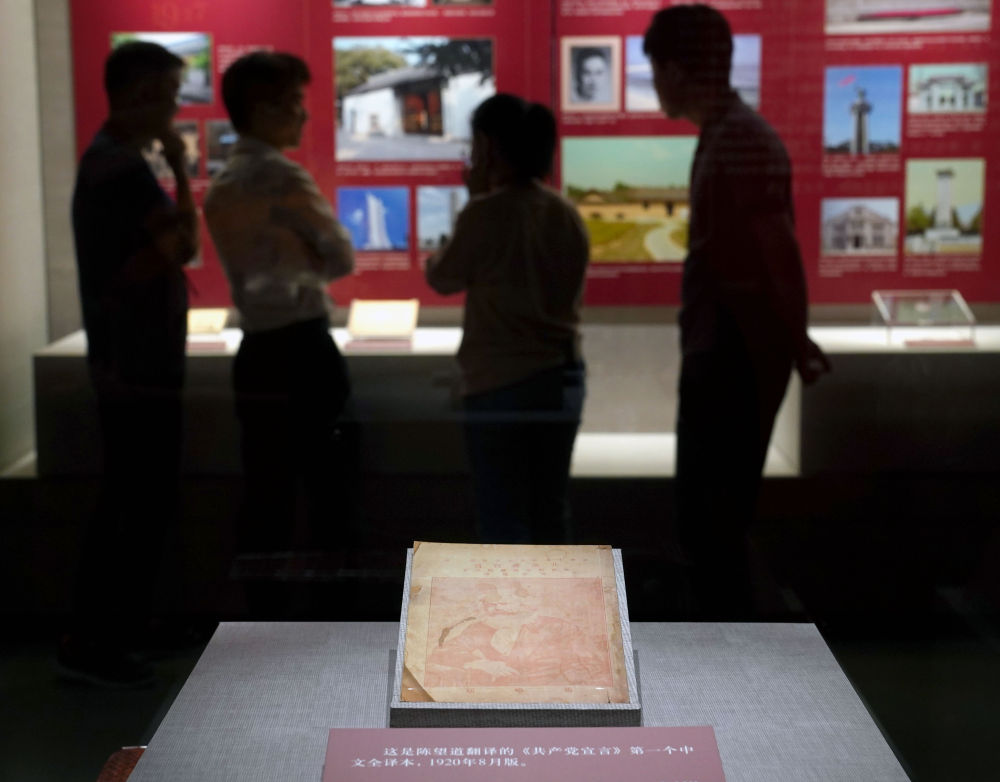
In the cave dwelling of Liangjiahe, Shaanxi, young Xi Jinping read “Capital” three times and took many notes. By the light of a kerosene lamp, with thoughts about the world, Xi Jinping also read many literary classics.
“The road of history is not the sidewalk on Nevsky Prospekt; it advances entirely through fields, sometimes through dust, sometimes through mud, sometimes across swamps, and sometimes through jungles.” In March 2013, during a speech at the Moscow State Institute of International Relations in Russia, President Xi Jinping quoted the famous line by Russian writer Nikolay Chernyshevsky to illustrate the objective laws of historical development, emphasizing that “no force can stop the wheels of history.”
“When I was young, I read Chernyshevsky’s ‘What Is to Be Done?’ and it had a great impact on me. That is the charm of excellent culture.” During that visit, when meeting with Russian sinologists, Chinese language students, and media representatives, President Xi Jinping again spoke about culture through reading, sparking widespread resonance.