Roles of Municipal Corporation Employees and Officers to Be Investigated, Commissioner Forms Six-Member Committee
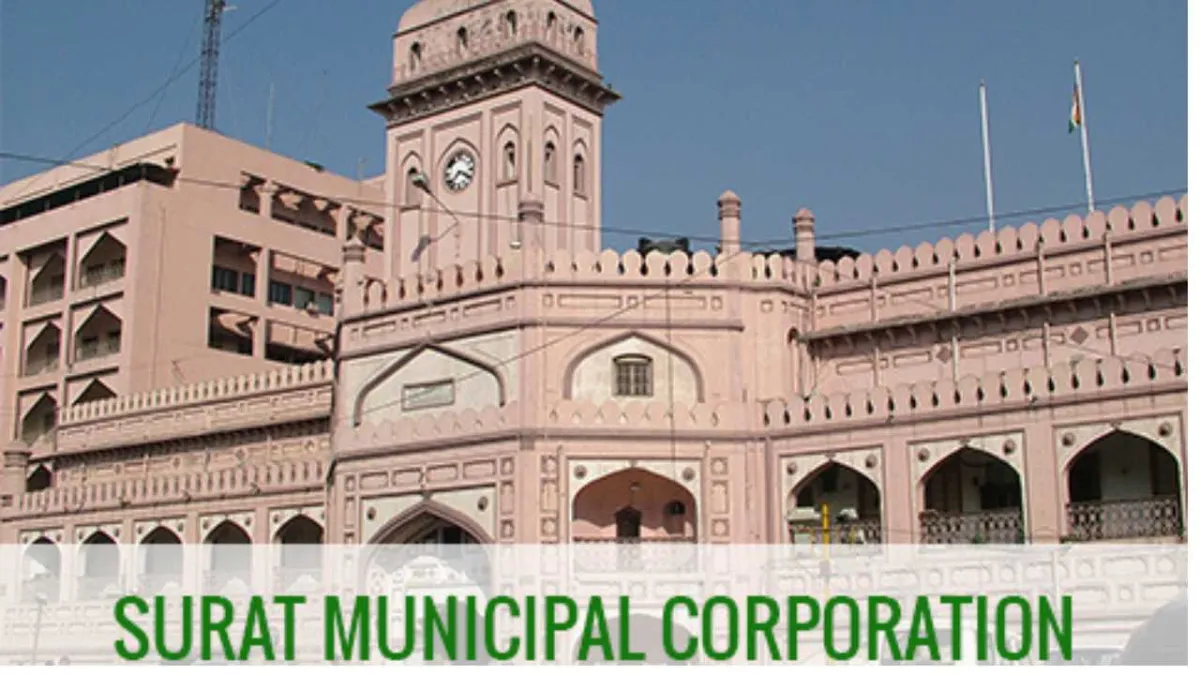
Surat. The Surat Municipal Corporation administration has formed a high-level investigation committee to look into the recent controversial demolition incident in Nasirnagar, located in the central zone of Surat.
This case has sparked widespread discussion and controversy in the city over the past several days. Questions have been continuously raised about who ordered the demolition, who was responsible, and whether any municipal corporation employees or officers played a role in it.
Considering the seriousness of the matter, the Municipal Commissioner has officially constituted a six-member investigation committee. The committee has been tasked with conducting an impartial investigation of the entire sequence of events and submitting a detailed report.
According to sources, complaints regarding the role of some municipal corporation employees and officers in the Nasirnagar case were received at various levels. In light of these complaints and public controversy, the administration has ordered an investigation.
Deputy Municipal Commissioner M.M. Gajjar has been appointed as the chairman of the investigation committee. Deputy Municipal Commissioner M.M. Doctor, Additional City Engineer M.D. Chavda, Executive Engineer K.L. Vasava, Executive Engineer R.D. Ganjawala, and Deputy Engineer Mohsin A. Kagzi have been made members of the committee.
The committee will investigate at what level the action in Nasirnagar was approved, whether administrative procedures were followed, and what the role of municipal corporation employees and officers was. Additionally, aspects of potential administrative lapses or negligence will also be reviewed.
Amid the growing controversy in the city over the Nasirnagar case and the questions being raised by public representatives and local residents, the formation of the investigation committee is seen as a significant step. All eyes are now on the committee’s report and the potential action that may follow based on it.
Surat
Surat, located in the Indian state of Gujarat, is a historic port city known for its significant role in maritime trade during the Mughal era, particularly as a hub for textiles and diamonds. It was one of the first Indian ports to be visited by European traders, including the British East India Company, who established a factory there in the early 17th century. Today, Surat is a major economic center, renowned for its diamond cutting and polishing industry, as well as its vibrant textile sector.
Nasirnagar
Nasirnagar is an upazila (sub-district) in the Brahmanbaria District of Bangladesh, known for its rich cultural heritage and historical significance. It is home to numerous ancient Hindu temples and archaeological sites, reflecting a long history of religious and architectural development. The area also played a role in the broader history of the Bengal region, with its rural landscape preserving traditional Bengali culture and customs.
Surat
Surat is a historic port city in the Indian state of Gujarat, known for its significant role in maritime trade during the 16th and 17th centuries. It was a major hub for the British East India Company and other European traders, exporting textiles and diamonds. Today, Surat is a thriving industrial center, famous for its diamond cutting and polishing industry, as well as its textile production.
Nasirnagar
<div class="text-gray-
Surat
Surat is a historic port city in the Indian state of Gujarat, renowned for its role as a major trading hub during the Mughal era, particularly for textiles and diamonds. It was an important center for shipbuilding and commerce, attracting traders from Europe, the Middle East, and Asia. Today, Surat is a bustling industrial city known for its diamond cutting and polishing industry, as well as its vibrant cultural heritage.
Nasirnagar
Nasirnagar is an upazila (sub-district) in the Brahmanbaria District of Bangladesh, known for its rich cultural heritage and historical significance. The area is particularly famous for its numerous ancient Hindu temples and archaeological sites, such as the 16th-century Kharampur Mazar Sharif and the historic Sattar Khan’s Mosque. Its history reflects a blend of Mughal and local influences, with the region playing a role in the broader cultural and religious tapestry of eastern Bengal.