The country’s economy will improve and the Himalayas will get a new lease of life
Dehradun, May 16. The global supply of gas and petroleum products has been severely affected due to the heavy geopolitical tensions in West Asia (Middle East).
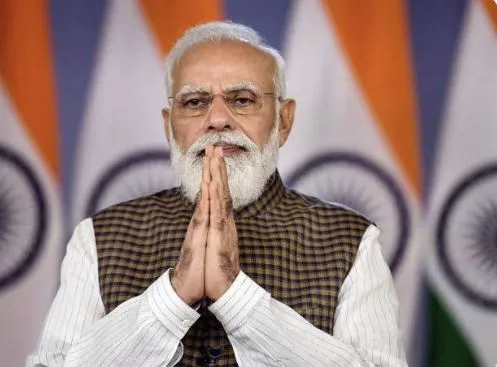
Due to the sharp rise in crude oil prices, additional economic pressure is mounting on the Indian economy. To deal with this crisis, Prime Minister Narendra Modi has made a special appeal to the citizens to use energy resources sparingly and not to buy gold for the next one year. This is because both fuel and gold have to be imported on a large scale, for which the country has to spend valuable foreign exchange (dollars).
This campaign by the PM will reduce imports, which will not only save the country’s revenue but also strengthen the Indian rupee in the international market.
Atmospheric and environmental scientists have strongly supported the Prime Minister’s ‘No Gold, Save Energy’ appeal. Scientists believe that the excessive use of energy resources and vehicles, and the smoke emitted from them, has made global warming and climate change an extremely serious challenge worldwide.
If the country’s population voluntarily reduces energy consumption, it will lead to a significant decrease in carbon emissions. This exemplary step will not only purify the environment of the plains but will also prove to be highly beneficial and a protective shield for the health of the Himalayan regions and their glaciers, which are melting due to rising temperatures.
In this context, scientists cited the example of the lockdown imposed in the country during the coronavirus period, saying that at that time, human and industrial activities stopped, and the environment completely reset (became healthy) on its own.
During the lockdown, the Ganges river became completely pollution-free and pristine up to Haridwar, air quality saw a historic improvement, and biodiversity in the Himalayan regions got a new life.
Experts say that by adopting PM Modi’s appeal, we can voluntarily give the environment its old life back, without any restrictions.
By adopting this frugality of resources, the country’s population is sure to strengthen the economic health of the nation and give a new lease of life to the fragile Himalayan system.
Himalayas
The Himalayas are a vast mountain range in Asia, home to the world’s highest peaks, including Mount Everest. Formed millions of years ago by the collision of the Indian and Eurasian tectonic plates, they have long been a sacred site in Hinduism and Buddhism, inspiring pilgrimage and spiritual retreat. Today, they remain a major destination for mountaineers, trekkers, and those seeking natural beauty.
Dehradun
Dehradun is the capital city of Uttarakhand, India, nestled in the Doon Valley between the Himalayas and the Shivalik range. Historically, it was part of the Garhwal Kingdom and later came under British rule, becoming a prominent colonial hill station and educational hub. Today, it is known for its scenic beauty, prestigious institutions like the Forest Research Institute, and as a gateway to popular hill stations such as Mussoorie.
West Asia
West Asia is a historically and culturally rich region that served as the cradle of some of the world’s earliest civilizations, including Mesopotamia and the Persian Empire. It has been a crossroads for trade, religion, and conflict, influencing the development of major faiths such as Judaism, Christianity, and Islam. Today, the area is known for its diverse cultures, ancient heritage sites, and geopolitical significance.
Middle East
The Middle East is a historically and culturally rich region spanning Western Asia and parts of North Africa, often considered the cradle of civilization. It was home to ancient empires like Mesopotamia, Persia, and Egypt, and is the birthplace of three major world religions: Judaism, Christianity, and Islam. Today, the region is known for its diverse cultures, significant oil reserves, and ongoing geopolitical complexities.
Ganges
The Ganges River is a sacred waterway in India, flowing over 1,500 miles from the Himalayas to the Bay of Bengal. For millennia, it has been central to Hindu culture, revered as a goddess (Ganga) and used for spiritual rituals, cremations, and purification. Despite its religious significance, the river faces severe pollution challenges from industrial waste and human activity.
Haridwar
Haridwar is an ancient city in the Indian state of Uttarakhand, considered one of the seven holiest places in Hinduism. Its history dates back thousands of years, and it is famously known as the site where the Ganges River leaves the Himalayas and enters the plains, with the sacred Ganga Aarti ceremony performed daily at Har Ki Pauri ghat. The city also hosts the grand Kumbh Mela festival every 12 years, drawing millions of pilgrims for ritual bathing.