
An expert in international law and migration and director of the African Migration Observatory stated that proposals to transfer third-country nationals to countries where they do not wish to settle, and whose communities are not prepared to receive them, raise legal and humanitarian questions about the future of these individuals and the compatibility of such policies with international rules and agreements governing human rights.

This came during participation in the first meeting of the steering committee for the “Joint Initiative on Migration,” launched by the Hertie School of Governance in Berlin in partnership with the Ger Foundation, aimed at promoting dialogue and research on migration issues between Africa and Europe.
The expert emphasized that the prevailing narratives about migration, particularly African migration, often do not reflect the available facts and data, noting that the African Migration Observatory works to support approaches based on evidence and scientific data to understand the phenomenon more accurately and objectively.

The expert explained that changes in some indicators of irregular migration do not necessarily mean a decline in migration movements, given the ongoing shifts in routes and destinations, pointing out that several North African countries are increasingly playing a role as destination and settlement countries for migrants, alongside their traditional role as transit countries.
The expert also noted that the discussion on migration is linked to a range of interrelated factors, including armed conflicts, demographic changes, economic needs, and the labor market, stressing the importance of understanding these factors when formulating public policies related to migration and human mobility.
The expert emphasized the need to rely on reliable data and scientific analysis when addressing migration issues, affirming that addressing the phenomenon requires international cooperation that takes into account the humanitarian, legal, and developmental dimensions associated with it.

A professor and director of the Center for Fundamental Rights at the Hertie School and general coordinator of the initiative explained that the project aims to redirect discussions on migration towards addressing its root causes, rather than focusing solely on deterrence and border control measures.
The professor added that the initiative will work over the coming years to support scientific research and dialogue among policymakers, academics, international organizations, and civil society institutions, contributing to the development of policies that are more evidence-based and more considerate of the humanitarian dimensions associated with migration.
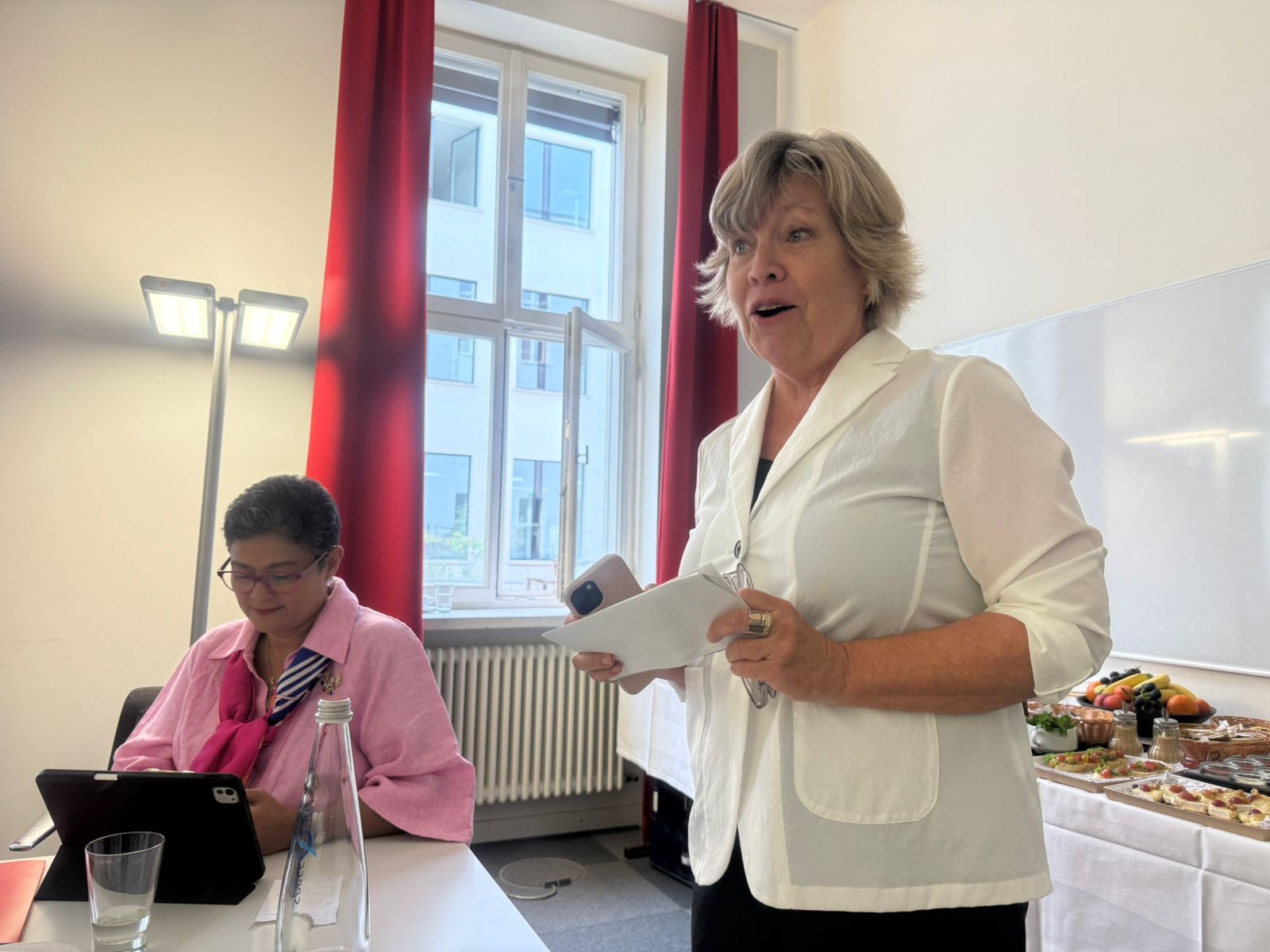
The “Joint Initiative on Migration” focuses on studying the factors influencing migration between Africa and Europe, and enhancing cooperation among various stakeholders, to support the formulation of knowledge- and data-based policies in dealing with migration and human mobility issues.
Hertie School of Governance
Berlin
Hertie School of Governance
Berlin
Related news

Ethiopia launches advanced training programs to implement Digital Ethiopia 2030.

Ethiopia launches reform program to enhance diplomatic capabilities

Ethiopian Foreign Minister meets with EU Commissioner for Equality, Preparedness, and Crisis Management.

The African Union commemorates its 63rd anniversary by renewing calls for unity, development, and global cooperation.