We’ve listed our five most read stories from top to bottom. The first story was viewed by 22.8% of our regular readers.

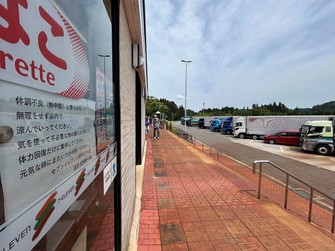
Large trucks are parked outside a 7-Eleven convenience store at the Ozumi Parking Area on the Hokuriku Expressway in Nagaoka, Niigata Prefecture, on May 27, 2026. A sign on the left invites people to come inside and cool off.

Owner explains ‘almost too kind’ sign at Japanese convenience stores that went viral abroad

NIIGATA — “If you think you may have heatstroke, please don’t push yourself — come inside and cool off.”

Tondabayashi City Hall is seen in Osaka Prefecture, Aug. 26, 2023, in this file photo taken from a helicopter.

16 garbage collectors in Osaka Pref. allegedly pulled out items for personal use

OSAKA — The Tondabayashi Municipal Government in Osaka Prefecture announced June 2 that 16 employees of Hannan Seiso, a city contractor responsible for garbage collection, had been removing items such as frying pans and electrical wiring from bulk trash put out by residents.

Iga Mayor Toshinao Inamori speaks about nationality requirements for public servants, at city hall in Iga, Mie Prefecture, May 12, 2026.

Japan mayor defends hiring foreigners as regular municipal staff; diversity ‘a strength’

IGA, Mie — As the Mie Prefectural Government considers ending hiring foreign-national employees, the city of Iga in the prefecture has brought two new foreign employees into city hall this spring under a regular staff hiring category. Forty-two-year-old Mayor Toshinao Inamori, who led the initiative, said he feels momentum is growing to turn diversity into energy and “make it a strength.”

A university student takes part in a job interview at Daiichi Life Insurance Co.’s headquarters in Tokyo’s Chiyoda Ward on June 1, 2026.

More Japan companies drop mandatory transfers as recruiting opens for 2027 graduates

TOKYO — Companies in Japan began recruitment screenings on June 1 for students graduating in spring 2027, with some firms abolishing mandatory relocations without employee consent to retain talented workers.

A women-only train car is seen at JR Ikebukuro Station in Tokyo in this April 4, 2005, file photo. East Japan Railway Co. (JR East) expanded women-only cars on the Saikyo Line to the morning rush hour starting that April.

Are women-only train cars still needed in Japan? 25 years on, issue remains unsettled

TOKYO — A quarter of a century has passed since railway companies in Japan began introducing women-only cars in their current form. They remain an indispensable measure for preventing sexual victimization such as groping, yet they are also frequently debated from the standpoint of gender equality. So what lies at the root of the problem?

Hokuriku Expressway

The Hokuriku Expressway is a major toll road in Japan connecting the Kanto region (Tokyo area) to the Hokuriku region along the Sea of Japan coast. Construction began in the 1960s, and the expressway was fully opened by the early 1990s, significantly reducing travel time between Tokyo and cities like Kanazawa and Toyama. It plays a vital role in regional transportation, supporting economic growth and tourism in the Hokuriku area.

Nagaoka

Nagaoka is a city in Niigata Prefecture, Japan, known for its rich history as a castle town during the Edo period. It was heavily damaged by fire in the 19th century and later rebuilt, becoming a center for industry and culture. Today, Nagaoka is famous for its spectacular

Hokuriku Expressway

The Hokuriku Expressway is a major toll road in Japan connecting the Kansai region to the Hokuriku region along the Sea of Japan coast. Construction began in the 1960s, with sections opening gradually, and the final link was completed in 1997, significantly improving travel and commerce between cities like Osaka, Kyoto, and Kanazawa. It is known for its scenic views and tunnels through mountainous terrain, playing a vital role in regional connectivity.

Nagaoka

Nagaoka is a city in Niigata Prefecture, Japan, known for its resilience and rich history. It was largely destroyed during the Boshin War in 1868 and again by a major earthquake in 2004, but has since been rebuilt. Today, it is famous for its spectacular Nagaoka Fireworks Festival, which originated as a memorial for those lost in war and has become a symbol of hope and recovery.

Niigata Prefecture

Niigata Prefecture, located on the northwestern coast of Japan’s Honshu island, is renowned for its rich agricultural heritage, particularly as one of the country’s top rice-producing regions, famous for premium brands like Koshihikari. Historically, it thrived as a key port along the Sea of Japan, especially during the Edo period, serving as a vital hub for trade and the shipment of rice to Edo (modern-day Tokyo). Today, it also draws visitors for its scenic landscapes, including the Sado Island gold mines and world-class skiing in areas like Myoko.

Tondabayashi City Hall

Tondabayashi City Hall is the administrative center of Tondabayashi, a city in Osaka Prefecture, Japan. The city itself was officially founded in 1958 through the merger of several towns and villages, and the city hall serves as the hub for local governance. Historically, the area was a prosperous castle town during the Edo period, centered around Tondabayashi Castle, though the modern city hall reflects its post-war development.

Osaka Prefecture

Osaka Prefecture is a vibrant region in Japan, historically known as a major commercial and industrial hub since the Edo period. Its capital, Osaka City, was once the country’s political center under Emperor Nintoku and later became known as the “Kitchen of the Nation” for its role in rice distribution. Today, the prefecture blends rich cultural heritage, including landmarks like Osaka Castle, with a modern reputation for food, entertainment, and innovation.

Iga

Iga is a historic region in Mie Prefecture, Japan, renowned as the birthplace of Iga-ryū ninjutsu, one of the most famous schools of ninja arts. During the Sengoku period, Iga became a stronghold for independent ninja clans, who developed unique espionage and guerrilla tactics. Today, the area is home to the Iga-ryū Ninja Museum, which preserves and showcases the history and culture of these legendary warriors.

Mie Prefecture

Mie Prefecture, located on Japan’s Kii Peninsula, is historically significant as the home of the Ise Grand Shrine, one of Shinto’s holiest sites, which has been rebuilt every 20 years for over 1,300 years. The region also flourished as a center for the ninja clans of Iga and Koga during the feudal era. Today, Mie is known for its natural beauty, including the scenic coastline of Ise-Shima National Park and the historic pilgrimage routes of the Kumano Kodo.

JR Ikebukuro Station

JR Ikebukuro Station is a major railway hub in Tokyo, Japan, serving as one of the busiest stations in the world. Opened in 1903, it connects multiple JR lines, including the Yamanote Line, and is surrounded by a vibrant commercial district known for shopping, entertainment, and the iconic Sunshine City complex. Over the decades, Ikebukuro has evolved from a quiet suburban stop into a bustling center of transportation and culture.