Jakarta –
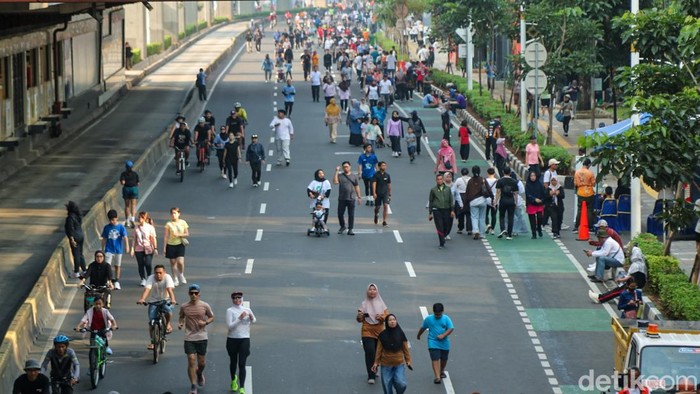
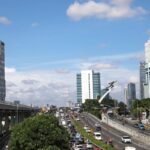
The car free day (CFD) on Jalan HR Rasuna Said, South Jakarta, will be held regularly starting Sunday, June 7, 2026, from 5:30 AM to 9:00 AM Western Indonesia Time. The Jakarta Provincial Government has prepared traffic engineering and alternative vehicle routes for residents active in the morning.
The CFD will take place on Sunday (7/6/2026) from 5:30 AM to 9:00 AM Western Indonesia Time, along a 4.4-kilometer stretch. The Rasuna Said CFD will be inaugurated on June 22, 2026, coinciding with Jakarta’s anniversary.
“Now it’s probably over 95%, in the finalization stage. So tomorrow, the car free day is the car free day that will officially be held continuously from 5:30 AM to 9:00 AM,” said the Governor of DKI Jakarta, Pramono Anung, to reporters in Matraman, East Jakarta, Friday (5/6/2026).
The reason for holding the CFD until 9:00 AM Western Indonesia Time is to avoid disturbing places of worship in the surrounding area. Even so, Pramono believes the Rasuna Said CFD will become a favorite spot for Jakarta residents.
“Why until 9:00 AM? Because there are several places of worship there, we don’t want to disturb them. And for the car free day on Rasuna Said or in Kuningan, I am sure this will become a new favorite place for Jakarta residents to choose whether at Gatot Subroto-Thamrin or at Rasuna Said,” he said.
The Rasuna Said CFD route stretches from Jalan Gembira to Jalan Raya Casablanca for the north-south direction, and from Jalan Prof Dr Satrio to Jalan Setiabudi Utara Raya and Jalan Setiabudi Tengah for the south-north direction.
The Jakarta Transportation Agency has prepared 10 alternative routes for traffic diversion in the Kuningan area. Additionally, residents can use the Jabodebek LRT on the Dukuh Atas-Harjamukti and Dukuh Atas-Jati Mulya routes via the Rasuna Said LRT Station and Setiabudi LRT Station.
The Jakarta Provincial Government has also prepared traffic engineering to access places of worship during the Rasuna Said CFD. Here is the list:
1. Church on the West side of Jalan HR Rasuna Said
From the North (Galunggung) to the church on the West side via Jalan Galunggung-Jalan Setiabudi Tengah-Jalan Setiabudi Selatan-Jalan Setiabudi-Jalan Denpasar and so on.
From the South (Gatot Subroto) to the church on the West side via Jalan HR Rasuna Said-Jalan Gilimanuk-Jalan Denpasar Raya-Jalan Prof Dr Satrio-u-turn in front of Kuningan City-Jalan Denpasar Raya-Jalan Setiabudi Selatan-Jalan Setiabudi Tengah-Jalan Setiabudi Utara Raya and so on.
2. Church on the East side of Jalan HR Rasuna Said
From the North (Galunggung) to the church on the East side via Jalan Galunggung-Jalan Gembira-Jalan Kuningan Persada-Jalan Kuningan Mulya-Jalan Achmad Bakrie Barat-Jalan Jembatan Merah and so on.
From the South (Gatot Subroto) to the church on the East side via Jalan HR Rasuna Said-Jalan Gilimanuk-Jalan Denpasar Raya-Jalan Prof Dr Satrio-u-turn in front of Kuningan City-Jalan Prof Dr Satrio-Jalan Jembatan Merah-Jalan Achmad Bakrie Barat-Jalan Epicentrum Boulevard Barat-Jalan Kuningan Mulia-Jalan Kuningan Persada and so on.</p
Jalan HR Rasuna Said
Jalan HR Rasuna Said is a major thoroughfare in South Jakarta, Indonesia, named after the prominent Indonesian national hero and women’s rights activist, Hajjah Rangkayo Rasuna Said. The road is a key commercial and business district, lined with high-rise office buildings, hotels, and embassies. Its history reflects Jakarta’s rapid modernization, transitioning from a quieter area into a bustling hub for corporate and diplomatic activities.
South Jakarta
South Jakarta is a major administrative city within the Jakarta Special Capital Region, known for its upscale residential areas, business districts, and shopping centers. Historically, it developed rapidly during the 1970s and 1980s as the city expanded southward, transforming from agricultural land into a hub for expatriates and the upper-middle class. Today, it is home to landmarks like the Pondok Indah Mall and the Ragunan Zoo, blending modern urban life with pockets of traditional Betawi culture.
Matraman
Matraman is a district in East Jakarta, Indonesia, historically known as the site of the 1740–1743 Chinese Batavia massacre and the subsequent Java War. Its name is derived from the Mataram Sultanate, reflecting the area’s role as a settlement for Javanese migrants and soldiers during the colonial era. Today, it is a bustling residential and commercial area, blending its historical roots with modern urban life.
East Jakarta
East Jakarta is a diverse administrative city known for its blend of urban development and preserved green spaces, including the expansive Taman Mini Indonesia Indah cultural park. Historically, it was part of the ancient kingdom of Tarumanagara and later developed during the Dutch colonial era as a center for industry and transportation, with key sites like the Halim Perdanakusuma Airport. Today, it remains a vital economic and residential hub, featuring modern shopping centers alongside traditional markets and historical landmarks such as the 18th-century Kebon Nanas Church.
Kuningan
Kuningan is a regency in West Java, Indonesia, known for its scenic highlands and historical significance. It was once part the ancient Sunda Kingdom and later played a role in the spread of Islam in the region. Today, Kuningan is recognized for its cultural traditions, such as the Seren Taun harvest festival, and its proximity to the Mount Ciremai National Park.
Gatot Subroto
Gatot Subroto is a major thoroughfare in Jakarta, Indonesia, named after the national hero Lieutenant General Gatot Subroto, a key figure in the country’s struggle for independence. The road serves as a vital artery connecting central and southern Jakarta, lined with government offices, corporate headquarters, and landmarks such as the Semanggi Interchange. Its history reflects Indonesia’s post-independence development, symbolizing modernization and the nation’s respect for its military heroes.
Thamrin
Thamrin is a major thoroughfare and commercial district in central Jakarta, Indonesia, named after the national hero Mohammad Husni Thamrin. Historically, it was developed in the mid-20th century as part of Jakarta’s modernization, transforming from a residential area into a bustling hub of skyscrapers, hotels, and shopping centers. Today, it is a symbol of the city’s economic growth and a key location for business and tourism.
Jabodebek LRT
The Jabodebek LRT is a light rail transit system serving the Greater Jakarta area in Indonesia, connecting Jakarta with the satellite cities of Bogor, Depok, and Bekasi. Construction began in 2015 to alleviate severe traffic congestion, and the system officially commenced operations in August 2023 after years of delays. It features both elevated and ground-level tracks, offering a modern transit alternative for commuters in the region.