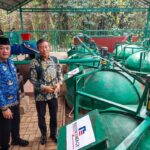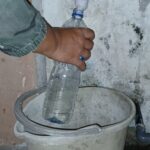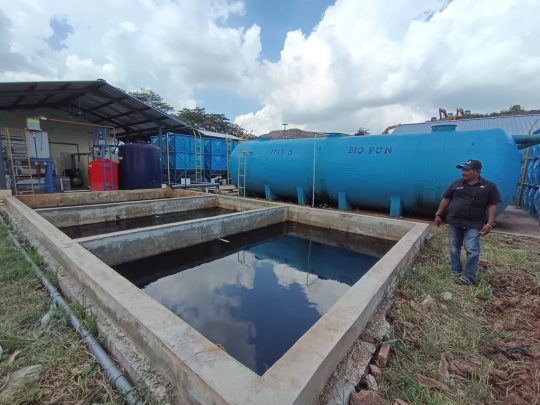
CIKARANG – A member of Commission III of the Bekasi Regency Regional House of Representatives revealed several main obstacles preventing the IDR 13 billion wastewater treatment plant at the Burangkeng landfill from operating. These include high operational costs that were not carefully calculated from the planning stage. Additionally, the technology used in the facility is more suited for industrial needs rather than treating leachate at a landfill site.
“This treatment plant is predominantly designed for industrial use. I will review and discuss this with the planning consultant. Typically, landfill sites use pond systems with biological methods, which do not require large operational costs,” he said.
The system used in the treatment plant requires special raw materials, with operational costs reaching around IDR 20 million per day, equivalent to IDR 7.2 billion per year.
“One reason it is not yet operational is the budget issue. This treatment plant machine requires IDR 20 million per day, or about IDR 7.2 billion per year. This was overlooked during planning. Operational costs for the treatment plant application should have been included in discussions from the planning stage,” he added.
Due to the lack of available operational budget, the facility, built with a large investment, has not yet been able to be used optimally.
Commission III of the Bekasi Regency Regional House of Representatives plans to summon the project contractor and planning consultant to request further clarification regarding the technology selection and budget planning used.
The Bekasi Regency Regional House of Representatives hopes that an evaluation of the Burangkeng landfill treatment plant project will produce a solution so that the facility can be utilized soon and not become an abandoned asset burdening the regional budget.