Jakarta

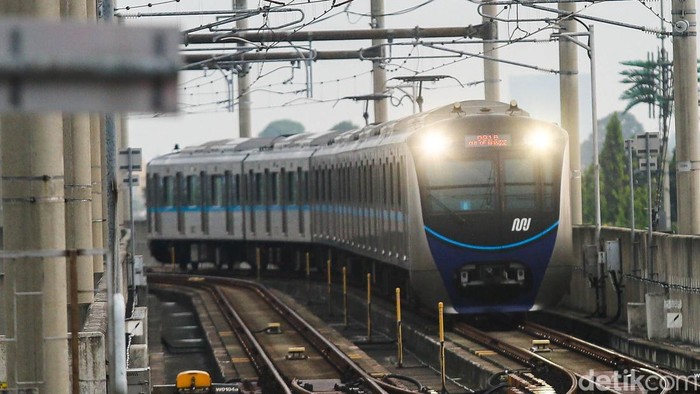
PT MRT Jakarta (Perseroda) has spoken about extending the route to Bekasi and Tangerang. This plan aims to enable more people to travel in and out of Jakarta using public transportation.

“MRT is essentially an operator that wants to assist the government, both central and regional, in connecting transportation not only within Jakarta but also to areas outside. Why? Because congestion in Jakarta is also contributed by the buffer zones,” said the President Director of PT MRT Jakarta, Tuhiyat, on Wednesday (June 3, 2026).

Tuhiyat explained that the extension of the line from Jakarta to Bekasi and Tangerang is already included in the MRT East-West cross plan. This development plan has been included in the list of national strategic projects based on Presidential Regulation Number 12 of 2025.

The western end of the MRT service will stop at Balaraja, and at the eastern end, this rail transportation mode will end at Cikarang. Along that route, there are plans for 48 stations and 3 MRT Jakarta depots.

“From Cikarang to Balaraja, it is approximately 84 km. We estimate daily passengers, again based on the initial study conditions, to be around 600,000,” he explained.

Tuhiyat explained that the project will be carried out in stages, namely phase 1 stage 1 from Tomang to Medan Satria and the MRT Depot in Rorotan.

Then, in phase 1 stage 2, work will be done from Tomang to Kembangan. Only after that, in phase 2, construction will proceed from Balaraja to Kembangan, and from Medan Satria to Cikarang.

On the same occasion, the Construction Director of MRT Jakarta, Weni Maulina, said that the route extension project to Bekasi phase 1 stage has entered the auction stage, especially for the preparation work package.

“The focus now is from Medan Satria to Tomang, there are approximately 12 work packages. One package is a small package, or what we call preparation work, a small package, this has started the auction,” said Weni.

Tomang-Medan Satria Route

The length of the MRT Jakarta route from Tomang to Medan Satria is approximately 24.5 kilometers. Then, in the middle of this route, a special track of 5.7 kilometers will also be built to connect the MRT depot located in the Rorotan area, North Jakarta.

According to Weni, part of the MRT line will be built above ground, known as elevated, and the rest will be built below ground, known as underground. For example, the elevated section will be on the Tomang to Grogol segment, as well as the segment from the Pakulonan area to West Cakung and Medan Satria.

“Tomang to Grogol is approximately 1.9 kilometers elevated. Next, CP102, CP103, CP104, and CP105 are underground works,” said Weni.

“CP102 is from Roxy to Petojo, then CP103 is the Cideng to Thamrin area. Continuing from Thamrin to Kwitang, as previously mentioned, CP104, then package CP105 is from Kwitang to Galur. So there is approximately 9 kilometers in total for the East-West underground line,” she continued.

Weni targets that this project can start by the end of 2026. Currently, the auction or tender process for the MRT Jakarta East-West line is still dominated by Japanese investors.

This is because the initial stage of the project is still under the funding scheme of the Japan International Cooperation Agency (JICA).

“God willing, we will start at the end of this year. Now it is still the auction period, everything is still in the auction period. We have already called for tender and contractors, potential contractors, because we are still using the JICA Loan, indeed we are still partnering with Japan,” she concluded.
Jakarta

Jakarta is the capital and largest city of Indonesia, located on the northwest coast of Java. Originally a small port called Sunda Kelapa, it was renamed Jayakarta in the 16th century before being claimed by the Dutch and renamed Batavia, serving as the center of Dutch colonial rule in the East Indies. After Indonesia’s independence, the city was renamed Jakarta and has since grown into a bustling metropolis, though it faces challenges like traffic congestion, flooding, and land subsidence.

Bekasi

Bekasi is a city in West Java, Indonesia, known for its rapid urbanization and status as a major satellite city of Jakarta. Historically, it was part of the ancient Tarumanagara kingdom, with the Tugu inscription (5th century CE) found there marking one of the earliest written records in Indonesia. Today, Bekasi is a densely populated industrial and commercial hub, blending modern development with historical heritage.

Tangerang

Tangerang is a city in Banten Province, Indonesia, located just west of Jakarta. Historically, it developed as a colonial-era settlement and became a center for Chinese-Indonesian culture, particularly known for its distinctive “Lumpia” spring rolls and the Boen Tek Bio temple, one of the oldest Chinese temples in the region. Today, Tangerang is a rapidly growing industrial and residential hub, blending modern urban development with its multicultural heritage.

Balaraja

Balaraja is a district and town in Tangerang Regency, Banten, Indonesia, historically known as a key agricultural area during the Dutch colonial era. Its name is derived from the Sundanese words “bala” (army) and “raja” (king), suggesting it may have served as a royal military post. Today, it functions as a bustling hub for trade and transportation, connecting Jakarta to western Banten.

Cikarang

Cikarang is a rapidly developing industrial and residential area in West Java, Indonesia, historically part of the larger Bekasi region. Once known for its agricultural landscape, it transformed in the late 20th century into a major industrial hub, hosting factories for multinational companies and supporting the growth of Jakarta’s metropolitan area. Today, Cikarang is a key economic center, known for its industrial estates, modern housing, and ongoing urban expansion.

Tomang

Tomang is a neighborhood in West Jakarta, Indonesia, historically part of a larger area that developed during the Dutch colonial era as a mix of residential and industrial zones. The name “Tomang” is believed to derive from the Sundanese word “tumang,” meaning “to care for,” reflecting its early role as a settlement near the Ciliwung River. Today, it is a bustling area known for its markets, schools, and proximity to key Jakarta landmarks like the Gajah Mada Plaza.

Medan Satria

Medan Satria is a district located in Bekasi City, West Java, Indonesia. Historically, the area developed from a rural settlement into a densely populated suburban region as part of Bekasi’s rapid urbanization in the late 20th century. Today, it is known for its mix of residential areas, local markets, and cultural diversity, reflecting the broader growth of the Jakarta metropolitan area.

Rorotan

Rorotan is a subdistrict in North Jakarta, Indonesia, historically known as a rural area with extensive rice fields and fishing villages. Over time, it has developed into a mixed residential and industrial zone, reflecting Jakarta’s urban expansion. The area is also notable for the Rorotan Mangrove Forest, which serves as an important ecological site for coastal protection and biodiversity.