World News 4-6: US says risk of Ukraine conflict escalating; Top US general visits Venezuela
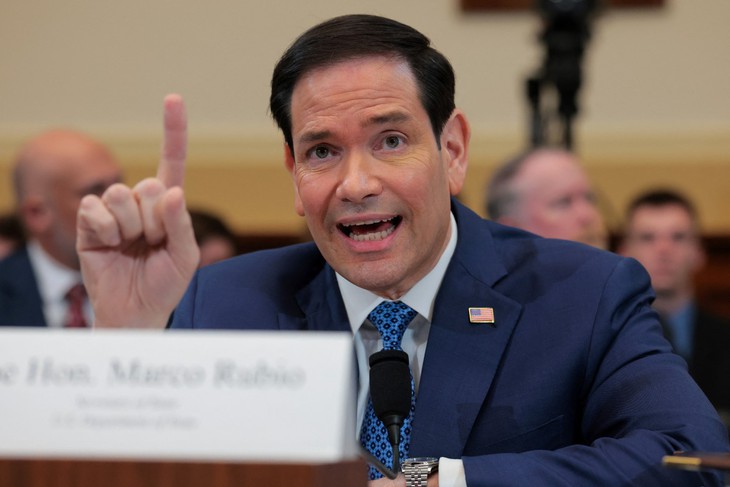
Rubio: Risk of Escalation in Ukraine War is ‘Real’
On June 3, the risk of the war in Ukraine escalating was warned to be ‘real,’ as Kyiv increasingly demonstrates its ability to strike deep into Russian territory, according to AFP.
Rubio’s assessment came after Ukrainian drones attacked energy infrastructure in St. Petersburg, Russia’s second-largest city. Kyiv stated this was a retaliatory strike following a large-scale Russian airstrike on June 2 that killed at least 23 people.
“Ukraine is increasingly showing effectiveness in conducting long-range attacks deep inside Russian territory,” Rubio said at the U.S. Senate.
He stated that this is “one of those reminders of the importance of trying to end this war, if possible, because the risk of escalation is real, even more present than two years ago.”
Earlier, at the U.S. House Foreign Affairs Committee, Rubio expressed regret that efforts to end the conflict had not made significant progress. “So far, both sides, especially Russia, are not ready to make the necessary concessions to achieve peace,” he said.
“However, we are always ready, and we have invested a significant amount of time at high levels in this conflict over the past year,” he noted.
EU Advances Ukraine’s Accession Process as Hungary Drops Veto
On June 3, the European Union (EU) agreed to move Ukraine and Moldova to the next stage of their accession process, as diplomats said Hungary signaled it would drop its long-standing veto on Kyiv’s bid, according to AFP.
“This is an important milestone on the European integration path for both countries, while sending a strong message of unity and determination,” Cyprus, which holds the EU’s rotating presidency, commented on social media.
The EU formally opened accession negotiations with Ukraine in June 2024, starting a complex process that typically takes years and involves negotiations across a range of sectors, from agriculture to the rule of law.
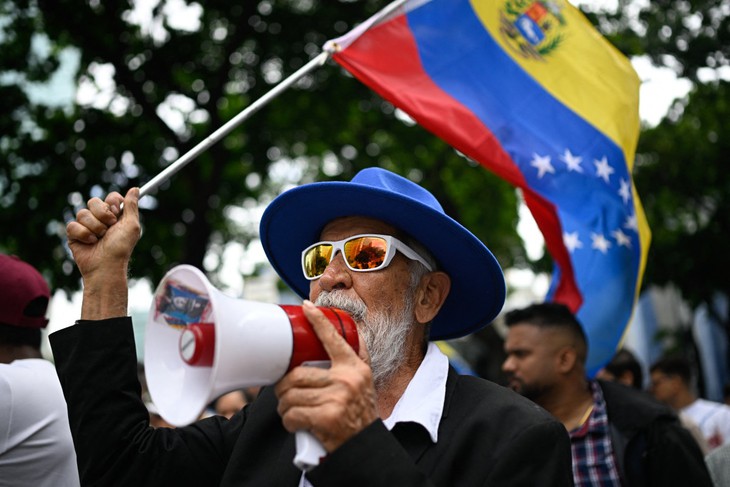
Top U.S. General Visits Venezuela, 5 Months After Maduro’s Arrest
On June 3, General Dan Caine, Chairman of the U.S. Joint Chiefs of Staff, visited Venezuela and met with the country’s interim leadership, five months after U.S. forces arrested Venezuelan President Nicolas Maduro, according to a statement from his office cited by AFP.
Caine “emphasized the importance of stability in Venezuela, common security across the Western Hemisphere, as well as the commitment of the Joint Forces to ensure the implementation” of Washington’s plan for Venezuela.
He is the latest U.S. official to visit Venezuela since Maduro’s arrest. He also visited the U.S. Embassy in Caracas, which had just reopened.
North Korea Issues New Statement on Nuclear Capabilities
On June 3, North Korean leader Kim Jong Un said the country’s production of weapons-grade nuclear materials has more than doubled over the past five years, while pledging to expand military nuclear capabilities at an “exponential” rate.
According to the Korean Central News Agency (KCNA), during an inspection of a new nuclear material production facility, Kim stated that North Korea
St. Petersburg
St. Petersburg, founded in 1703 by Tsar Peter the Great, served as the imperial capital of Russia for over two centuries. Known for its stunning neoclassical and baroque architecture, including the Winter Palace and the Hermitage Museum, the city was a center of culture and political upheaval, witnessing the 1917 Russian Revolution. Today, it remains a major cultural hub, renowned for its canals, bridges, and rich artistic heritage.
U.S. Senate
The U.S. Senate is the upper chamber of the United States Congress, established in 1789 under the Constitution. It was designed to represent each state equally, with two senators per state, and to provide a more deliberative and stable counterbalance to the House of Representatives. Over its history, the Senate has played a pivotal role in shaping national legislation, confirming presidential appointments, and ratifying treaties.
U.S. House Foreign Affairs Committee
The U.S. House Foreign Affairs Committee is a standing committee of the United States House of Representatives responsible for overseeing foreign policy, international relations, and matters related to U.S. diplomacy and foreign aid. Established in 1822, it has played a key role in shaping American foreign policy through hearings, investigations, and the drafting of legislation. The committee’s work includes reviewing treaties, authorizing foreign assistance, and monitoring the executive branch’s conduct of foreign affairs.
European Union
The European Union (EU) is a unique political and economic union of 27 European countries, established to foster peace, prosperity, and cooperation after the devastation of World War II. Its roots trace back to the 1951 European Coal and Steel Community, evolving through treaties like the 1992 Maastricht Treaty to create a single market, common currency (the euro), and shared policies. Today, the EU promotes free movement of people, goods, services, and capital, while also influencing global affairs through diplomacy and trade.
Ukraine
Ukraine is a large Eastern European country with a rich history dating back to the medieval state of Kyivan Rus’. It has experienced periods of independence and foreign rule, including being part of the Russian Empire and the Soviet Union. Since declaring independence in 1991, Ukraine has faced ongoing challenges, including the 2014 annexation of Crimea by Russia and the full-scale war that began in 2022.
Moldova
Moldova is a landlocked Eastern European country known for its rich winemaking traditions and rolling hills. Its history includes being part of the Principality of Moldavia, then the Russian Empire, and later a Soviet republic before gaining independence in 1991. Today, Moldova is celebrated for its monasteries, rural culture, and the world’s largest wine cellar at Mileștii Mici.
Venezuela
Venezuela, located on the northern coast of South America, is known for its diverse landscapes, including the Andes Mountains, the Amazon rainforest, and the world’s tallest waterfall, Angel Falls. The region was originally inhabited by indigenous peoples such as the Carib and Arawak, before being colonized by Spain in the 16th century. It gained independence in 1821 under the leadership of Simón Bolívar, and later became a major oil-exporting nation in the 20th century.
Caracas
Caracas, the capital of Venezuela, was founded in 1567 by Spanish conquistadors and later became a key center for independence movements, most notably as the birthplace of Simón Bolívar. The city grew into a major cultural and economic hub in the 20th century, fueled by the oil industry, but has faced significant social and political challenges in recent decades. Today, Caracas is known for its striking blend of modern skyscrapers and colonial architecture, set against the backdrop of the Ávila Mountain.