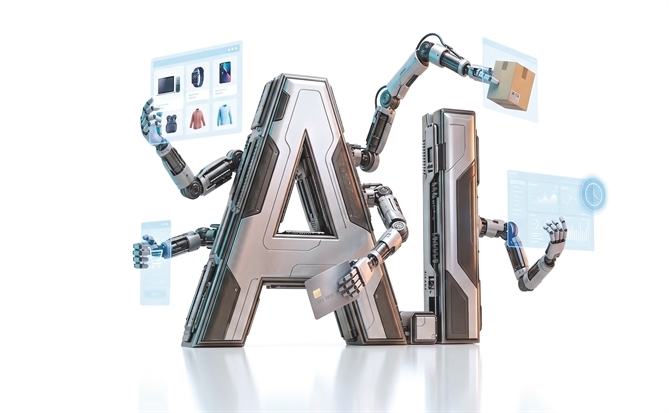
The A.I wave is redefining the entire retail, media, and advertising industry, and in Vietnam, this trend is happening strongly.
When A.I assistants can make purchasing decisions, it creates a new set of rules for the advertising industry.
A notable insight is that consumers are increasingly using artificial intelligence tools to get product advice before making a purchase, including platforms like ChatGPT, Copilot, and Gemini. About 50% of customers have used A.I in some form, with around 60% relying on these tools for product guidance.
Resetting the Rules of the Game
The A.I wave is redefining the entire retail, media, and advertising industry, and in Vietnam, this trend is happening strongly. The concept of “AI First and AI All” has been emphasized, viewing A.I as the primary foundation for all activities, applying A.I to management where “digital robots” not only collect data but also analyze, suggest, and support decision-making.
When consumers input queries to A.I chatbots instead of traditional search tools, advertisers will have to find ways to ensure their brands are recommended by tools like ChatGPT or Gemini. A.I can already analyze customer moods to select ads with emotional resonance, thereby increasing natural interaction rates. Hyper-personalized A.I helps brands provide increasingly accurate and flexible customer experiences, significantly boosting consumer satisfaction and encouraging repeated interactions with the brand.
Instead of placing ads on the margins of websites, A.I directly integrates commercial suggestions into its answers. When a user asks for a solution to a problem, A.I can provide an objective analysis, then subtly insert the name of a sponsored brand as an “optimal” choice. When A.I begins performing tasks on behalf of humans, such as booking flights, shopping, or scheduling meetings, it holds the key to consumer behavior. In this model, A.I is not just a consultant but becomes a sales representative for the highest bidders. This is the agentic advertising model.
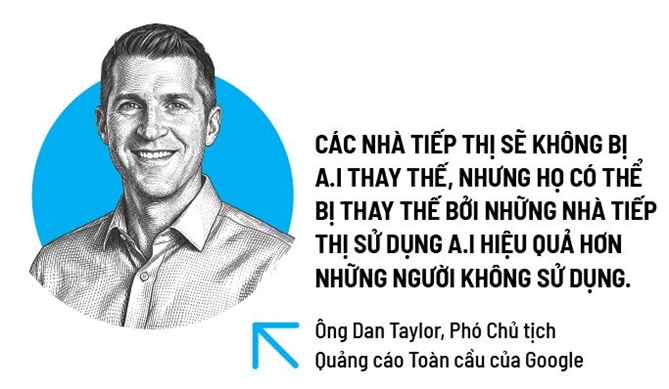
When A.I becomes the default interface for search, it has full control over product visibility. Being “named” by A.I in a response becomes a new form of SEO, with much stricter barriers to entry than optimizing keywords on traditional search engines.
 |
Taking Over Shopping Decisions
A recently revealed A.I-integrated shopping tool allows users to instruct it to send notifications when the price of a product drops to a certain level. Such tools may soon be “empowered” to make shopping decisions on behalf of humans.
These models show that A.I has penetrated deeply into advertising, and A.I assistants are gradually becoming salespeople. From OpenAI, Google, Microsoft to Amazon, most major players are joining this game. This is not just a change in display interface, but a core shift in the digital business model: from the “attention economy” to the “intent economy.”
The fact is that the four largest ad sellers—Google, Meta, ByteDance, and Amazon—account for more than 50% of the global market, compared to just over one-third in 2019. Moreover, 8 out of the 10 largest ad sellers are also technology companies, and A.I seems to be strengthening their power to dominate user purchasing decisions.
 |
For OpenAI, which is expected to spend $25 billion in cash this year, advertising is a necessary way to monetize hundreds of millions of free users. Despite the same revenue goal, OpenAI and Google show different approaches in deciding the right to “close the deal.” About 98.5% of ads in Google’s A.I mode appear in response to the first query, similar to how traditional search engines work.
ChatGPT seems more “patient.” Less than half of ads appear in the first response, and nearly one-third appear after the 10th interaction, much like a real salesperson waiting for the customer’s intent to become clear before making an offer. OpenAI focuses more on brand-building advertising to polish its image.
Nevertheless, these A.I models still face major challenges regarding brand safety and effectiveness measurement. When chatbots write ad content themselves, companies remain wary of a “silicon salesperson” that could create