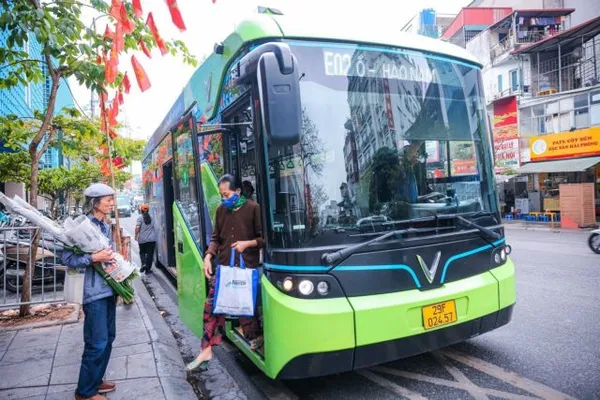
Hanoi welcomed an estimated 560,000 visitors during the four-day 2026 New Year holiday, a surge of around 250 percent compared to the same period last year.
The impressive growth reflects the sector’s effective rebound after a challenging period, driven by the capital city’s diversified tourism products.
The Hanoi tourism sector aims to become a leading destination in the Asia-Pacific region and a key hub connecting domestic and international tourism in the near future, with initial targets of welcoming more than 35.8 million visitors and generating over VND160 trillion (US$6.08 billion) in revenue by 2026.
Tourism revenue climbed to VND108.22 trillion (US$4.1 billion), a year-on-year increase of nearly 20 percent, reflecting the sector’s sustained recovery after years of pandemic impacts and global economic uncertainties.
According to the Deputy Director of the Hanoi Department of Tourism, this collaboration opens up numerous opportunities for cooperation in various aspects, creating a foundation for developing attractive and sustainable inter-regional tourism products.
This is an annual activity of the city aimed at promoting tourism in the capital while honoring, preserving, and spreading the unique intangible cultural values of the Vietnamese traditional dress.
This year’s edition brings together over 170 artists, photographers, curators and experts from 21 countries, in collaboration with 25 specialized institutions.
China remains Vietnam’s top outbound tourist market, with over 5.8 million visitors annually, accounting for around 30 percent of international arrivals to Vietnam. In 2024, nearly 3.74 million Chinese tourists visited Vietnam, recovering over 64 percent of pre-COVID levels, with nearly 3.9 million arrivals in the first nine months of this year.
The city aims to not only increase visitor numbers but also solidify its status as the premier tourist hub in Vietnam – an appealing, cultured and distinct destination.
The event reaffirms the city’s role as the nation’s leading cultural and tourism hub – where heritage, craft villages and creativity converge – connecting communities, businesses and visitors in a space rich in cultural identity.
Joining the “Exploring the heritage road in South Thang Long” tour, people will travel from the city center to the outlying districts of Thanh Oai, Ung Hoa and My Duc.
After over a thousand years of ups and downs, Chuon Ngo’s mother-of-pearl products have made a name for themselves in both domestic and foreign markets.
The pedestrian spaces around Hoan Kiem Lake and pedestrian streets in the Old Quarter have become an attractive destination, drawing a lot of local residents and visitors at weekends and on holidays.
The 2023 Proud of Vietnamese Agricultural Products will be held in late December in Hanoi, aiming to popularize national products and affirm its quality to the wider community.
In the memories of Hanoi residents, the Old Quarter is not just an “urban cultural village,” but also a place where handicraft activities and trade flourish, forming distinctive craft streets.
The exhibition displays 70 artworks by 62 artists who are lecturers and officials at the Vietnam University of Fine Arts (VNUFA) in Hanoi and the HCM City University of Fine Arts in HCM City, to highlight their dedication and creative spirit.
The 282 Factory, a multifunctional creative space renovated from an old oil processing factory in Long Bien District, will host a special festival called ‘282 Factory – Heritage Journey’ on December 23.
The capital is blessed with numerous museums that are the best places to learn and fully understand the country. Vietnamese Women’s Museum and Vietnam Military History Museum are among the most highly recommended by travel sites and local guides.
One of the standout achievements of Hanoi’s tourism in 2023 is the surge in international visitors, totaling four million.
Organized by the Hanoi Trade, Tourism, and Investment Promotion Centre from December 15-18, the objective of the program was to advertise and promote typical agricultural products from Hanoi, as well as other provinces and cities.
Fresh ingredients, refined traditions, and secret family recipes are hallmarks of cooking in the capital. “Pho” and “com xao” with their distinctive flavor are Hanoi specialties. So if you love fine foods, head to Hanoi and enjoy these very special dishes.
After four years of joining the Creative Cities Network of UNESCO, Hanoi is gradually working towards a ‘Creative City’ title, implementing initiatives and hosting multiple programs and activities to realize commitments with the UN culture organization.
The capital city is considered a safe, attractive and