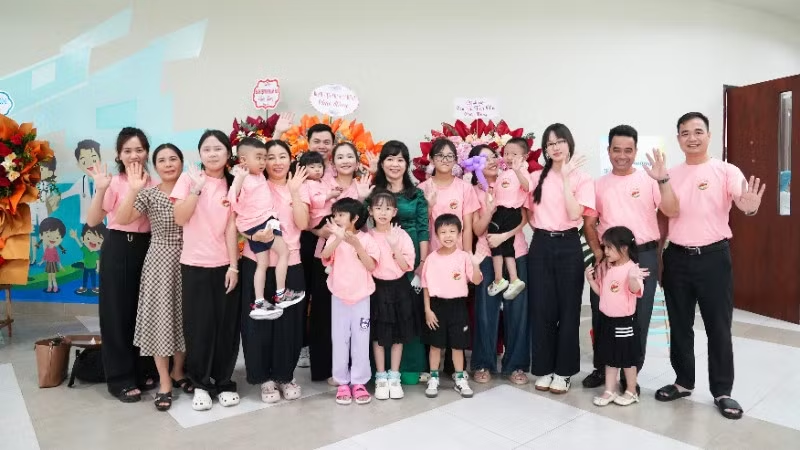
On the morning of May 29, a ceremony celebrated the milestone of 100 pediatric liver transplants and a scientific conference on liver transplantation for children. The event marked a 20-year journey of this pediatric facility in bringing renewed life to many young patients suffering from congenital liver and biliary diseases.
Children “born a second time” thanks to liver transplants
Throughout the gathering, little boy Hoang Phuc Ng. (6 years old) sat obediently beside his parents, a mask rarely leaving his small face. Few would think that just a few months earlier, he had undergone a major liver transplant from a brain-dead donor. This was a miracle for the family.
Nearly four years ago, Ng. began showing unusual symptoms such as jaundice, atopic dermatitis, and many pimples on his scalp. Initially, the family thought he had a common skin disease. However, during treatment at the Clinical Hematology Department of the National Children’s Hospital, doctors discovered he had Langerhans cell histiocytosis—an extremely rare disease worldwide.
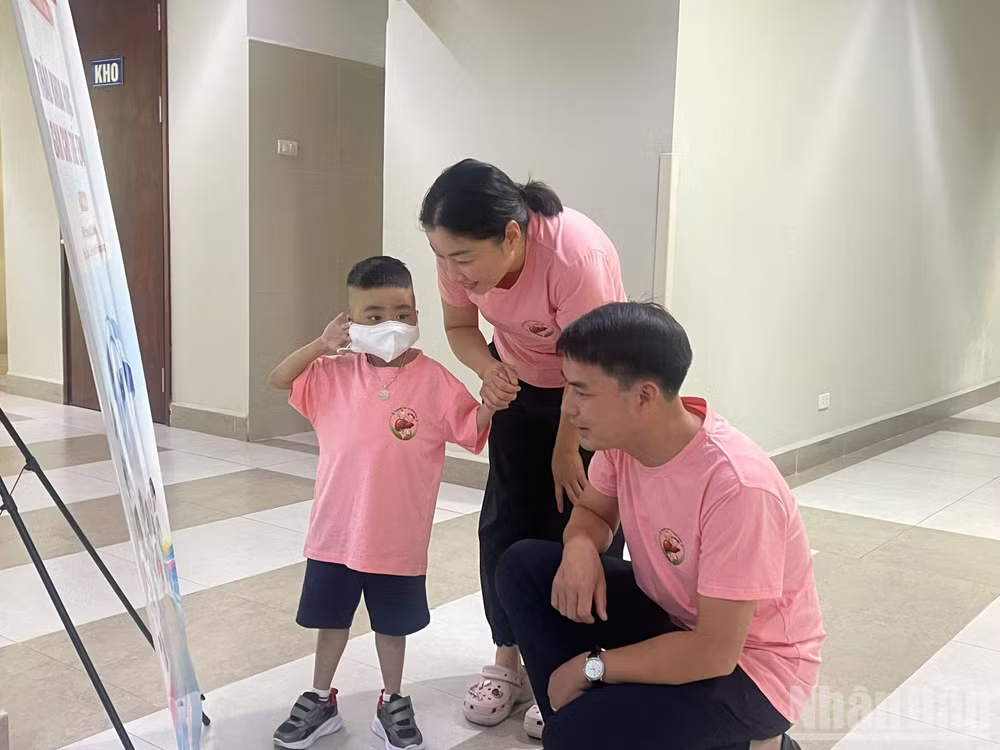
From August 2022, the family took the child to Singapore for treatment because targeted therapy for this disease was very scarce in Vietnam at that time. During nearly three years of traveling for treatment abroad, the family’s hope wavered many times as the child’s condition grew increasingly severe. By May 2025, doctors in Singapore concluded the child needed a liver transplant. But even there, Ng.’s case was considered too difficult.
“The Singapore side said this was their first case, so they weren’t sure about the success rate. At that point, my wife and I decided to bring our child back to the National Children’s Hospital, trying any last resort,” the father recalled emotionally.
Upon returning to Vietnam, Ng.’s condition was very serious. His body was deeply jaundiced, his eyes clearly yellow, and his abdomen began to harden due to severe liver damage. After many consultations, doctors decided to perform a liver transplant for him in December 2025. The successful transplant from a brain-dead donor gave new life to the 6-year-old boy.
Now, after months facing the line between life and death, Ng. is much healthier. He has started eating better, playing, and recovering day by day, to the happiness of his family. “Seeing our child sitting here today is already a miracle for us,” the father shared.
Ng. is also one of the first pediatric patients to receive a liver transplant from a brain-dead donor at the National Children’s Hospital—a milestone not only for his family but also for pediatric transplant medicine in Vietnam.