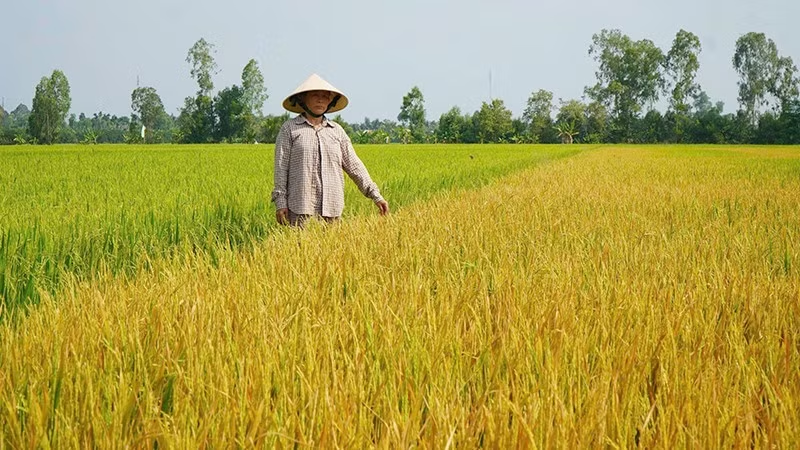
The Deputy Head of the Economic Office of My Qui Commune stated that local authorities have coordinated with the Dong Thap Crop Production and Plant Protection Sub-Department to collect samples of the affected rice and send them to a functional unit in Ho Chi Minh City for testing and analysis of the chemical samples.
Additionally, the Dong Thap Provincial Police also visited the damaged field of Ms. Pham Thi Ngoc Men’s family to collect rice samples for verification and clarification purposes.
As of 1:00 PM on April 25, the functional authorities have not yet identified the subject responsible for the incident.
Previously, on April 19, the My Qui Commune Police received a report from the family of Ms. Pham Thi Ngoc Men (residing in My An 2 Hamlet, Thap Muoi Commune, Dong Thap Province) regarding over 2.1 hectares of rice in the flowering stage showing signs of widespread yellowing and leaf burn.
Specifically, the affected area includes 17,264.4 square meters located in My Qui Commune and 4,687 square meters in Thap Muoi Commune. At the time of the report, the rice was approximately 70 days into its growth period.
Functional authorities have preliminarily determined that the cause may be due to the impact of toxic chemicals, with symptoms similar to those caused by 2,4-D group herbicides or substances with equivalent properties.
The estimated damage rate is about 90% of the area, with many sections of rice completely destroyed and unable to recover. Accordingly, the total estimated damage value is approximately 100 million Vietnamese dong, based on post-harvest production value.
The My Qui Commune Economic Office, in coordination with the Commune Police and a representative of My Dong 1 Hamlet, conducted a comprehensive field inspection, drafted a verification report of the current status, and collected rice samples for analysis to determine the exact cause.
The Cao Lanh Regional Crop Production and Plant Protection Station was also invited to participate in a professional assessment of the damage level. The Commune Police and local specialized agencies visited the field to inspect and assess the initial damage.
At the same time, functional authorities instructed the affected household to fully document the current status and preserve all related evidence to serve the verification and investigation process.
My Qui Commune
My Qui Commune is a rural administrative area in Vietnam, typically found within provinces like Quảng Ngãi or Bình Định. Its history is deeply tied to agricultural traditions and local governance under the Vietnamese commune system, which has evolved from feudal times through French colonial rule to the modern era. The commune reflects the enduring cultural practices and community life of Vietnam’s countryside.
Dong Thap Province
Dong Thap Province is located in the Mekong Delta region of southern Vietnam, known for its vast rice paddies, floating markets, and the Tram Chim National Park, a key habitat for the rare red-crowned crane. Historically, it was a frontier area during the Nguyen dynasty and played a significant role in the resistance wars against French colonial rule and the Vietnam War. Today, it is celebrated for its agricultural output and unique wetland ecosystem.
Ho Chi Minh City
Ho Chi Minh City, formerly known as Saigon, is the largest city in Vietnam and serves as its economic and cultural hub. Originally a small fishing village, it grew into a major port under French colonial rule in the 19th century and later became the capital of South Vietnam during the Vietnam War. In 1976, after the war ended, the city was renamed Ho Chi Minh City in honor of the revolutionary leader, and today it is known
My Qui Commune
My Qui Commune is a historical administrative division in Vietnam, though specific details about its exact location and history can vary depending on the region referred to. Generally, communes like My Qui were established during the feudal or colonial periods, serving as local governance units where villagers managed agriculture, trade, and cultural practices. Today, such communes often retain traditional communal houses and festivals that reflect the area’s agrarian heritage and community life.
Dong Thap Province
Dong Thap Province, located in the Mekong Delta region of southern Vietnam, is known for its vast rice fields, orchards, and the famous Dong Thap Muoi (Plain of Reeds) wetland ecosystem. Historically, the area played a significant role during the Vietnam War as a revolutionary base, and it is also home to the Xeo Quyt relic site, which preserves a network of canals and bunkers from that era. Today, the province is celebrated for its natural landscapes, including Tram Chim National Park, a UNESCO Ramsar site that shelters the rare red-headed cranes.
Ho Chi Minh City
Ho Chi Minh City, formerly known as Saigon, is the largest city in Vietnam and a major economic and cultural hub. Originally a small fishing village, it grew significantly during French colonial rule and later became the capital of South Vietnam until the end of the Vietnam War in 1975, when it was renamed. Today, the city is known for its dynamic blend of modern skyscrapers, historic French colonial architecture, and vibrant street life.
Thap Muoi Commune
Thap Muoi Commune is a rural administrative area located in the Đồng Tháp Province of Vietnam’s Mekong Delta region. Its name, meaning “Ten Towers,” is historically tied to the region’s ancient towers and its role as a strategic area during the resistance wars against foreign invasions. Today, the commune is known for its agricultural landscapes, particularly rice and lotus farming, and for preserving local cultural traditions.
My An 2 Hamlet
My An 2 Hamlet is a small rural settlement located in central Vietnam, known for its traditional agricultural lifestyle and close-knit community. Historically, the area has been shaped by centuries of rice farming and local customs, with its development influenced by the broader cultural and economic shifts of the region. Today, it remains a quiet reflection of Vietnam’s enduring village heritage.
My Dong 1 Hamlet
My Dong 1 Hamlet is a rural community in Vietnam, known for its traditional agricultural lifestyle and close-knit village structure. Historically, it reflects the resilience of Vietnamese hamlets that have developed through periods of agrarian reform and modernization. Today, it represents a blend of enduring cultural practices and gradual adaptation to contemporary life.
Cao Lanh Regional Crop Production and Plant Protection Station
The Cao Lanh Regional Crop Production and Plant Protection Station, located in Dong Thap Province, Vietnam, serves as a key agricultural hub for the Mekong Delta region. Established to support local farmers, it focuses on crop research, pest management, and promoting sustainable farming practices. The station plays a vital role in safeguarding regional food security by providing expert guidance on plant protection and yield improvement.
Tram Chim National Park
Tram Chim National Park, located in Dong Thap Province in Vietnam’s Mekong Delta, is a vital wetland reserve known for its rich biodiversity, particularly as a key habitat for the endangered red-crowned crane. Established as a protected area in 1985 and later upgraded to a national park in 1998, it was historically part of the vast Plain of Reeds, which played a significant role in local ecosystems and during the Vietnam War. Today, the park is a popular ecotourism destination, offering visitors a chance to explore its flooded forests, lotus ponds, and diverse birdlife.