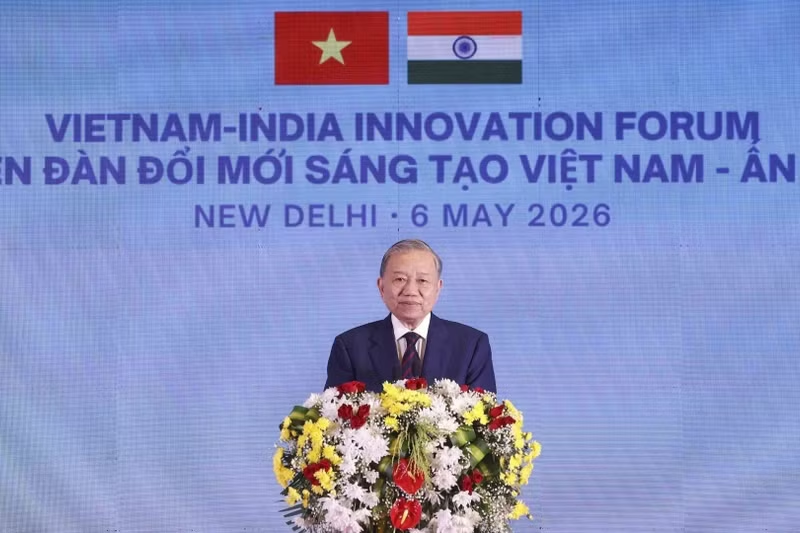
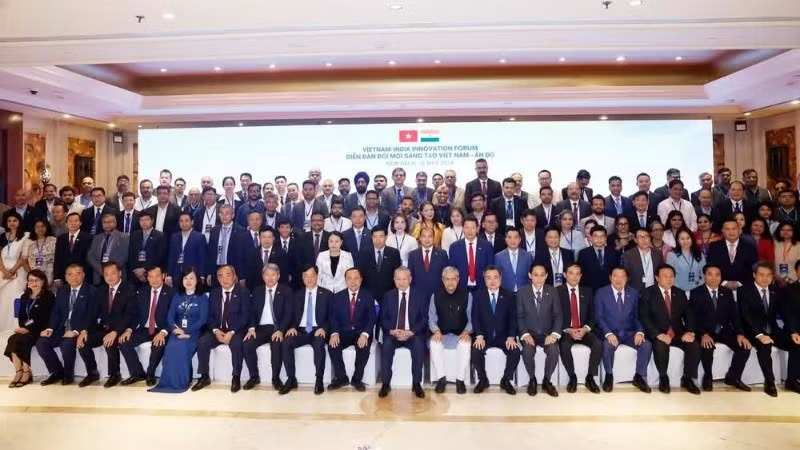
The CEO of the Digital Bhasha India Language Division and the Startup Hub of the Ministry of Electronics and Information Technology (MeitY) assessed that Vietnam and India have many complementary advantages in the ecosystem, as both possess high-quality human resources and are actively developing deep-tech and emerging technology fields.
It was emphasized that Vietnam and India share the aspiration of becoming developed nations by 2045 and 2047, respectively. Therefore, startup organizations and associations of the two countries can jointly build cooperative ecosystems, serving not only domestic needs but also aiming to expand into other markets.
Regarding artificial intelligence (AI) and language data, this is a promising area for cooperation due to its connection to each country’s cultural identity.
India is implementing the Bhasha Interface project for the country to build AI models and data repositories for many languages, including those with limited digital resources. India has developed a national language technology platform, integrating AI models and language data, and has open-sourced most of this system to enhance compatibility and connectivity with international languages.
Notably, Vietnamese has now been integrated into India’s language platform, allowing content in Indian languages to be seamlessly converted into text or speech in Vietnamese.
There is hope that the two countries will further promote cooperation in the startup ecosystem, AI, and language data in the coming time.
Meanwhile, the co-founder of three startups RIKA India, RIKA Institute, and DTECH, highlighted the significance of the Innovation Forum, calling it a future-oriented initiative and an important platform connecting startups from both countries.
According to them, one of the most promising areas for cooperation is disaster management and climate change response, as Vietnam and India share many similarities in disaster risks. In this field, startups can play a key role in developing technological solutions for disaster management and response in the future, not only in South Asia but also in Southeast Asia.
It was also noted that Vietnam and India can aim to cooperate in developing AI-powered robots and other advanced technologies, including quantum technology, to help effectively mitigate and manage shared risks faced by both countries.
Indian experts expressed confidence that the state visit of General Secretary and President To Lam will create new momentum for Vietnam-India cooperation in innovation, digital technology, and startups, contributing to the continued substantive and effective development of the Enhanced Comprehensive Strategic Partnership between the two countries.