-
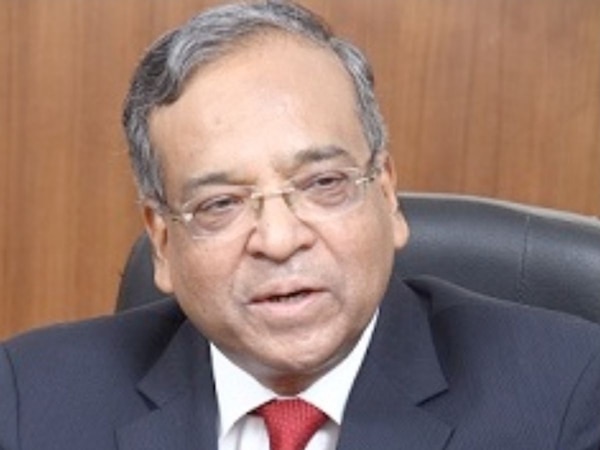
IAS Dhanendra Kumar Delhi Fire News: A retired IAS officer, Dhanendra Kumar, died due to a fire in an air conditioner in the Hauz Khas area of Delhi. He had served in several important positions, including at the World Bank. People allege that fire brigade vehicles took a long time to arrive, causing the fire to become severe, and Dhanendra Kumar lost his life trapped in it.
Long administrative career as former CCI Chairman
The senior IAS officer, who played a key role in India’s bureaucracy and economic policies, had a very long and influential administrative career. Born in 1946, Dhanendra Kumar began his service as an officer of the 1968 batch of the Indian Administrative Service (IAS). During his career, he worked in several high-ranking positions in the central and Haryana governments, and later played a significant role in key decisions related to the country’s competition law and economic reforms.
Served as secretary in several important ministries
Dhanendra Kumar held the responsibility of secretary in several important ministries of the central government. These include the Ministry of Defence, the Ministry of Road Transport and Highways, and the Ministry of Culture. While serving as secretary in the Ministry of Defence, he handled national security and administrative matters, while in the Ministry of Road Transport, he worked on issues related to infrastructure and highway projects.
As secretary in the Ministry of Culture, he handled matters related to the country’s cultural heritage and institutions. In addition, he also served as Chairman and Managing Director of the Rural Electrification Corporation.
Also held a major responsibility at the World Bank
Dhanendra Kumar also represented India at the international level. From November 2005 to January 2009, he served as Executive Director for India, Bangladesh, Sri Lanka, and Bhutan. During this time, he worked on economic and development projects related to South Asian countries.
Among the prominent figures of the first term of CCI
Dhanendra Kumar served as Chairman from February 2009 to June 2011. During his tenure, several important steps were taken towards implementing competition law in India. The role of the CCI was strengthened to maintain fair competition in the market and monitor the monopolies of large companies.
Key role in formulating the National Competition Policy
The Ministry of Corporate Affairs also formed a committee under the chairmanship of Dhanendra Kumar to prepare the National Competition Policy. The committee’s task was to reform competition law and formulate new policies. Additionally, the Ministry of Housing and Urban Poverty Alleviation formed the SAPREP committee under his chairmanship to simplify the approval process for real estate projects.
Major contribution to industrial development in Haryana
Dhanendra Kumar also held several important responsibilities in the Haryana government. He served as Principal Secretary to the Chief Minister of Haryana, as well as Chairman and Managing Director of the Haryana State Industrial & Infrastructure Development Corporation (HSIIDC).
He was also awarded the National Citizens Award for his contribution to the development of industrial parks in Haryana. He also received an honorary doctorate for his outstanding contribution to public affairs.
Long administrative journey from district to Delhi
In his early administrative career, Dhanendra Kumar served as District Collector and in other administrative positions in several districts of Haryana. He was Deputy Commissioner of Karnal and Jind. In addition, he worked as Labour Commissioner, Registrar of Cooperative Societies, Director of Industries, and several other important positions.
He also served as Resident Director at the Indian Investment Centre in London. In addition, he worked in senior positions in the Ministry of Agriculture, the Ministry of Textiles, and the Ministry of Communications.
Active role in media and policy matters
<div class
Hauz Khas
Hauz Khas, located in South Delhi, India, is a historic complex centered around a large water tank built by Sultan Alauddin Khalji in the 13th century to supply water to the nearby Siri Fort. Later, during the 14th century, the area was developed by Firoz Shah Tughlaq, who added a madrasa (Islamic school), mosque, and his own tomb, blending medieval architecture with lush greenery. Today, it is a vibrant neighborhood known for its blend of ancient ruins, upscale boutiques, art galleries, and trendy restaurants, reflecting Delhi’s rich cultural layers.Delhi
Delhi, the capital of India, is a historic city that has been continuously inhabited for over two millennia, serving as the capital of several ancient and medieval empires, including the Mughals. It is home to iconic landmarks such as the Red Fort, Qutub Minar, and Humayun’s Tomb, reflecting its rich blend of Hindu, Islamic, and British colonial influences. Today, Delhi is a bustling metropolis that seamlessly combines its deep historical heritage with modern urban life.Haryana
Haryana, a state in northern India, was carved out of the former state of Punjab in 1966 on linguistic grounds. Its history is deeply rooted in ancient Indian civilization, as it is traditionally considered the birthplace of the Hindu epic, the Mahabharata, and the site of the historic Battle of Kurukshetra. Today, Haryana is known for its rich agricultural output, vibrant folk culture, and being a major economic hub near the national capital, Delhi.World Bank
The World Bank is an international financial institution established in 1944 at the Bretton Woods Conference, originally created to help rebuild war-torn Europe after World War II. Its mission has since evolved to focus on reducing global poverty and supporting development in low- and middle-income countries through loans, grants, and technical assistance. Headquartered in Washington, D.C., it operates as a key partner in financing infrastructure, education, and health projects worldwide.Ministry of Defence
The Ministry of Defence (MoD) is the UK government department responsible for implementing defence policy and managing the British Armed Forces. Its headquarters, known as the Main Building, is located in Whitehall, London, and was originally constructed in the early 20th century as a hotel before being repurposed for military use during World War II. The MoD was formally established in 1964, merging the Admiralty, War Office, and Air Ministry to create a unified command structure for national security.Ministry of Road Transport and Highways
The Ministry of Road Transport and Highways is a key government agency in India responsible for the development and maintenance of the country’s national highways and road infrastructure. Established in its current form in 1985, it has played a vital role in expanding and modernizing India’s road network, including flagship programs like the National Highways Development Project. The Ministry also oversees road safety regulations and the registration of motor vehicles, aiming to improve transportation efficiency and safety across the nation.Ministry of Culture
The Ministry of Culture is a government department responsible for preserving and promoting a nation’s cultural heritage, arts, and creative industries. Its history often dates back to the mid-20th century, when many countries established such ministries to centralize cultural policy and support national identity. Today, it typically oversees museums, cultural events, and heritage protection laws.Rural Electrification Corporation
The Rural Electrification Corporation (REC) is a public infrastructure finance company in India, established in 1969 to accelerate the development of power infrastructure in rural areas. Its primary mission was to provide financial assistance for electrification projects, significantly expanding electricity access to villages and supporting agricultural and economic growth. Over the decades, REC has played a crucial role in India’s rural transformation, evolving into a key financial institution under the Ministry of Power.