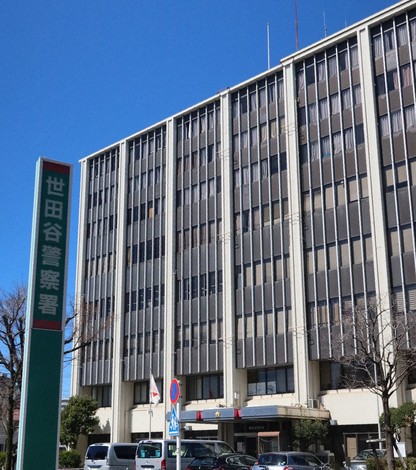
The Setagaya Police Station is a local law enforcement facility located in Setagaya, Tokyo, Japan. It serves the Setagaya ward, one of Tokyo’s 23
Setagaya Police Station
The Setagaya Police Station is a local law enforcement facility in Tokyo’s Setagaya Ward, serving one of the city’s largest residential areas. Historically, the station and its precinct have been involved in notable investigations, including the unresolved 2000 Setagaya family murder case, which remains one of Japan’s most infamous unsolved crimes. Today, it continues to provide public safety and community policing services to the ward’s residents.
Setagaya Ward
Setagaya Ward is a special ward located in western Tokyo, Japan, known for its residential neighborhoods, cultural attractions, and green spaces. Historically, it developed as a suburban area during the Edo period, with many temples and shrines, and later became part of Tokyo in 1932. Today, it is famous for sites like the Gotoh Planetarium and the Setagaya Art Museum, blending traditional charm with modern urban life.
Setagaya Art Museum
The Setagaya Art Museum, located in Tokyo’s Setagaya ward, opened in 1986 and is known for its focus on modern and contemporary art, with a special emphasis on artists connected to the region. Housed in a building designed by architect Fumihiko Maki, the museum is set within the scenic Kinuta Park, offering a blend of nature and culture. Its collection features works by Japanese modernists such as Seison Maeda and Ryuzaburo Umehara, reflecting the area’s rich artistic heritage.
Gotoh Planetarium
The Gotoh Planetarium, located in Tokyo, Japan, is one of the oldest and most renowned planetariums in the country. Originally opened in 1957, it was part of the Gotoh Educational and Cultural Foundation and featured a state-of-the-art Zeiss projector. After closing in 2015 due to building renovations, it was reimagined and reopened in 2018 with advanced digital projection technology, continuing to inspire visitors with stunning astronomical shows.
Todoroki Valley
Todoroki Valley is a serene, lush ravine located in the Setagaya ward of Tokyo, Japan, offering a rare natural escape within the city. Historically, the valley was formed by the Yazawa River and has been a cherished spot for centuries, once serving as a retreat for feudal lords and artists during the Edo period. Today, its 1.2-kilometer walking trail, dotted with shrines and mossy stone paths, provides visitors with a peaceful glimpse into Tokyo’s hidden green past.
Saitama Prefecture
Saitama Prefecture, located just north of Tokyo, was historically part of the ancient Musashi Province and developed as a key agricultural region during the Edo period. Today, it is a major suburban area of the Greater Tokyo Area, known for its blend of urban centers like Saitama City and cultural sites such as the Bonsai Village in Omiya. The prefecture also preserves historical landmarks like the Kawagoe Castle ruins and the Kitain Temple complex, reflecting its rich samurai-era heritage.
Nihon University
Nihon University, founded in 1889 as Nihon Law School, is one of Japan’s largest and most prestigious private universities. It expanded significantly after World War II, growing from a legal focus to encompass a wide range of disciplines including medicine, engineering, and the arts. Today, it operates 16 colleges and numerous graduate schools, with a strong emphasis on fostering global citizenship and practical education.
Chichibu Shrine
Chichibu Shrine is a Shinto shrine located in Chichibu, Saitama Prefecture, Japan, with a history dating back over 2,000 years. It is dedicated to the deities of the local region and is famous for hosting the Chichibu Night Festival, one of Japan’s three major float festivals, which showcases elaborate floats and fireworks. The shrine has long been a center of spiritual and cultural life, drawing visitors for both worship and its vibrant annual celebrations.