Launch of the Organization’s Global Expansion and New Leadership Journey
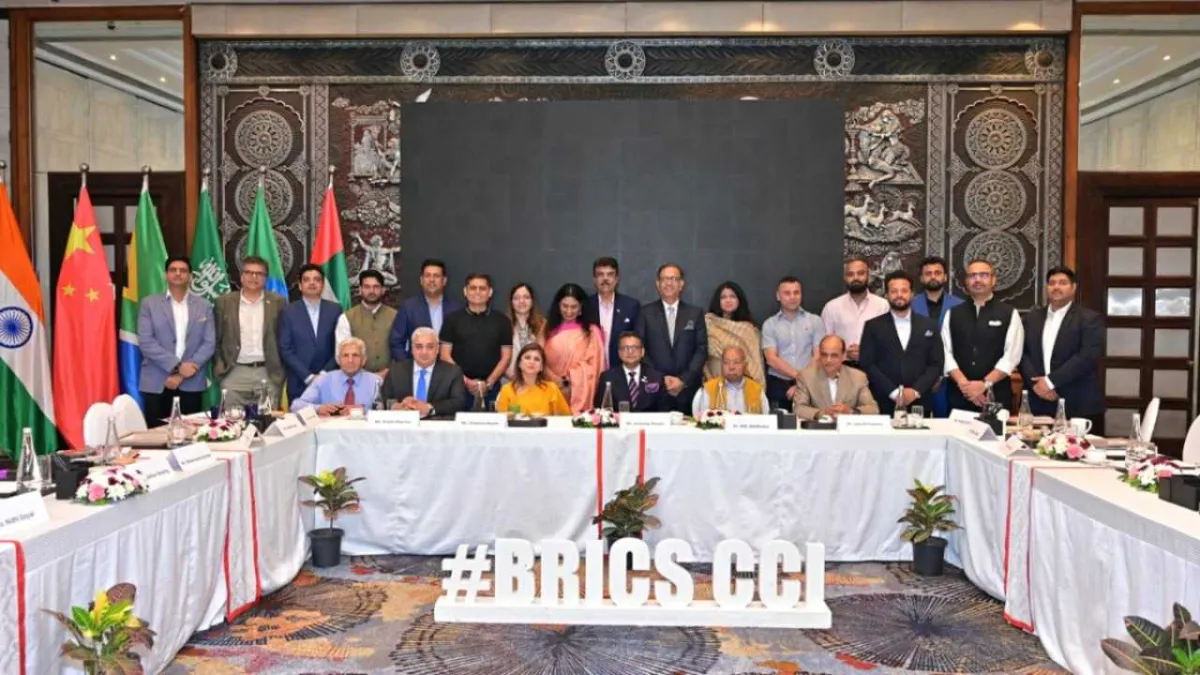
New Delhi, May 20: The BRICS Chamber of Commerce and Industry (BRICS CCI) has formally announced the appointment of Mr. Sameep Shastri as the Chairman of the organization for the term from April 2026 to March 2029.
This appointment was formally concluded during the 14th Annual General Meeting of BRICS CCI held in New Delhi, where the newly elected office bearers took the oath of office and secrecy during the swearing-in ceremony.
Mr. Sameep Shastri’s election was unanimous and unopposed, reflecting the members’ confidence in his leadership, vision, and long-term contribution to the organization’s global expansion and institutional strengthening.
As a distinguished entrepreneur, strategic thinker, and public leader, Mr. Sameep Shastri has been actively involved with BRICS CCI’s international engagements, youth leadership initiatives, policy dialogue platforms, and strategic partnerships for many years.
Serving as Vice President of BRICS CCI for six years, he played a significant role in strengthening the organization’s presence in global platforms and multilateral collaborations related to trade, diplomacy, innovation, culture, and sustainable development.
Carrying forward the inspiring legacy of former Prime Minister of India, Mr. Lal Bahadur Shastri, Mr. Sameep Shastri represents a new generation of leadership committed to nation-building, global cooperation, and inclusive development.
His appointment comes at a time when India is emerging as a strong voice of the Global South and BRICS nations are playing a key role in shaping a new direction for the global economic order.
Under his leadership, BRICS CCI is expected to further strengthen trade and investment cooperation, innovation-based partnerships, entrepreneurship, sustainable development dialogue, youth engagement, and people-to-people contact among BRICS countries and emerging economies.
On this occasion, Mr. Sameep Shastri said,
“This is a transformative time for India and the BRICS ecosystem, and it is an honor for me to serve as the Chairman of the BRICS Chamber of Commerce and Industry during such a crucial period.
Having worked closely with the organization for many years, taking on its leadership today is a matter of both pride and responsibility. BRICS nations are today building a new era of global cooperation and shared development.
We are committed to creating strong partnerships and impactful opportunities that contribute towards a more connected, sustainable, and prosperous global order.”
About BRICS CCI
The BRICS Chamber of Commerce and Industry (BRICS CCI) is a non-profit organization that works through dialogue, institutional engagement, and global cooperation initiatives to promote economic cooperation, trade promotion, innovation, entrepreneurship, and strategic partnerships among BRICS countries and emerging economies.
New Delhi
New Delhi is the capital of India, designed and built by the British in the early 20th century, with its foundation laid in 1911. It was officially inaugurated in 1931, replacing Calcutta as the center of British rule, and later became the capital of independent India in 1947. The city is known for its grand colonial architecture, wide boulevards, and iconic landmarks like India Gate and the Rashtrapati Bhavan.
India
India is a vast and diverse country in South Asia, known for its rich cultural heritage and ancient history. It is the birthplace of major religions such as Hinduism, Buddhism, Jainism, and Sikhism, and has been home to powerful empires like the Maurya, Gupta, and Mughal dynasties. Today, India is the world’s most populous democracy, celebrated for its vibrant traditions, languages, and iconic landmarks like the Taj Mahal.
<div class="my-
New Delhi
New Delhi, the capital of India, was designed and built by the British colonial government in the early 20th century, with its foundation laid in 1911 and officially inaugurated in 1931. It replaced Calcutta as the capital and was master-planned by architects Edwin Lutyens and Herbert Baker, featuring grand boulevards and iconic structures like the India Gate and Rashtrapati Bhavan. Today, it stands as a vibrant metropolis that blends its colonial heritage with India’s rich cultural diversity and modern political significance.
India
India is a vast South Asian country with a rich history dating back to the Indus Valley Civilization (c. 3300–1300 BCE). It was home to ancient empires like the Maurya and Gupta, saw the rise of major religions such as Hinduism, Buddhism, and Jainism, and later came under Mughal and British colonial rule before gaining independence in 1947. Today, India is known for its cultural diversity, iconic landmarks like the Taj Mahal, and its status as the world’s most populous democracy.
India Gate
India Gate is a prominent war memorial located in New Delhi, India, built to honor the soldiers of the British Indian Army who died in World War I and the Third Anglo-Afghan War. Designed by Sir Edwin Lutyens and completed in 1931, the 42-meter-high archway bears the names of over 13,000 fallen soldiers. Today, it stands as a symbol of national pride and is a popular gathering spot for locals and tourists alike.
Rashtrapati Bhavan
Rashtrapati Bhavan is the official residence of the President of India, located in New Delhi. Originally built as the Viceroy’s House during British colonial rule, it was designed by architect Edwin Lutyens and completed in 1929. The grand building, which features a blend of Indian and Western architectural styles, became the presidential palace after India gained independence in 1947.
Taj Mahal
The Taj Mahal is a white marble mausoleum located in Agra, India, built by Mughal emperor Shah Jahan between 1632 and 1653 in memory of his beloved wife Mumtaz Mahal. It is a masterpiece of Mughal architecture, combining Persian, Islamic, and Indian styles, and is recognized as a UNESCO World Heritage Site. Today, it stands as a global symbol of love and one of the most famous landmarks in the world.