Ho Chi Minh City Police crack down on drug “octopus arms,” arresting 17 suspects across multiple locations.
Intensively implementing a 45-day-and-night peak campaign to combat and suppress drug-related crimes, ensure security and order, and clean up the area, PC04 of the Ho Chi Minh City Police coordinated with the police of communes and wards including Phu My, Tan Thanh, Tan Phuoc, Chau Pha, and Kim Long to root out and cut off the “octopus arms” of drug trafficking.
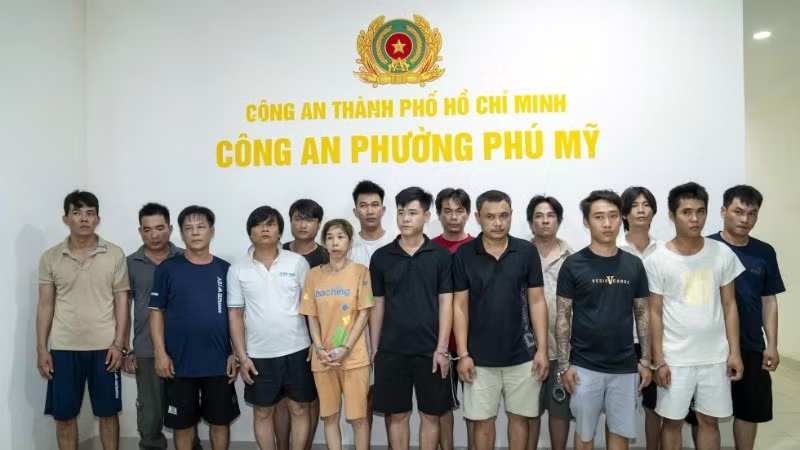
Most recently, on the evening of May 19, the Criminal Investigation Agency of the Ho Chi Minh City Police investigated and detained 17 suspects involved in a large-scale, inter-provincial, and inter-district drug trafficking and organization of illegal drug use network. This is an outstanding achievement, demonstrating a firm commitment to attacking crime, aiming for the goal of building a drug-free Ho Chi Minh City by 2030.
Specifically, through area management and professional measures, the police force identified suspect H.T. D. (born in 1989, registered permanent residence in Suoi Nhum neighborhood, Tan Thanh ward, Ho Chi Minh City) as a key figure specializing in supplying drugs to many addicts. This suspect also cunningly turned his own home into a hideout and provided tools for addicts to organize illegal drug use.
Given the complexity of the case, PC04 of the Ho Chi Minh City Police closely coordinated with the police of the aforementioned communes and wards to conduct raids and simultaneously expand the investigation.
Initial investigation results show that to evade authorities, the suspects in the drug ring used sophisticated methods such as payments via bank transfers and e-wallets, and constantly changed drug delivery locations.
Police read detention orders to suspects in the drug ring.
Based on collected documents and evidence, the Criminal Investigation Agency of the Ho Chi Minh City Police prosecuted 17 suspects, executing detention orders for 15 of them for the acts of “Illegal drug trafficking,” “Organizing illegal drug use,” and “Harboring illegal drug use.” Additionally, the police force compiled files and sent 4 suspects to compulsory drug rehabilitation.
This achievement is a clear testament to the effective coordination and high determination of the police force in combating and eradicating drug abuse from social life.
The police force sternly warns that any act of covering up, harboring, or assisting drug crimes will be strictly dealt with by law. They also call on the public to raise awareness of legal compliance and actively participate in reporting crimes. The police agency commits to keeping the identity and information of informants absolutely confidential.
The case is currently under further investigation.
Phu My
Phu My is a rapidly developing port and industrial area in Ba Ria-Vung Tau Province, southern Vietnam. Historically, it was a quiet rural district until the late 20th century, when the government transformed it into a major deep-water port complex to support the country’s growing trade. Today, Phu My serves as a key economic hub, handling container shipping and heavy industry, while still retaining some traditional Vietnamese coastal culture.
Tan Thanh
Tan Thanh is a coastal commune in Ba Ria-Vung Tau Province, Vietnam, known for its scenic beaches and historical significance. During the Vietnam War, it was a strategic location and site of the Battle of Long Tan in 1966, a major conflict between Australian forces and the Viet Cong. Today, it is a peaceful area that attracts visitors to its memorial sites and natural landscapes.
Tan Phuoc
Tan Phuoc is a commune in Vietnam, often associated with rural agricultural life and traditional Vietnamese culture. Historically, it has been shaped by the broader history of the Mekong Delta region, including periods of Khmer settlement and later Vietnamese expansion during the 17th and 18th centuries. Today, it is known for its peaceful landscapes and local community practices.
Chau Pha
Chau Pha is a historical Hindu temple complex located in the Mekong Delta region of southern Vietnam, dating back to the 4th-8th centuries CE. Originally built by the Funan or early Champa kingdoms, it served as a religious site dedicated to the worship of Shiva and other Hindu deities. Today, the site is recognized for its ancient brick architecture and carved stone linga, offering valuable insights into the region’s pre-Vietnamese cultural and religious heritage.
Kim Long
Kim Long is a historic village located along the Perfume River in Hue, Vietnam, known for its serene landscapes and traditional architecture. Originally established in the 17th century, it served as a royal retreat and later became a center for Catholicism, with many ancient churches and tombs reflecting its blend of cultural influences. Today, Kim Long is recognized for its peaceful atmosphere and well-preserved heritage sites, offering a glimpse into Vietnam’s imperial and religious history.
Suoi Nhum
Suoi Nhum is a scenic stream located in the Binh Duong province of southern Vietnam, known for its tranquil natural beauty and clear, cool waters. Historically, the area was a significant site during the Vietnam War, serving as a base for the Viet Cong due to its dense forest and strategic location. Today, it is a popular destination for eco-tourism and recreation, offering visitors opportunities for swimming, picnicking, and exploring the surrounding forests.
Ho Chi Minh City
Ho Chi Minh City, formerly known as Saigon, is Vietnam’s largest city and economic hub. It was the capital of French Indochina and later the capital of South Vietnam until the end of the Vietnam War in 1975, when it was renamed after the communist leader Ho Chi Minh. Today, the city blends historic French colonial architecture, modern skyscrapers, and vibrant markets, reflecting its complex past and rapid development.