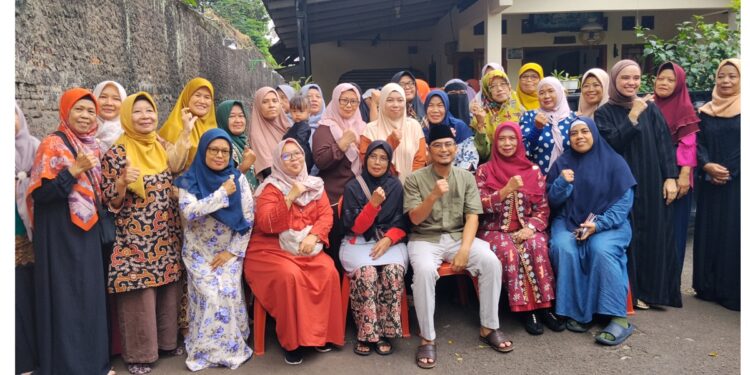
Depok (May 16, 2026) – Public awareness about sorting waste at the household level remains a major challenge in Depok City. This reality emerged during a meeting between the Chairman of the Depok City Regional House of Representatives and representatives of the Watul Khoir Waste Bank management of RW 01, Mekarsari Village, Cimanggis District.

During the meeting, the waste bank management conveyed field dynamics regarding fluctuations in resident participation and technical obstacles in domestic waste management.

Grassroots Challenges and Uneven Education

The management of the Watul Khoir Waste Bank revealed that regulations and outreach at the bureaucratic level have actually been running extensively from the village and relevant agencies. However, the main obstacle arises at the implementation stage among residents.

  • Participation Constraints: Community response in depositing sorted waste is still considered fluctuating.

  • Technical Issues: The management often receives organic waste or leftover food in dirty condition without prior cleaning, complicating the accumulation process.

  • Positive Instinct: Despite the difficulty, this activity has succeeded in forming new habits among female management who are now more sensitive to the presence of recyclable waste in their environment.

“In terms of basic facilities like scales, we are already adequate from previous assistance. Currently, our focus is on relying on the social work of the management while continuing to awaken residents’ awareness,” said Warni.

Criticism of Ceremonial Programs and Optimization of Facilities

Hearing these complaints, the Chairman of the Depok City Regional House of Representatives emphasized the need for reform in environmental guidance methods by the Environmental and Sanitation Agency (DLHK). He criticized the old pattern that tends to be ceremonial or merely to fulfill budget absorption without sustainability.

He requested the DLHK to move progressively by inserting educational material directly into RT meeting rooms and residents’ social gatherings to change the community’s mindset.

“The separation between organic, non-organic, and residual waste must be completed upstream, i.e., at the household level. This is waste we all produce, so the responsibility for its resolution also lies with us,” he asserted.

Bottom-Up System and RW Fund Allocation of 300 Million Rupiah

To support grassroots movements, the Depok City Regional House of Representatives has coordinated with the Regional Development Planning Agency (Bappeda). The strategic policy being pushed is to include waste management agenda as a mandatory activity in the allocation of the Indicative Ceiling for RW Funds amounting to 300 million rupiah.

Through this budget scheme, each area can propose the fulfillment of facilities and infrastructure needed in the field, including:

  1. Procurement of special organic waste sorting buckets for households.

  2. Provision of motorized cart fleets for local transportation.

  3. Procurement of composters or waste shredders at the area level.

Furthermore, he emphasized the need for regulations that include incentive schemes for RTRW that successfully manage their areas independently, as well as the application of sanctions for environments deemed uncooperative in the waste sorting program. This step is considered crucial so that program sustainability does not stall when government stimulus funds run out.

Watul Khoir Waste Bank

Watul Khoir Waste Bank is a community-based environmental initiative in Indonesia that focuses on waste management and recycling. It was established to address local waste problems by encouraging residents to sort and deposit recyclable materials, which are then processed or sold to support the community. The waste bank also promotes environmental education and sustainable practices, helping to reduce landfill waste and generate economic benefits for participants.

Mekarsari Village

Mekarsari Village, located in Bali, Indonesia, is a traditional village known for its rich cultural heritage and agricultural roots. Historically, it

Depok

Depok is a city in West Java, Indonesia, known historically as a former colonial plantation estate established by Cornelis Chastelein, a Dutch VOC official, in the 18th century. Chastelein freed his enslaved workers and granted them land, leading to the development of a unique Christian community and cultural heritage. Today, Depok has grown into a bustling satellite city of Jakarta, home to the University of Indonesia and a blend of modern urban life with historical remnants.

Watul Khoir Waste Bank

Watul Khoir Waste Bank is a community-based waste management initiative in Indonesia that promotes recycling and environmental sustainability. It was established to address local waste problems by encouraging residents to sort and deposit recyclable materials in exchange for financial benefits or goods. The waste bank also serves as an educational hub, fostering awareness about waste reduction and the circular economy within the community.

Mekarsari Village

Mekarsari Village, located in the Bogor Regency of West Java, Indonesia, is a renowned agrotourism destination known for its tropical fruit gardens and educational farm experiences. Established in the 1990s as part of a government initiative to promote agriculture and tourism, the village features a vast collection of fruit trees, including durian, mango, and rambutan, alongside interactive activities like fruit picking and traditional farming demonstrations. It serves as a cultural site that preserves local agricultural heritage while offering visitors a glimpse into Indonesia’s rural life and sustainable farming practices.

Cimanggis District

Cimanggis District, located in Depok City, West Java, Indonesia, has historical roots as a rural area that developed significantly from the 1980s onward due to urbanization and the expansion of Greater Jakarta. It is known for its traditional “Cimanggis” durian fruit and for hosting several prominent universities, such as Gunadarma University, which contributed to its transformation into a bustling educational and residential hub. Today, the district is a densely populated suburban area characterized by a mix of modern housing, commercial centers, and ongoing infrastructure development.

Depok City Regional House of Representatives

The Depok City Regional House of Representatives (DPRD Kota Depok) is the legislative body responsible for creating local laws and overseeing the city’s governance in Depok, West Java, Indonesia. Established following Depok’s expansion and official recognition as a city in 1999, the institution has played a key role in the city’s development and administrative evolution from a residential area into a growing urban center. The DPRD operates as part of Indonesia’s decentralized government system, representing the interests of Depok’s diverse population.

Environmental and Sanitation Agency (DLHK)

The Environmental and Sanitation Agency (DLHK) is a local government body in Indonesia responsible for managing environmental protection, waste management, and sanitation services. Its history is tied to Indonesia’s decentralization reforms in the early 2000s, which empowered regional governments to establish agencies like DLHK to address growing urban waste and pollution challenges. Today, DLHK oversees programs such as waste reduction, recycling, and public hygiene to promote sustainable urban living.

Regional Development Planning Agency (Bappeda)

The Regional Development Planning Agency (Bappeda) is a key government institution in Indonesia responsible for coordinating and formulating regional development plans at the provincial and municipal levels. Established under Indonesian law, its history dates back to the New Order era when centralized planning was emphasized, evolving later to support decentralized governance after the reforms of 1998. Today, Bappeda plays a crucial role in aligning local development programs with national priorities and ensuring sustainable growth.