Filtered by: Top Picks
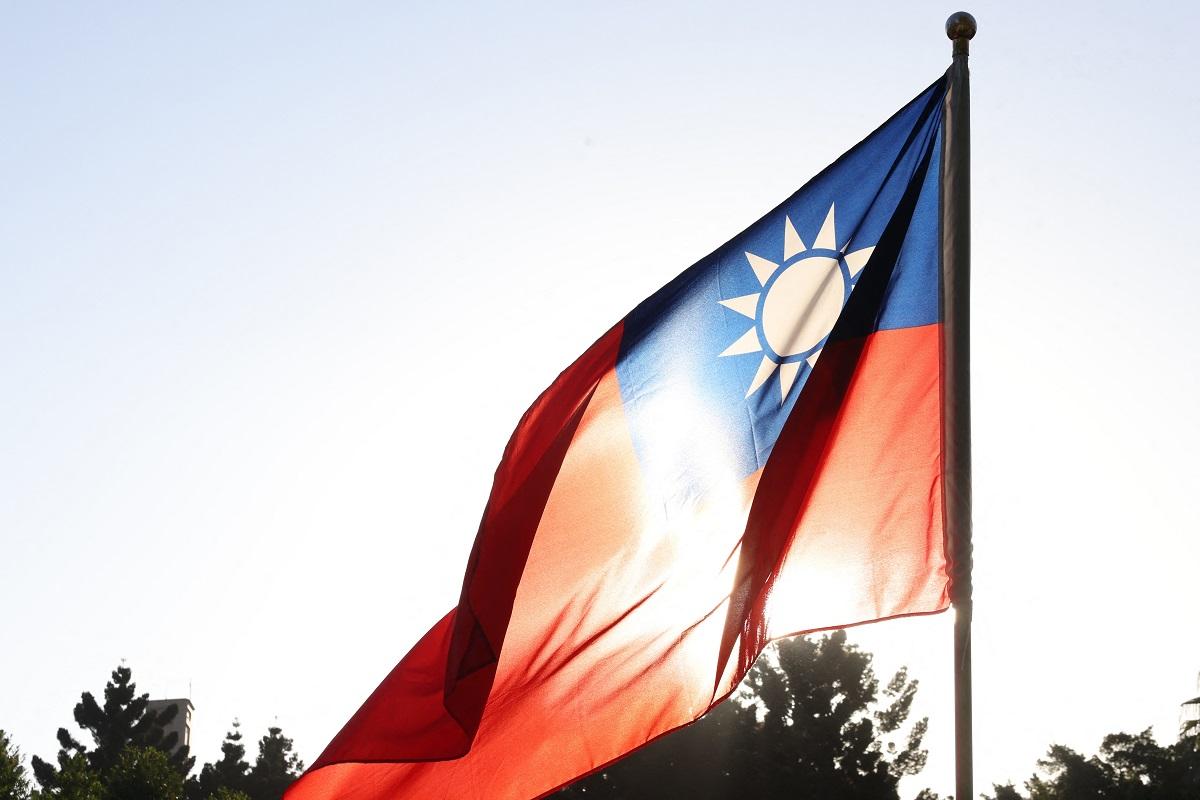
TAIPEI, Taiwan – Taiwan’s minister in charge of the coast guard has made a rare visit to a Taiwan-controlled island in the South China Sea for exercises, including practicing the armed boarding of a suspicious ship.
Taiwan and China claim sovereignty over most of the South China Sea, and Taiwan has control of Itu Aba in the contested Spratly Islands in the southern part of the sea.
In a statement late on Wednesday, Taiwan’s coast guard said Ocean Affairs Council Minister Kuan Bi-ling had visited Itu Aba, which it calls Taiping Island, the previous day for a “humanitarian relief, medical evacuation, and marine pollution removal” exercise.
Taiwan’s official Central News Agency said it was the first time in seven years a minister had visited Itu Aba, which is also claimed by China, Vietnam and the Philippines.
In one part of the drill, coast guard special forces armed with guns practiced boarding a suspicious cargo ship that had refused to respond to hails.
“In order to safeguard the nation’s rights and national security, the cargo vessel was escorted back to Taiping Island for further investigation,” the coast guard said.
It shared video footage of the special forces, clad in black and heavily armed, entering the control room of the ship.
“You have entered the waters under the jurisdiction of our country. Please cooperate with the investigation,” one of the team tells a crew member.
Itu Aba has a runway long enough to take military re-supply flights from Taiwan, and Taiwan opened a new wharf there in 2023 able to accommodate a 4,000-ton patrol ship.
But the island is lightly defended compared to nearby Chinese-controlled islands. Chinese forces generally leave Itu Aba alone.
Beijing has carried out extensive land reclamation on the South China Sea islets and outcrops it controls, building major air force and other military facilities, fueling concern in Washington and around the region where Brunei, Malaysia, the Philippines and Vietnam also claim parts of the sea.
China says it has every right to build on and defend what it considers to be its territory.
Taiwan also controls the Pratas Islands in the northern part of the South China Sea. China’s air force and navy regularly operate nearby to assert Beijing’s territorial claims over Taiwan, which the government in Taipei rejects.
The South China Sea is a key shipping route through which billions of dollars in trade passes every year, and an important fishing ground. It is also thought to hold substantial energy reserves.
Itu Aba
Itu Aba, also known as Taiping Island, is the largest natural island in the South China Sea’s Spratly archipelago. Historically, it was used as a base by Chinese fishermen and later occupied by Japan during World War II, after which it was taken over by the Republic of China (Taiwan) in 1946. Today, it is administered by Taiwan and features an airport, a naval base, and a research station, though its sovereignty is disputed by multiple neighboring countries.
Taiping Island
Taiping Island, the largest natural island in the South China Sea, is part of the disputed Spratly archipelago and is currently administered by Taiwan. Historically, it was used as a military outpost by various powers, including Japan during World War II, before being reclaimed by the Republic of China in 1946. Today, the island features an airport, a hospital, and ecological conservation areas, reflecting its dual role as a strategic outpost and a protected habitat.
Spratly Islands
The Spratly Islands are a disputed archipelago in the South China Sea, consisting of over 750 small islands, reefs, and atolls. Historically known for their strategic location along important shipping routes and rich fishing grounds, the islands have been a source of territorial conflict since the mid-20th century, with claims from China, Taiwan, Vietnam, the Philippines, Malaysia, and Brunei. The region also holds potential undersea oil and gas reserves, further intensifying geopolitical tensions and militarization in the area.
South China Sea
The South China Sea is a vital body of water in Southeast Asia, bordered by multiple countries including China, Vietnam, and the Philippines. Historically, it has served as a crucial maritime trade route for centuries, linking East Asia to the Indian Ocean and beyond. The region is also known for its disputed territorial claims, particularly over the Spratly and Paracel Islands, which have led to ongoing geopolitical tensions.
Pratas Islands
The Pratas Islands, also known as the Dongsha Islands, are a group of coral atolls in the South China Sea administered as part of Kaohsiung, Taiwan. Historically, they have been used as a strategic maritime outpost and fishing ground, with remnants of ancient Chinese maritime activity found there. The islands are now designated as the Dongsha Atoll National Park, recognized for their rich marine biodiversity and ecological significance.
Taiwan
Taiwan is an island located off the southeastern coast of China with a complex history, having been inhabited by indigenous peoples for thousands of years before being colonized by the Dutch, Spanish, and later ruled by the Qing dynasty. After the First Sino-Japanese War in 1895, it was ceded to Japan, which governed until the end of World War II. Following the Chinese Civil War, the Republic of China government retreated to Taiwan in 1949, establishing a separate political entity that has since developed a vibrant democracy and distinct cultural identity.
China
China is a vast East Asian country with a rich history spanning over 5,000 years, making it one of the world’s oldest continuous civilizations. It is home to iconic cultural sites like the Great Wall, the Forbidden City, and the Terracotta Army, which reflect its imperial past under dynasties such as the Qin, Tang, and Ming. Today, China blends its ancient heritage with rapid modernization, playing a major role in global culture, economy, and politics.
Philippines
The Philippines is a Southeast Asian archipelago known for its diverse culture, shaped by centuries of trade and colonial rule, first under Spain for over 300 years and then the United States. It gained full independence in 1946, and today its rich history is reflected in landmarks like the walled city of Intramuros in Manila and the rice terraces of Banaue. The country is also renowned for its stunning beaches, vibrant festivals, and the resilience of its people.