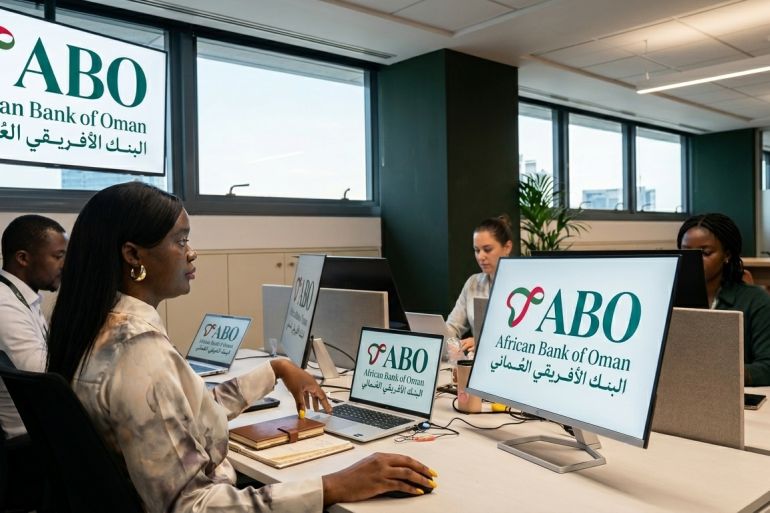
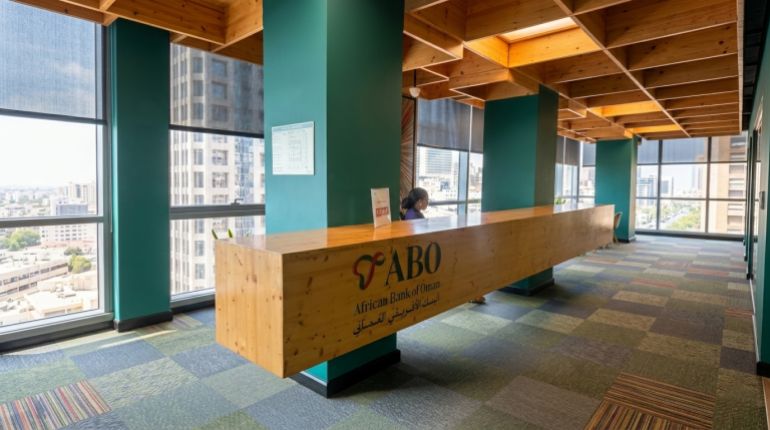
The Omani African Bank (ABO) officially launched in the Angolan capital, Luanda, becoming the first bank with Omani capital to enter the Sub-Saharan market, as part of the sultanate’s efforts to expand its economic presence in the continent.
The establishment of the bank comes amid the economic transformations Angola is undergoing under its long-term development plan, “Angola Strategy 2050,” which focuses on diversifying the economy, accelerating privatization programs, developing infrastructure, and opening productive sectors to international investment, after decades of near-total reliance on oil revenues.
The bank was introduced as a cross-border investment bank, licensed under Angolan law and based on Omani governance standards. A group of Omani companies fully subscribed to its capital, amounting to approximately 18.24 billion kwanzas ($20 million).
The board of directors is chaired by Omani businessman Tariq Ateeq, while the executive presidency was assigned to Portuguese-Angolan banker Antonio Dinis Mendes, a former official at the French bank Société Générale. The board consists of 11 members.
From a Presidential Visit to a Banking Institution
According to the official Omani statement, the bank’s inauguration came just 11 months after the official visit of Angolan President João Lourenço to the sultanate, indicating the country’s ability to quickly move from diplomatic announcement to institutional implementation, within a framework of Arab-African cooperation.
The Angolan news agency quoted the Deputy Governor of the National Bank of Angola, Domingos Pedro, as saying that the entry of the new bank enhances competition, stimulates innovation, and contributes to modernizing the financial system, at a time when the Angolan banking sector is seeking supervisory standards equivalent to those adopted in Europe.
The Angolan Banks Association had previously welcomed, through its President Mário Nascimento, the entry of the Gulf institution into a market that was previously dominated by Portuguese and South African banks, amid the exit of the Russian bank VTB Africa.
A Financial Arm Within the Framework of Vision 2040
On the Omani side, the official statement quoted the Deputy Prime Minister for Economic Affairs, Theyazin bin Haitham bin Tariq Al Said, as saying that the project embodies the approach of “economic diplomacy” established by Sultan Haitham bin Tariq, and solidifies the sultanate’s position as a financial bridge between the Middle East and emerging markets.

The head of the Omani Investment Authority, Abdul Salam bin Mohammed Al Murshidi, described the project as a “cornerstone for a long-term partnership between the Gulf and Africa,” and an integrated platform that not only directs capital but also extends to transferring technologies and knowledge, and opening a gateway for Omani companies abroad. He added that it “represents a practical embodiment of achieving the goals of Oman Vision 2040, which aims to build effective financial arms in emerging markets and enhance the diversification of income sources.”
Operational Roadmap
The bank’s model is based on three pillars: facilitating cross-border payments between Angola and the Middle East, corporate banking services including letters of credit, guarantees, and liquidity management, and financing major projects in oil, gas, mining, manufacturing, and logistics.
The first phase aims to serve about 50 multinational companies, as well as government and local entities. Its role is not limited to directing Gulf capital towards the continent but also includes facilitating African companies’ access to Gulf investors, creating a two-way financial channel.