What lies behind the Taiwanese president’s cancellation of his visit to Eswatini?
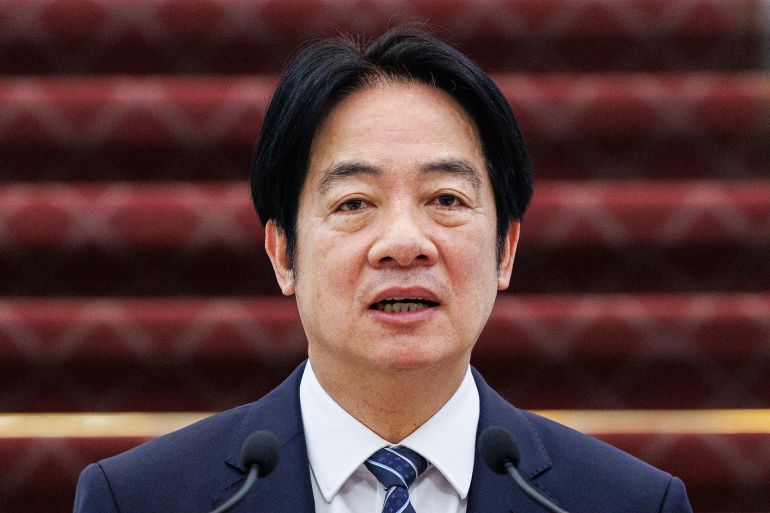
Taiwanese President Lai Ching-te announced the postponement of his visit to the Kingdom of Eswatini after three African countries—Seychelles, Mauritius, and Madagascar—refused at the last minute to grant his presidential plane permits to fly through their airspace. This unprecedented development reveals the expanding Chinese influence in Africa and brings the fierce diplomatic legitimacy battle between Beijing and Taipei back to the forefront.
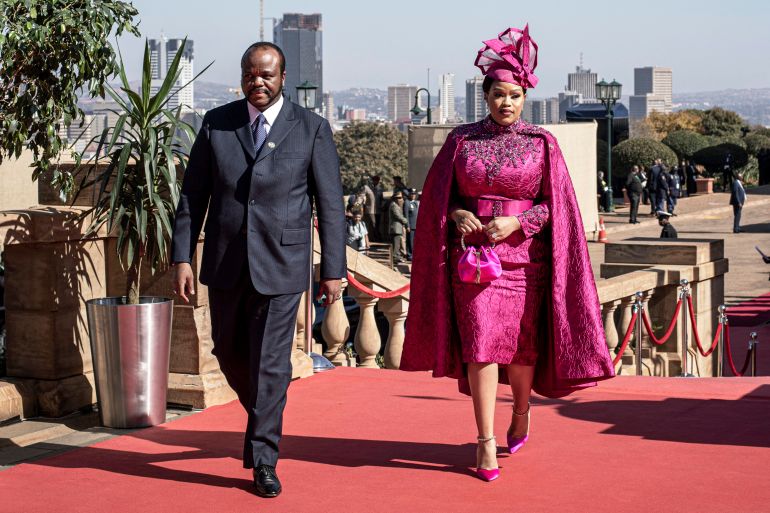
Lai had planned to travel to Eswatini, Taiwan’s only remaining African ally, on Wednesday to participate in celebrations marking the 40th anniversary of King Mswati III’s accession to the throne. However, the Taiwanese Presidential Office announced that the trip could not proceed following simultaneous decisions by the three countries to cancel transit permits without prior warning, as reported by Reuters.
The Secretary-General of the Presidential Office, Pan Ming-an, placed full responsibility on China, asserting that the decisions resulted from intense economic pressure exerted by Beijing. Reuters quoted a Taiwanese security official as saying that China threatened economic sanctions, including the cancellation of debt relief facilities, to pressure these nations. This marks the first time a Taiwanese president has been forced to postpone a foreign trip due to Chinese pressure.
Between Chinese Gratitude and American Criticism
In contrast, Seychelles and Madagascar denied that their decisions were linked to external pressure, insisting they adhered to the “One China” policy. The Seychelles foreign ministry stated that the Taiwanese plane did not receive permission for transit or landing, in line with the government’s established policy of not recognizing Taiwan’s sovereignty. A senior official in Madagascar’s foreign ministry also stressed that Malagasy diplomacy recognizes only one China and that the decision was made within the framework of full sovereignty over the country’s airspace. Mauritius has not yet issued any official clarification.
On the other hand, China’s foreign ministry quickly expressed its “high appreciation” for the African countries that adhered to the One China principle, according to a statement reported by AFP. A ministry spokesperson said this position aligns with the basic norms of international relations, adding that China’s reunification process is historical and cannot be stopped by anyone.
Beijing’s Taiwan Affairs Office, as reported by the South China Morning Post, also denied the accusations leveled against China and merely praised what it described as the “position and practice” of the three countries in committing to the One China principle.
Meanwhile, the US State Department criticized what it described as an “intimidation campaign” led by Beijing against Taiwan and its supporters, expressing concern that several countries had withdrawn transit permits. The department stated, according to AFP, that these countries acted at China’s behest, interfering with the safety of travel for Taiwanese officials.
This American stance comes despite the US not officially recognizing Taiwan, although it remains its primary security guarantor, while a meeting between the US president and his Chinese counterpart is expected next month.
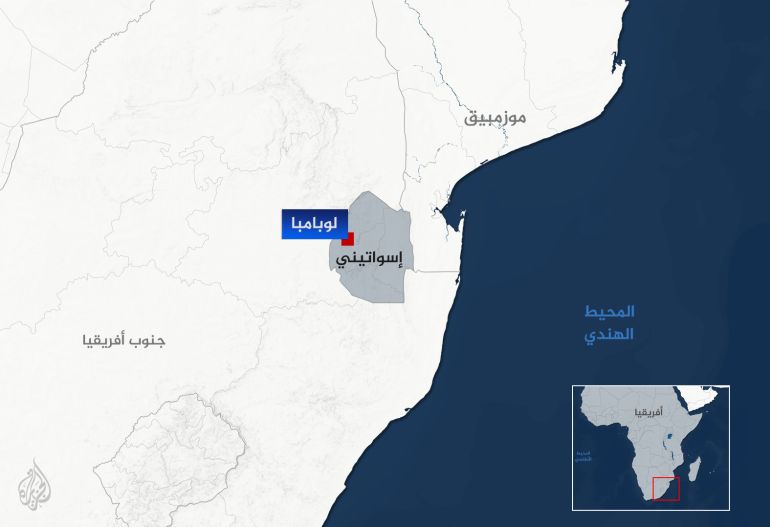
Map of Eswatini (Al Jazeera)
Broader Context
Today,
Presidential Office in Taipei
The Presidential Office in Taipei, Taiwan, is a historic Baroque-style building completed in 1919 during Japanese colonial rule, originally serving as the Office of the Governor-General of Taiwan. After World War II, it became the seat of the Republic of China’s government and has since been the workplace of the President. Today, it remains an iconic symbol of Taiwan’s political history and is open to the public for guided tours on select days.
Kingdom of Eswatini
The Kingdom of Eswatini, formerly known as Swaziland, is a small, landlocked monarchy in Southern Africa known for its rich cultural traditions and stunning landscapes. It gained independence from British rule in 1968 and is one of the few remaining absolute monarchies in the world, with King Mswati III currently ruling. The country is famous for its vibrant annual Reed Dance ceremony and efforts to preserve its unique heritage.
Seychelles
The Seychelles is an archipelago nation in the Indian Ocean, known for its stunning beaches, lush tropical forests, and unique granite rock formations. Originally uninhabited, the islands were claimed by the French in the 18th century before being ceded to the British in 1814, eventually gaining independence in 1976. Today, it is a popular tourist destination celebrated for its rich biodiversity and Creole culture.
Mauritius
Mauritius is an island nation in the Indian Ocean, known for its stunning beaches, diverse culture, and unique blend of African, Indian, Chinese, and European influences. Originally uninhabited, it was colonized by the Dutch, French, and British, with the latter ruling from 1810 until independence in 1968. The island’s history is deeply tied to the sugar plantation economy and the arrival of indentured laborers, which shaped its multicultural identity.
Madagascar
Madagascar is a large island nation off the southeastern coast of Africa, known for its unique biodiversity and distinct cultural heritage. Its history includes early settlement by Austronesian peoples around 1,500 years ago, followed by the rise of the Merina Kingdom in the central highlands. The island became a French colony in 1896 before gaining independence in 1960, leaving a lasting influence on its language and culture.
Union Buildings
The Union Buildings in Pretoria, South Africa, serve as the official seat of the country’s national government and house the offices of the President. Designed by architect Sir Herbert Baker, construction was completed in 1913, symbolizing the unification of formerly divided British colonies and Boer republics after the Anglo-Boer War. This iconic sandstone complex is also a significant site for national gatherings, including presidential inaugurations and public celebrations.
Nelson Mandela Amphitheatre
The Nelson Mandela Amphitheatre is a 5,000-seat open-air venue located in Adelaide, South Africa, within the Nelson Mandela Bay Stadium complex. It was named in honor of the former South African president and anti-apartheid revolutionary, Nelson Mandela, and serves as a cultural hub for concerts, events, and community gatherings. The amphitheatre reflects Mandela’s legacy of unity and reconciliation, offering a space that celebrates the diverse heritage of the region.
South China Morning Post
The South China Morning Post (SCMP) is a Hong Kong-based English-language newspaper founded in 1903 by Australian journalist Tse Tsan-tai and British co-founders. It has served as a leading source of news on China and Asia, with a history of editorial independence that shifted after being acquired by Malaysian tycoon Robert Kuok in 1993 and later by Alibaba Group in 2016. Today, it continues to report on regional affairs while navigating the complexities of operating under greater political influence from Beijing.