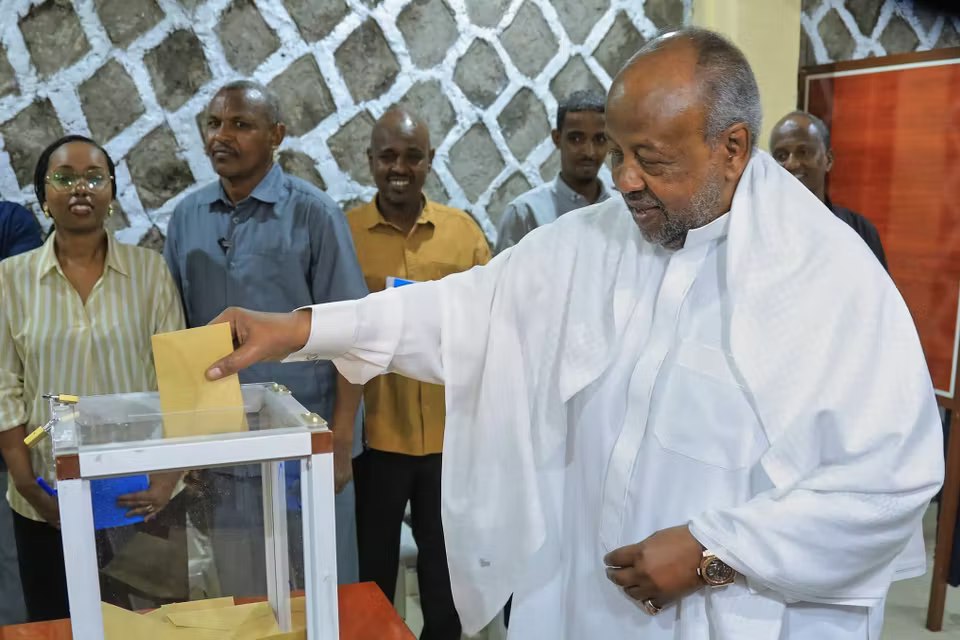
According to preliminary results reported by the Ethiopian News Agency, Guelleh received approximately 97.8 percent of the votes, reinforcing his continuation in power and paving the way for him to assume a sixth term since he first came to the presidency in 1999.
In contrast, his sole opponent, Mohamed Farah Samatar, received about 2.2 percent of the votes, according to figures issued by the Ministry of Interior, and did not pose a significant electoral challenge to the incumbent president.
Guelleh, 78 years old, continues his presence as one of the most prominent political figures in Djibouti, a country with a strategic location on the Red Sea in the Horn of Africa region.
This victory mirrors the results of the 2021 elections, in which Guelleh also achieved a percentage exceeding 97 percent.
This win is expected to refocus attention on the level of political competition and the trajectory of democratic processes in Djibouti, amid repeated observations by monitors regarding the limited activity of the opposition.