Amid nationwide criticism, Western Railway General Manager defends; passengers raise serious questions about the system and arrangements
Surat. The stampede and chaos at Udhna railway station on Sunday has now become a subject of national discussion and criticism. Questions are being raised about the railway administration and police system regarding the alleged lathi charge on passengers and the disorder. Meanwhile, on Monday, the General Manager of Western Railway, Ramashray Pandey, arrived at Udhna station and presented the railway’s side on the entire matter.
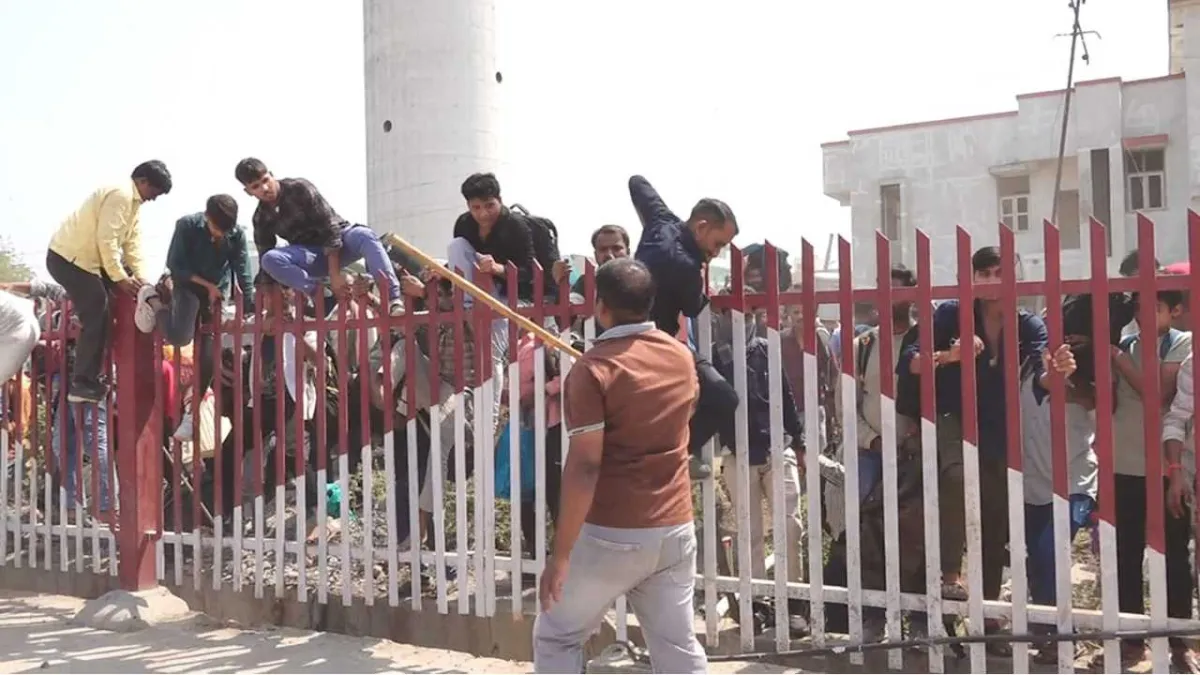
Dismissing the allegations arising from the incident, the General Manager stated that no lathi charge was carried out on passengers. According to him, videos that surfaced on social media show RPF personnel swinging batons, but these were hitting the fencing, not the passengers. He termed it a “false narrative.”
However, this statement has raised several questions. Passengers ask why adequate arrangements were not in place when a huge crowd had gathered at the station? The lack of drinking water, line management, and security measures worsened the situation. In such circumstances, a debate has also emerged over how justified the use of force was to control the crowd.
Following the incident, the railway system is facing criticism across the country, but statements from officials indicate that the administration is trying to portray the entire matter as normal. Passengers and the general public believe that accountability needs to be fixed and corrective steps taken regarding such incidents.
Meanwhile, on Monday, the atmosphere at Udhna railway station appeared completely changed. Where there was heavy crowd and chaos on Sunday, the next day saw normal conditions and silence at the station.
This entire episode has once again raised serious questions about the railway’s crowd management system and passenger safety.