
The Deputy Prime Minister signed Decision No. 352/QD-TTg on February 27, 2026, approving the 2026 public borrowing and debt repayment plan.
The plan aims to ensure resources; fully and timely repay public debts without affecting the national credit rating; control debt safety; optimize the debt portfolio; and develop the capital market.
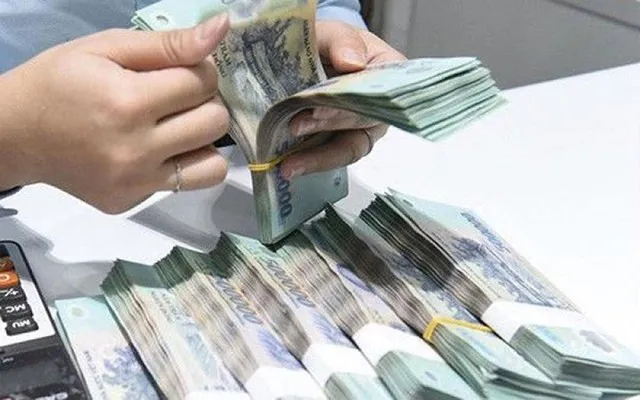
In 2026, the government’s maximum borrowing plan is 969,796 billion VND, with debt repayment of about 534,739 billion VND.
Regarding the 2026 public borrowing and debt repayment plan, the government’s maximum borrowing is 969,796 billion VND, including:
– Borrowing for central budget balance: maximum 959,705 billion VND, of which borrowing to cover central budget deficit is a maximum of 583,700 billion VND, and borrowing for principal repayment does not exceed 376,005 billion VND.
– Borrowing for on-lending: about 10,092 billion VND. Funding sources will flexibly combine instruments: (i) issuing government bonds; (ii) ODA loans and foreign concessional loans; (iii) issuing international government bonds and other lawful financial sources.
Government debt repayment is about 534,739 billion VND, of which direct government repayment does not exceed 493,405 billion VND, and repayment for on-lending projects is about 41,334 billion VND.
Regarding government-guaranteed borrowing:
For the Vietnam Development Bank: The maximum limit for issuing government-guaranteed bonds equals the principal repayment of government-guaranteed bonds due in 2026, which is 2,910 billion VND.
For the Social Policy Bank: The maximum limit for issuing government-guaranteed bonds is 251 billion VND.
For guarantees for domestic and foreign enterprise borrowing: No government guarantee limit is allocated for 2026 for domestic and foreign borrowing projects, as these projects have completed capital withdrawal.
Local government borrowing and repayment plan: Total borrowing for the year is about 26,079 billion VND. Total principal repayment is about 3,979 billion VND.
Regarding foreign commercial borrowing by enterprises without government guarantee in 2026: The medium and long-term foreign commercial borrowing limit for enterprises and credit institutions under the self-borrowing, self-repayment method is about 6,124 million USD per year; the growth rate of short-term foreign debt is about 19-20% compared to the outstanding debt at the end of 2025.
The decision states that the 2026 borrowing and repayment plan will be implemented within the above maximum limits; if needs exceed these maximums, the Ministry of Finance will submit a plan adjustment to the Prime Minister.
Urgently allocate 2026 central budget public investment plan
For government foreign loans for programs and projects, the Prime Minister assigns ministries, central agencies, and localities to urgently allocate the 2026 central budget public investment plan in detail by category and allocated capital for each project within the time limit specified in the Public Investment Law; new foreign borrowing projects should prioritize important projects that can change the situation, transform the state, and address existing issues related to slow disbursement of ODA and concessional loan projects.
Ministries and localities should accelerate the disbursement of public investment capital, consistent with the list of projects allocated annual public investment capital and the medium-term public investment plan for the five-year period, contributing to improving the efficiency of borrowing and using loan capital, ensuring savings, and preventing waste.
Strengthen inspection of loan capital use and debt repayment
The Ministry of Finance will strictly control the state budget deficit, local budget deficit, local budget borrowing levels, and government debt repayment obligations; promote the method of withdrawing ODA loans and foreign concessional loans under the direct budget support mechanism. Develop a project for issuing international bonds to submit to competent authorities for readiness when needed. Research new methods of mobilizing loan capital, ensuring sufficient capital for development investment while controlling public debt and national foreign debt within the ceiling limits and warning thresholds for the 2026-