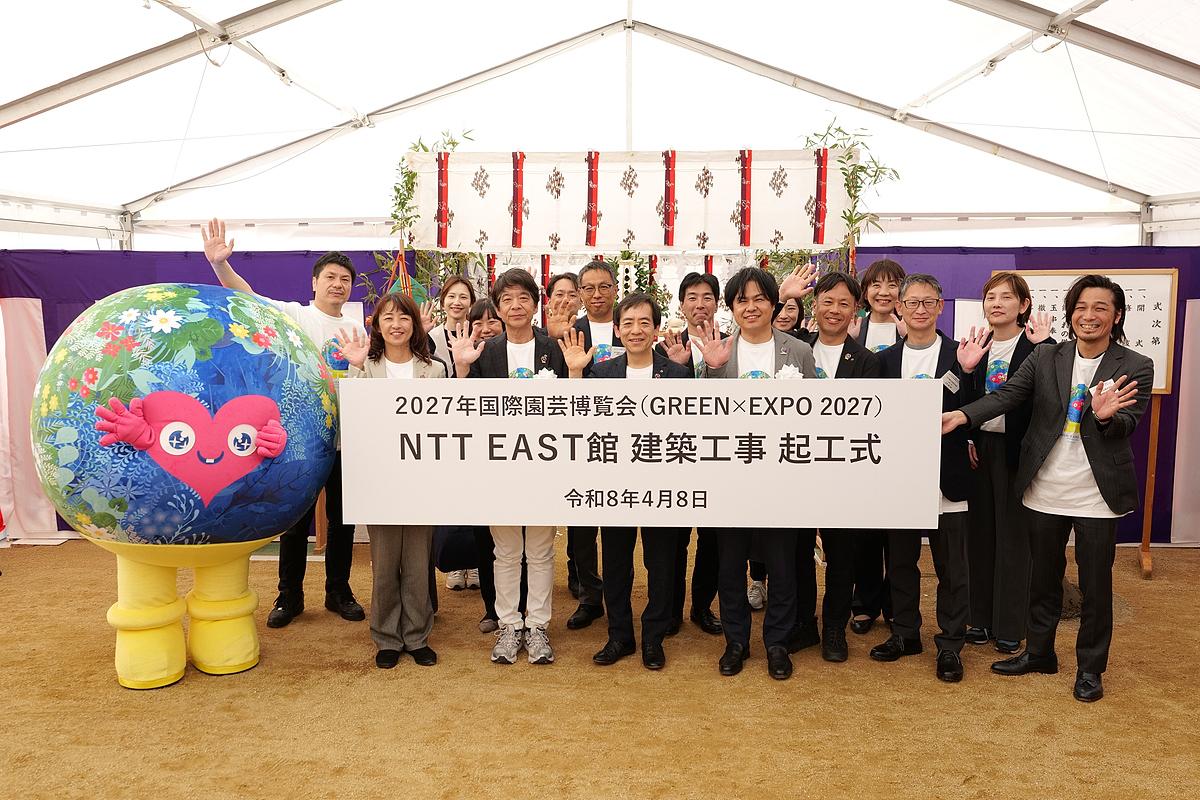
NTT East held a groundbreaking ceremony for its pavilion, the “NTT EAST Pavilion,” which will be exhibited at the international horticultural exposition “GREEN×EXPO 2027.” The ceremony was attended by company executives and guests, who offered prayers for the safety of the construction work.
The pavilion’s concept and new exterior design were also announced. The concept is “Well,” which carries three meanings: “Well-being,” “Welcome,” and “Planting (seeds for the future).” The pavilion will utilize cutting-edge digital technologies, such as digital twins, to provide immersive experiential exhibits that allow visitors to feel the natural environment.
Yokohama is the place where Japan’s telegraph business first began and where telephone service was inaugurated. For the company, it is like a hometown. The goal is to complete this pavilion splendidly and contribute to the Yokohama Green Expo.
The Yokohama Green Expo has exhibition formats such as “Flower & Greenery Exhibits” for displaying garden works and “Theme Business Stalls” for food, beverages, and merchandise. This pavilion is one of the “Village Exhibits,” which blend exhibition and experience.
The pavilion site covers approximately 1,300 square meters, with a building area of about 600 square meters. Construction is scheduled to begin in May, with completion targeted for December.
NTT EAST Pavilion
The NTT EAST Pavilion is a temporary exhibition space located in Tokyo’s Shibuya district, designed by a renowned architect. It was constructed in 2020 to showcase a vision for future technology and urban life, featuring a distinctive facade made from recycled acrylic to symbolize sustainability and connectivity. The pavilion itself represents a modern cultural project aimed at fostering public dialogue about digital innovation.
GREEN×EXPO 2027
“GREEN×EXPO 2027” is an upcoming international horticultural exposition to be held in Yokohama, Japan. It will focus on themes of sustainability, green innovation, and harmony between nature and urban life, following in the tradition of world horticultural expositions that promote environmental awareness. The event aims to showcase cutting-edge green technology and ecological solutions for future cities.
Yokohama
Yokohama is a major port city in Japan, located south of Tokyo. It was one of the first Japanese ports opened to international trade in 1859, which rapidly transformed it from a small fishing village into a cosmopolitan hub. Today, it is known for its historic waterfront, Chinatown, and modern landmarks like the Minato Mirai district.
Yokohama Green Expo
The Yokohama Green Expo was a major international horticultural exposition held in Yokohama, Japan, from March to September 1989. It was organized to commemorate the 100th anniversary of Yokohama’s city charter and the 130th anniversary of the opening of its port, showcasing advanced environmental and greening technologies. The event’s legacy includes the development of the surrounding area into Minato Mirai 21, Yokohama’s prominent waterfront business district.
Flower & Greenery Exhibits
“Flower & Greenery Exhibits” typically refer to curated horticultural displays, such
NTT EAST Pavilion
The NTT EAST Pavilion is a temporary exhibition space located in Tokyo’s Shinjuku Central Park, operated by the telecommunications company NTT East. It was originally constructed for the “Tokyo Fiber ’09 Senseware” exhibition to showcase innovative uses of fiber optics and has since hosted various public art and technology events, emphasizing the fusion of digital innovation with community engagement.
GREEN×EXPO 2027
“GREEN×EXPO 2027” is a planned international horticultural exposition (Expo 2027) to be held in Yokohama, Japan, focused on green innovation and sustainable urban development. Its history is rooted in Japan’s tradition of hosting major expositions, with this event aiming to showcase cutting-edge environmental technology and nature-based solutions for future cities. The expo will build upon themes of ecological harmony and global cooperation to address climate change and promote a greener society.
Yokohama
Yokohama is a major port city in Japan, located south of Tokyo. It was a small fishing village until 1859, when it opened as one of Japan’s first international ports after the country ended its long period of national isolation, rapidly transforming into a hub for foreign trade and Western influence. Today, it is known for its historic waterfront area, Minato Mirai district, Chinatown, and its role as a symbol of Japan’s modernization.
Yokohama Green Expo
The Yokohama Green Expo was a major international horticultural exposition held in Yokohama, Japan, in 1989. It was organized to commemorate the 100th anniversary of Yokohama City and the 30th anniversary of its sister-city relationship with San Diego, showcasing advanced environmental and gardening technologies. The event’s legacy includes the development of the Minato Mirai 21 district and several permanent parks that transformed the city’s waterfront.
Flower & Greenery Exhibits
“Flower & Greenery Exhibits” typically refer to curated horticultural displays, such as those found in botanical gardens, flower festivals, or world expos. Their history is often linked to the 19th-century tradition of grand public exhibitions showcasing botanical discoveries, landscape design, and national pride through flora. Today, these exhibits serve as both educational attractions celebrating biodiversity and artistic showcases of gardening and environmental stewardship.
Theme Business Stalls
“Theme Business Stalls” is not a widely recognized specific cultural or historical site. The term likely refers to market stalls or vendor booths organized around a specific theme, such as a food festival, craft fair, or historical reenactment market. Their history is generally tied to local commerce and community events, evolving from traditional marketplaces to curated experiences that showcase specific products, cuisines, or cultural themes.
Village Exhibits
“Village Exhibits” typically refer to open-air museums or cultural heritage parks that preserve and showcase traditional rural architecture, crafts, and ways of life. They are often created by relocating historic buildings from various villages to a single site to prevent their loss, serving as living history museums. These exhibits aim to educate visitors about the cultural history and folk traditions of a region, often spanning from the 18th to early 20th centuries.