Investors of highway projects through eastern Đắk Lắk commit to opening routes by the end of April.
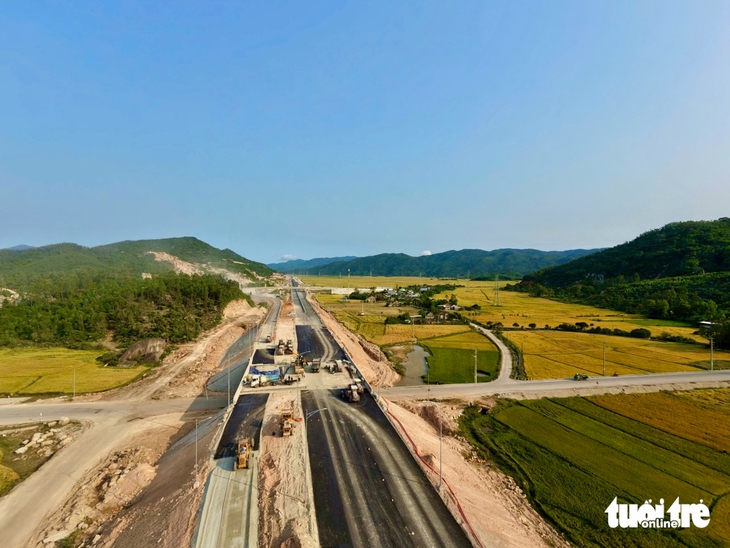
Investors of the Quy Nhon – Chi Thanh and Chi Thanh – Van Phong expressway projects (passing through Phu Yen province, now part of eastern Dak Lak) are striving to complete the final stages, committing to open the routes by the end of this April.
On April 16, a representative of Project Management Board 85 (the investor of the Quy Nhon – Chi Thanh project) stated that this section is basically complete. The unit will invite functional agencies for inspection and organize an acceptance council; if approved, it will be put into operation.
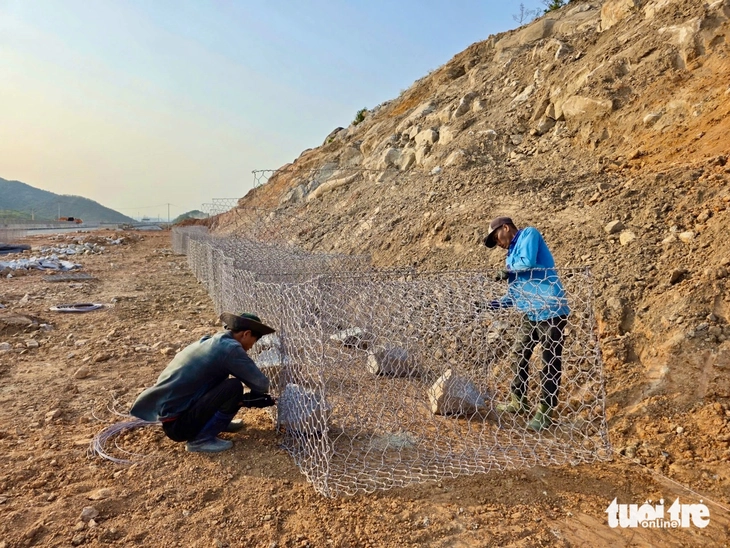
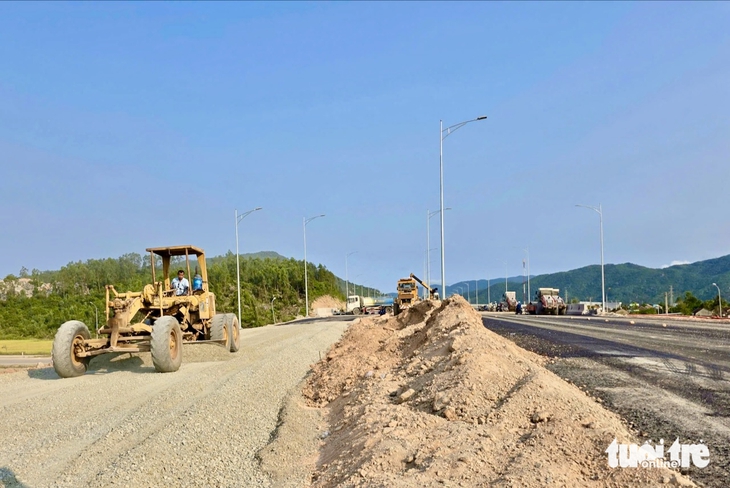
“Currently, the contractor is still working on the service roads, restoration roads, and completing some items damaged by the 2025 storms. The rest stop at Km41+500 has finished essential items like restrooms and resting areas…”, the representative said.
Meanwhile, according to the leadership of Project Management Board 7 (the investor of the Chi Thanh – Van Phong project), the project is entering the final completion phase, with the cumulative output value to date reaching 8,493/8,767 billion VND, equivalent to 96.87% of the contract value.
The investor stated they will report the project’s completion, then invite the State Inspection Council for verification, as a basis to report to competent authorities for handover procedures and route opening by the end of April 2026.
Regarding construction progress, many key items have been 100% completed. Specifically, roadbed excavation, sand filling, earth filling, and crushed stone aggregate work have all been finished. All 32/32 bridges along the route have been constructed; the Tuy An tunnel has also been fully completed with a length of 1,020m. Additionally, 249 drainage culverts and 47 underpasses for local communities have been completed.
For pavement items, the volume of asphalt concrete paving is also being accelerated. Traffic safety items such as guardrails, median strips, and protective fences have reached approximately 85% to over 91%, entering the final completion stage before acceptance.
The construction unit of the Chi Thanh – Van Phong expressway completes the final kilometers
Parallel to the main construction, the intelligent transportation system and traffic operation monitoring system are also being deployed. According to plan, the ITS (Intelligent Transportation System) will complete installation and trial runs by mid-May 2026.
The project’s executive director stated: “There are still about 1-2 km of asphalt pavement left, with some sections passing through complex geological areas requiring time for surcharge loading to ensure roadbed stability.
The contractor is focusing on completing the main route construction, so service road work will begin after that. To put the project into operation, all safety items and handover procedures must be fully completed.”
Despite being affected by rising prices of fuel and materials like steel, sand, and construction stone, the investor and contractor of the Quy Nhon – Pleiku (Gia Lai) expressway project are striving to maintain progress on the construction site.
Quy Nhon – Chi Thanh expressway
The Quy Nhon – Chi Thanh Expressway is a key transportation project in Binh Dinh Province, Vietnam, completed in 2019. It was constructed to reduce travel time, boost economic connectivity for the region’s ports and industrial zones, and alleviate traffic on the overloaded National Highway 1D. This modern infrastructure represents a significant investment in the socio-economic development of central Vietnam.
Chi Thanh – Van Phong expressway
The Chi Thanh – Van Phong Expressway is a key infrastructure project in Vietnam, connecting Chi Thanh town in Phu Yen province to the deep-water port complex of Van Phong in Khanh Hoa province. Its primary purpose is to enhance regional connectivity, boost economic development, and facilitate cargo transport to and from the strategic Van Phong port area. While a modern development, its history is tied to Vietnam’s recent national master plan for economic growth in the south-central coastal region.
Phu Yen province
Phu Yen is a coastal province in central Vietnam, historically part of the Champa Kingdom before being incorporated into Vietnam in the 17th century. It is renowned for its scenic landscapes, including the iconic Ganh Da Dia (The Cliff of Stone Plates), a natural wonder of basalt rock columns, and its long, pristine beaches. The area also holds significance as the landing site of the first Catholic missionary to Vietnam, Father Alexandre de Rhodes, in 1624.
Dak Lak
Dak Lak is a province in Vietnam’s Central Highlands, best known for its rich ethnic minority cultures, particularly the Ede and M’nong peoples. Its history is deeply tied to coffee cultivation, introduced by the French in the 20th century, making it the heart of Vietnam’s coffee industry. A key cultural site is **Buon Ma Thuot**, the provincial capital, which is home to the Dak Lak Museum and the nearby **Ban Don** area, famous for its tradition of elephant hunting and taming.
Tuy An tunnel
The Tuy An Tunnel is a historic underground passage located in Phú Yên Province, Vietnam, constructed by the Viet Cong during the Vietnam War (American War). It served as a crucial base for military operations, supply routes, and shelter for local forces and villagers against opposing troops. Today, it stands as a preserved war relic and memorial site, offering insight into the region’s wartime resilience.
Quy Nhon – Pleiku expressway
The Quy Nhon – Pleiku Expressway is a major infrastructure project in Vietnam’s central region, designed to improve connectivity between the coastal city of Quy Nhon and the Central Highlands city of Pleiku. Its construction, which began in the 2010s, aims to reduce travel time, boost economic development, and facilitate trade between the port and the highland provinces.
Gia Lai
Gia Lai is a mountainous province in Vietnam’s Central Highlands, historically home to indigenous groups like the Jarai and Bahnar. Its culture is deeply tied to traditional stilt houses, communal longhouses (*nha rong*), and vibrant gong festivals. The area also holds historical significance from the Vietnam War, including sites related to the Ho Chi Minh Trail.
Project Management Board 85
“Project Management Board 85” does not refer to a widely recognized public place, cultural site, or historical landmark. It is most likely an internal administrative or corporate body, such as a committee within a government agency, company, or specific project. Therefore, it does not have a general history or cultural significance to summarize for the public.