VinSpeed has just raised a massive capital of 45,000 billion dong.
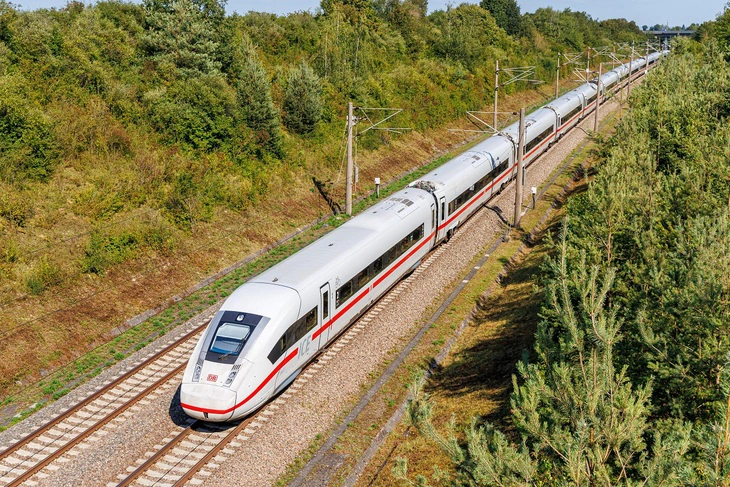
VinSpeed’s primary activities focus on railway construction.
According to a published change in business registration content, the High-Speed Railway Investment and Development Joint Stock Company adjusted its charter capital upward to 45,000 billion VND, equivalent to an increase of approximately 36% compared to before.
The registration date for the adjustment was December 25, 2025, coinciding with the time Vingroup announced the withdrawal of its investment registration for the large-scale, $67 billion North-South high-speed railway project.
Previously, VinSpeed was established in May of this year with an initial charter capital of 6,000 billion VND. After 7 months with multiple capital expansions, VinSpeed’s charter capital has increased 7.5 times.
The primary activities of VinSpeed focus on railway construction, locomotive and carriage production, and related equipment.
Currently, VinSpeed is the main investor in the project to build a railway line connecting the center of Ho Chi Minh City to Can Gio. The project commenced construction on December 19.
The project involves building a double-track line with a 1,435mm gauge. The main line length is over 54km, with a design speed of 350km/h and an axle load of 17 tons/axle.
The station facilities include 2 stations for phase 1 (Ben Thanh Station, Can Gio Station); 1 depot planned for Can Gio commune; and 1 Operations Control Center (OCC) located in Can Gio commune.
The preliminary total investment is approximately 102,430 billion VND (not including about 12,784 billion VND for site clearance costs, which are to be covered by the state budget).
The project’s operational term is 70 years from the date the competent authority issues the investment policy decision, concurrently with the acceptance of the investor.
VinSpeed also plans to implement the Hanoi – Quang Ninh high-speed railway from late 2025, with potential commercial operation by the first quarter of 2028.
According to VinSpeed’s proposal, the total investment for the Hanoi – Quang Ninh high-speed railway project is approximately 138,930 billion VND, equivalent to nearly $5.3 billion.
Ben Thanh Station
Ben Thanh Station is a historic railway station in Ho Chi Minh City, Vietnam, originally built by the French colonial administration and opened in 1914. It served as the city’s main terminal for over a century before being replaced by a new station in 2021. The iconic yellow building, known for its distinctive clock tower, is now preserved as a museum and cultural venue.
Can Gio Station
Can Gio Station is a small, historic railway station located in the Can Gio District of Ho Chi Minh City, Vietnam. It was part of the now-defunct Saigon–Go Cong railway line, which was built during the French colonial period in the early 20th century and operated until the mid-20th century. Today, the station stands as a quiet reminder of the region’s colonial-era transportation history.
Can Gio commune
Can Gio Commune is a coastal district located southeast of Ho Chi Minh City, Vietnam, renowned for its UNESCO-recognized Can Gio Mangrove Biosphere Reserve. Historically, the area’s mangroves were severely damaged during the Vietnam War but have since been successfully reforested into a vital ecological zone. Today, it serves as an important green lung for the city, a protected habitat for diverse wildlife, and a popular site for eco-tourism and education.
Operations Control Center (OCC)
The Operations Control Center (OCC) is a critical facility, often found in transportation and space agencies, that monitors and manages real-time operations. Historically, such centers became prominent with the rise of complex systems like air traffic control in the mid-20th century and NASA’s mission control for spaceflight. They serve as the central nervous system for coordinating personnel, vehicles, and data to ensure safety and efficiency.
Ho Chi Minh City
Ho Chi Minh City, formerly known as Saigon, is the largest city in Vietnam and a major economic hub. It served as the capital of the French colony of Cochinchina and later of the independent Republic of South Vietnam until the end of the Vietnam War in 1975, when it was renamed after the revolutionary leader Ho Chi Minh. Today, it is a dynamic metropolis known for its blend of French colonial architecture, bustling markets, and rapid modern development.
Can Gio
Can Gio is a coastal district of Ho Chi Minh City, Vietnam, best known for its UNESCO-recognized Mangrove Biosphere Reserve. Historically, the area’s dense mangroves were severely damaged during the Vietnam War but have since been successfully reforested into a vital ecological zone. Today, it serves as an important green lung for the city and a popular ecotourism destination for its biodiversity and Monkey Island.
Hanoi
Hanoi is the capital of Vietnam, with a history spanning over a thousand years since its establishment as the capital of the Đại Việt kingdom in 1010. It is renowned for its well-preserved French colonial architecture in the Old Quarter, ancient temples like the Temple of Literature, and its pivotal role as the political and cultural heart of the country throughout various dynasties and modern conflicts.
Quang Ninh
Quang Ninh is a coastal province in northeastern Vietnam, renowned as the home of Ha Long Bay, a UNESCO World Heritage Site famous for its thousands of limestone karsts and islands. Historically, the area has been a significant part of ancient Vietnamese civilizations and was a crucial trading hub, with Ha Long Bay itself playing a defensive role in the nation’s military history against invasions. Today, it is a major tourism and economic center, vital for its stunning natural landscapes and its coal mining industry.