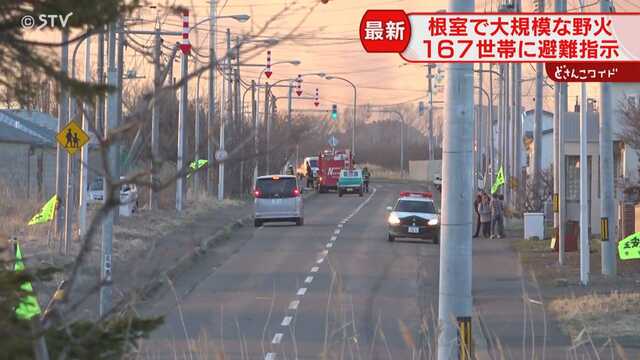
Road and Self-Defense Force helicopters conduct firefighting efforts as wildfire spreads across 35 hectares of grassland; dry weather advisory in effect…wildfire in Nemuro City.
Here is the latest update on the wildfire that occurred in Nemuro City, Hokkaido.
The prefecture has requested disaster relief deployment from the Self-Defense Forces regarding the spreading wildfire in Nemuro City.
The wildfire is occurring in the 1-chome area of Goyomai, Nemuro City. Around 1:00 PM on April 16, a report was made from the fire department to the police stating “a wildfire has broken out.”
According to the prefecture, the fire had spread across approximately 35 hectares of grassland by 1:30 PM.
There are no injuries, but two people living nearby have evacuated.
One prefectural helicopter is currently conducting firefighting operations from the air.
The prefecture requested disaster relief deployment from the Self-Defense Forces shortly before 4:00 PM.
It is planned that two Self-Defense Force helicopters will also join in the firefighting efforts.
A dry weather advisory had been issued for Nemuro City on the 16th, and caution was urged regarding fire handling.
Nemuro City
Nemuro City is a port city located on the eastern tip of Hokkaido, Japan, historically developed as a center for the fishing and kelp industries. It is best known for its proximity to the disputed Northern Territories (the Habomai islets and Shikotan), which are visible from Cape Nosappu, making it a focal point for related memorials and observatories. The city’s history is deeply tied to the post-World War II territorial dispute, and it serves as a base for former residents and advocacy groups regarding the islands.
Hokkaido
Hokkaido is Japan’s northernmost and second-largest island, historically inhabited by the indigenous Ainu people. It was formally incorporated into Japan during the Meiji Restoration in the late 19th century, when large-scale development and settlement began. Today, it is renowned for its vast natural landscapes, major cities like Sapporo, and unique seasonal attractions.
Goyomai
I’m unable to find any verifiable historical or cultural information on a place or site named “Goyomai.” It’s possible the name is misspelled, refers to a very localized or lesser-known site, or is a term from a specific context (like a local business or artistic work).
To provide an accurate summary, could you please double-check the spelling or provide any additional context about where you encountered this name?