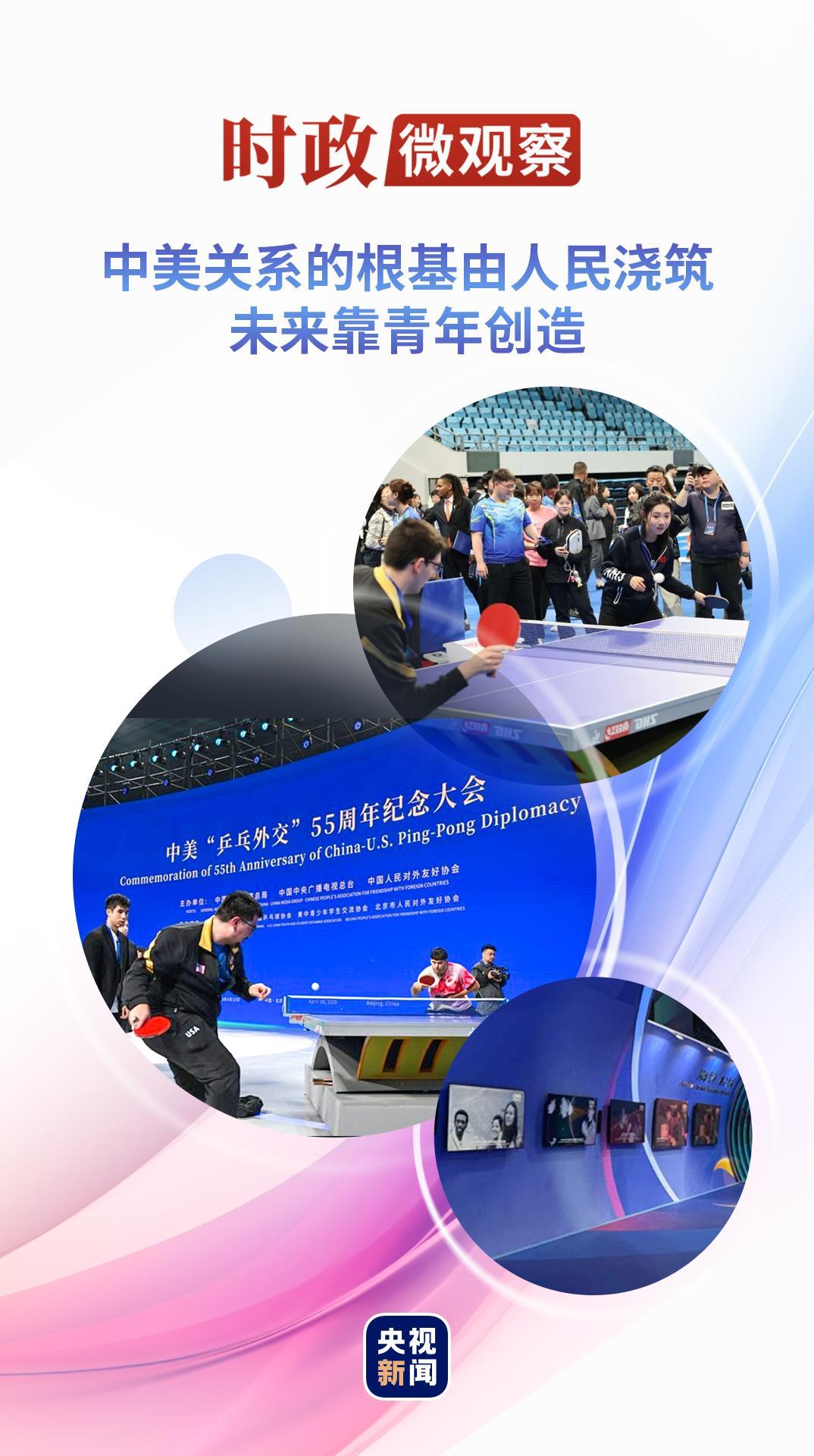
“Fifty-five years ago, the elder generation of Chinese and American leaders, with exceptional political wisdom and strategic vision, reopened the door to friendly exchanges between the peoples of the two countries, creating the historical tale of ‘the small ball moving the big ball.'”
On April 10, President Xi Jinping sent a congratulatory letter to the commemorative meeting for the 55th anniversary of China-U.S. “Ping-Pong Diplomacy” and the launch ceremony of the China-U.S. Youth Sports Exchange Series. President Xi highly commended the historical and contemporary significance of “Ping-Pong Diplomacy,” encouraging people from all walks of life in both countries, especially the younger generation, to understand and bond with each other, and to move forward hand in hand, injecting strong impetus into promoting a stable, healthy, and sustainable development of bilateral relations.
On the same day, the commemorative meeting for the 55th anniversary of China-U.S. “Ping-Pong Diplomacy” and the launch ceremony of the China-U.S. Youth Sports Exchange Series, jointly hosted by relevant organizations, was held in Beijing. Participants of the original “Ping-Pong Diplomacy,” young athletes from both countries, and representatives from various sectors attended the commemorative meeting, jointly witnessing the launch of the youth sports exchange series.
Drawing Wisdom and Strength from History
In April 1971, China-U.S. “Ping-Pong Diplomacy” opened the door to friendly exchanges between the two peoples, ushering in a new chapter in bilateral relations and exerting a profound impact on China-U.S. relations and the world landscape at the time.
Over the past 55 years, the legendary story of “the small ball moving the big ball” has transcended sports exchange itself, becoming a spiritual symbol of China-U.S. people-to-people friendship.
In his congratulatory letter, President Xi Jinping pointed out: “It is hoped that people from all walks of life in both countries, especially the younger generation, will draw wisdom and strength from history, understand and bond with each other through exchanges and cooperation, and move forward hand in hand through mutual learning and mutual reference, jointly tightening the bonds of friendship and making new contributions to promoting the stable, healthy, and sustainable development of China-U.S. relations.”
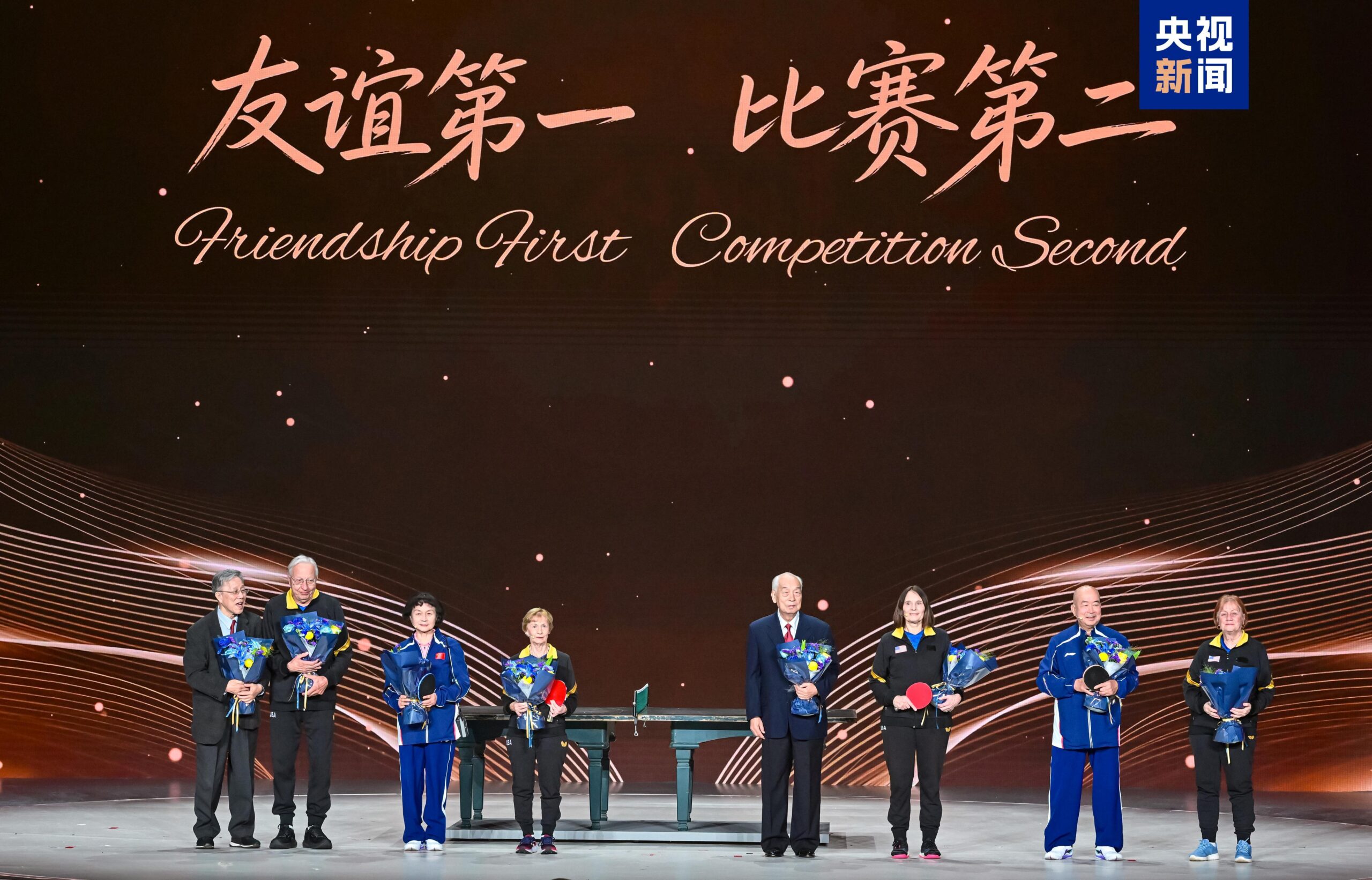
Upon hearing President Xi Jinping’s congratulatory letter, a member of the original U.S. table tennis delegation to China said: “At present, mutual understanding and dialogue are more important than ever. We hope to continue passing on the spirit of ‘Ping-Pong Diplomacy,’ conveying warmth and enhancing understanding between the peoples of the two countries.”
A stable, healthy, and sustainable China-U.S. relationship serves the common interests of both peoples and meets the common expectations of the international community.
Understanding and Bonding Through Exchanges and Cooperation
“The foundation of China-U.S. relations is laid by the people, and its future is created by the youth.” This is how President Xi Jinping encouraged people from all walks of life in both countries, especially the younger generation, in his letter.
Over the years, President Xi Jinping has attached great importance to and personally promoted friendly exchanges between the Chinese and American peoples, with particular concern for exchanges between the youth of both countries.
During his visit to the United States in 2015, President Xi presented books about China, a ping-pong table, and equipment to Lincoln High School in Tacoma, encouraging young people from both countries to