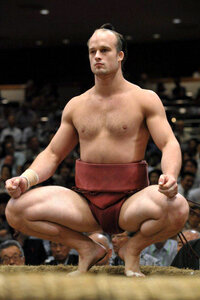
The stablemasters who witnessed the victory had this to say: “He’s frightening for the future,” and “It’s exciting to see how strong he can become.” However, former yokozuna expressed a completely different view.
Two days prior, on the 11th day, Ishiura had resorted to a sidestep maneuver to secure a win against an ozeki. Then, in his first challenge for the yokozuna rank, he used a sidestep again. One former yokozuna stated: “The rank of yokozuna is not so light that one can cling to it with such a cheap, flighty spirit in a first challenge against a yokozuna or ozeki.” Another former yokozuna said, “He’ll likely peak at the ‘sanyaku’ ranks (ozeki, sekiwake, komusubi).”
By defeating Kakuryu, expectations swelled for Ishiura to achieve a historic “championship on debut as yokozuna.” However, it was Hakuho who lifted the Emperor’s Cup. He overwhelmingly defeated Ishiura on the 14th day, then also beat Kakuryu, securing his 31st championship. Nine years later, Ishiura retired from sumo, his highest rank having peaked at sekiwake.
If one aspires to the yokozuna rank, perhaps a sidestep at the initial charge is something one “must not do.”
On the other hand, there are also sidesteps one “should do”…
Emperor’s Cup
The Emperor’s Cup (天皇杯) is Japan’s premier national football (soccer) tournament, first held in 1921. It is open to all professional and amateur teams in the country, from the J1 League down to regional qualifiers, creating a historic “knockout cup” competition. Originally called the “All Japan Football Championship,” it was renamed in honor of Emperor Hirohito in 1927 and is now presented by the Japan Football Association.
yokozuna
“Yokozuna” is not a place or cultural site, but the highest rank in professional sumo wrestling in Japan. The title, which translates to “grand champion,” has a history dating back to the 17th century and is awarded for exceptional skill, strength, and dignity. Yokozuna are considered living cultural icons, embodying the tradition and spirit of the Japanese national sport.
ozeki
“Ozeki” (大関) is a title in professional sumo wrestling, representing the second-highest rank just below yokozuna (grand champion). The title has existed since the Edo period (1603-1868) and is awarded to wrestlers who demonstrate consistent top-tier performance, often serving as a potential final step before promotion to the ultimate yokozuna rank. An ozeki must maintain a high level of achievement, as a significant losing record can result in demotion.
sekiwake
“Sekiwake” is not a physical place or cultural site, but a title in professional sumo wrestling, the third-highest rank below yokozuna and ōzeki. The title has existed since the Edo period and is a crucial position, as a sekiwake is often a candidate for promotion to ōzeki. The rank embodies a long tradition of achievement and prestige within Japan’s national sport.
komusubi
“Komusubi” is not a place or cultural site, but a rank in professional sumo wrestling in Japan. It is the fourth-highest rank, just below sekiwake, and is considered a gateway to the prestigious titled ranks (sanyaku). A wrestler at komusubi has the opportunity to challenge the highest-ranked opponents, and achieving this rank is a significant career milestone.
sanyaku
“Sanyaku” (三役) refers to the three highest ranks in professional sumo wrestling: sekiwake, komusubi, and ōzeki. These ranks have existed since the Edo period (1603-1868) and represent the elite competitors just below the sport’s ultimate rank of yokozuna. Achieving sanyaku status is a major career milestone, indicating a wrestler’s consistent high performance and eligibility for top tournament matchups.