“Ringleader” of fake functional food for children and the elderly accused of profiting 264 billion.
Nguyễn Năng Mạnh, Chairman of MediUSA, has been indicted as the alleged mastermind of a counterfeit functional food production and distribution ring targeting the elderly and children, valued at 540 billion VND, with illicit profits of 264 billion VND.
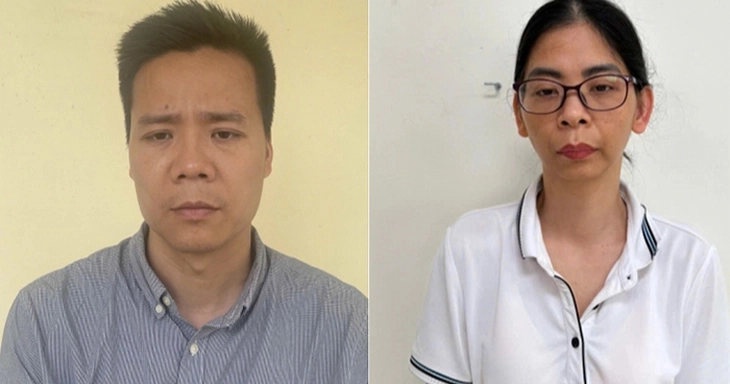
On March 27, the alleged “boss” of the counterfeit functional food ring, Nguyễn Năng Mạnh (former Chairman of MediUSA), was indicted by the Supreme People’s Procuracy on three charges: producing and trading counterfeit goods as foodstuffs, food, and food additives; violating accounting regulations causing serious consequences; and bribery.
Đỗ Mạnh Hoàng, Director of MediPhar Company, and Khúc Minh Vũ, Director of Việt Đức Company, were indicted on two charges: producing and trading counterfeit goods as foodstuffs, food, and food additives; and violating accounting regulations causing serious consequences.
Three individuals were charged with receiving bribes: Nguyễn Thế Việt, former Deputy Director of the Customs Supervision and Management Department; Nguyễn Hữu Tuân, former Deputy Head of Supervision Division 5, Customs Supervision and Management Department; and Phan Công Chiến, former Head of the Drug Business Management Department under the Ministry of Health.
Separately, Nguyễn Danh Dũng, a former officer of Division 4 under the Environmental Crime Prevention Police Department (C05, Ministry of Public Security), was charged with intentionally disclosing work secrets.
Counterfeit Functional Food Production Ring Worth Over 500 Billion
According to the indictment, Nguyễn Năng Mạnh, besides being Chairman of MediUSA, was also Director of MegaPharco Company, Deputy Director holding 70% of shares in MediPhar Company, and a founding shareholder of Hùng Phương Company.
Nguyễn Năng Mạnh, Đỗ Mạnh Hoàng, and Khúc Minh Vũ, in their roles as shareholders, established companies and directly held controlling power, directing and managing all activities of Mediphar Company, MediUSA Company, and other companies within the system.
Since 2016, Mạnh, Hoàng, and Vũ organized and managed 12 companies and 2 factories, MediPhar and MediUSA, to produce and distribute counterfeit functional food in exceptionally large quantities and diverse types.
Investigation results determined that Mạnh used deceptive tactics on product packaging and labels, indicating imports from the USA and Europe. However, in reality, the products were mainly imported from China or purchased randomly on the market.
The consumer market targeted by Mạnh’s group primarily focused on the elderly and children. However, product testing results showed that quality indicators and many components only reached below 30% of the declared content.
Nguyễn Năng Mạnh is also accused of committing violations from the licensing stage to obtain GMP certification for factory operation. The suspects gave money to inspection and audit delegations to secure favorable conditions.
The quantity of products produced by this ring was exceptionally large for distribution and sale in almost all provinces and cities nationwide, the indictment stated.
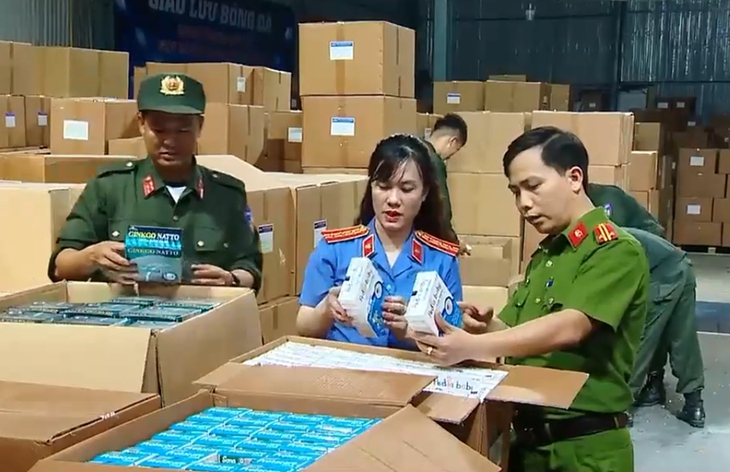
The total actual revenue of Mediphar and MediUSA Companies through production and trading activities was over 1,700 billion VND. Within this, forensic conclusions identified 88 products as counterfeit goods, sold with revenue of 540 billion VND.
“Boss” Nguyễn Năng Mạnh, along with Đỗ Mạnh Hoàng and Khúc Minh Vũ, are accused of illicitly profiting over 264 billion VND.
C03 concluded that a total of 88 functional food products valued at over 539 billion VND were counterfeit. Through this
MediUSA
“MediUSA” does not refer to a recognized historical place or cultural site. It appears to be a fictional or conceptual name, possibly a blend of “Mediterranean” and “USA,” which might be used in creative works, brand names, or theoretical discussions about cultural fusion. Without a specific real-world referent, it has no verifiable history.
MediPhar Company
“MediPhar Company” does not refer to a specific, widely recognized public place or cultural site with a documented history. It appears to be a generic or fictional name for a pharmaceutical or medical company. Therefore, it does not have a notable historical or cultural background to summarize in this context.
Việt Đức Company
“Việt Đức Company” is not a widely recognized historical place or cultural site in Vietnam. It is most commonly known as the name of a major hospital in Hanoi—**Việt Đức Hospital** (Viet Duc Hospital)—which is a leading surgical center. Founded in 1906 during the French colonial period, it was originally called *L’Hôpital de l’Union* and has played a significant role in Vietnam’s medical history, especially during the wars in the 20th century.
MegaPharco Company
MegaPharco Company is not a recognized historical place or cultural site, but rather appears to be a fictional or generic corporate name. Therefore, it does not have a verifiable history or cultural significance to summarize.
Hùng Phương Company
Hùng Phương Company is a Vietnamese enterprise specializing in the production of construction materials, particularly bricks and tiles. While specific historical details are limited in public sources, such companies typically emerged and grew significantly during Vietnam’s post-renovation (*Đổi Mới*) period from the late 1980s onward, supporting the country’s infrastructure and housing development. It represents an important part of Vietnam’s modern industrial and private business sector.
Customs Supervision and Management Department
The Customs Supervision and Management Department is a key administrative agency within China’s General Administration of Customs, responsible for overseeing the flow of goods, enforcing trade regulations, and collecting tariffs. Its modern structure and functions have evolved significantly since the late 20th century as part of China’s economic reforms and integration into the global trading system, with a core mission of facilitating legitimate trade while preventing smuggling and ensuring border security.
Drug Business Management Department
The “Drug Business Management Department” is not a widely recognized public cultural site or historical place. It is typically an administrative division within a government health or regulatory agency, such as China’s National Medical Products Administration (NMPA), responsible for overseeing the licensing, regulation, and supervision of pharmaceutical businesses. Its history is tied to the development of modern pharmaceutical law and public health policy, evolving to ensure the safety, efficacy, and quality of medicines in the market.
Environmental Crime Prevention Police Department (C05)
The Environmental Crime Prevention Police Department (C05) is a specialized unit within the Vietnamese Ministry of Public Security, established to investigate and combat serious environmental crimes. Its history is tied to Vietnam’s increasing focus on environmental protection laws in the 21st century, with C05 formally created to enforce these regulations by targeting offenses like illegal logging, wildlife trafficking, and hazardous waste dumping. The department plays a key role in upholding the country’s environmental security and legal framework.